admin

Despite the generally out-of-reach nature of celebrities and high fashion, through social media, the internet, and magazines we are able to grasp this foreign world within an arms-length — almost parasocially so. The new campaign ‘Image of an Image’ for Prada’s SS26 collection by Miuccia Prada and Raf Simons is a charming wink at the relationships between advertising, fashion, and viewers.

In its essence, parasocial behaviour is the ways people create illusions of intimacy and closeness by crossing the divide between fan and celebrity. Since celebrities are turned into spectacles, isn’t it only natural that we become spectators? Or is it our constant gaze, admiration, and attention that raise these distant figures onto pedestals of aspiration?
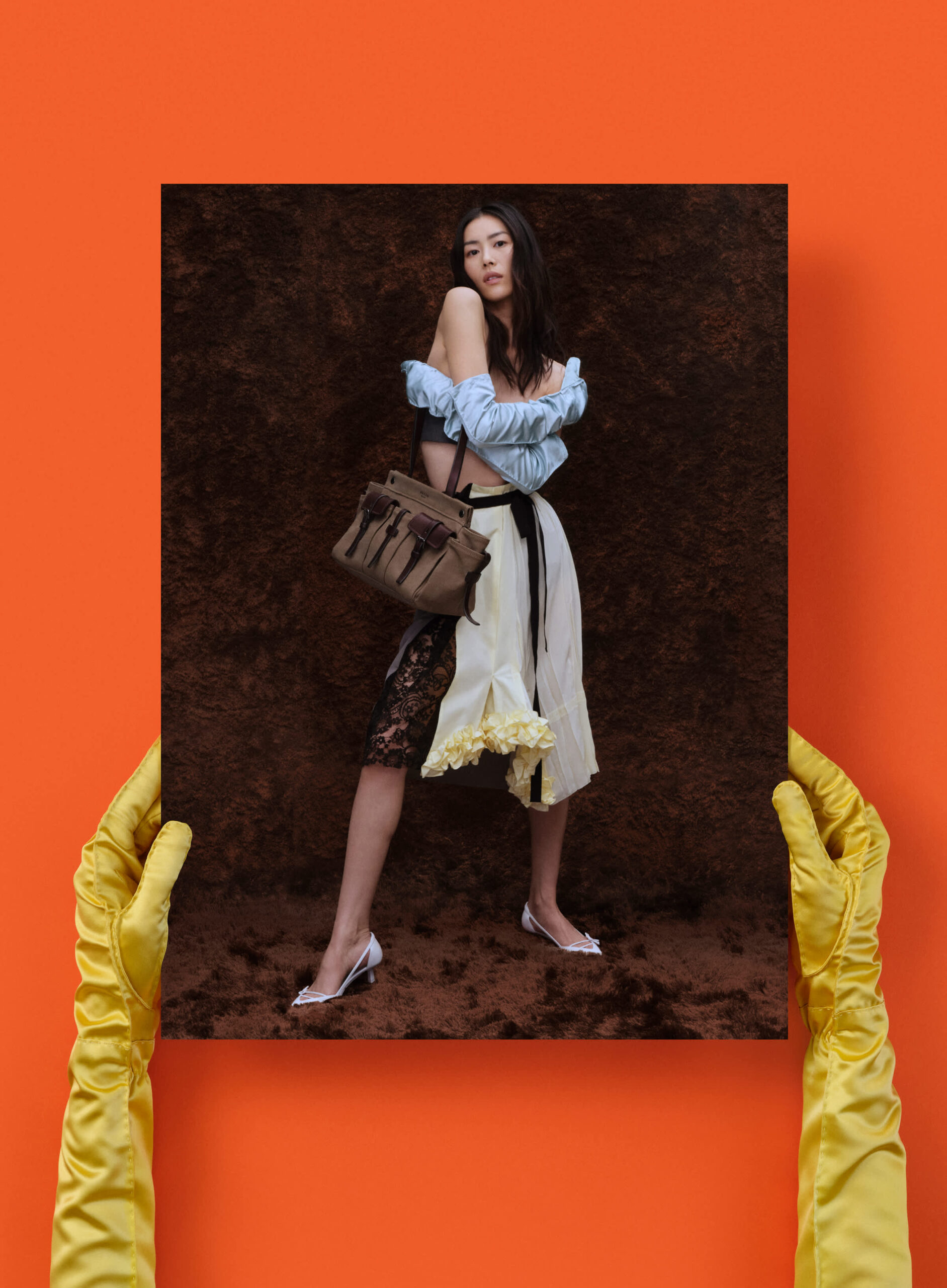
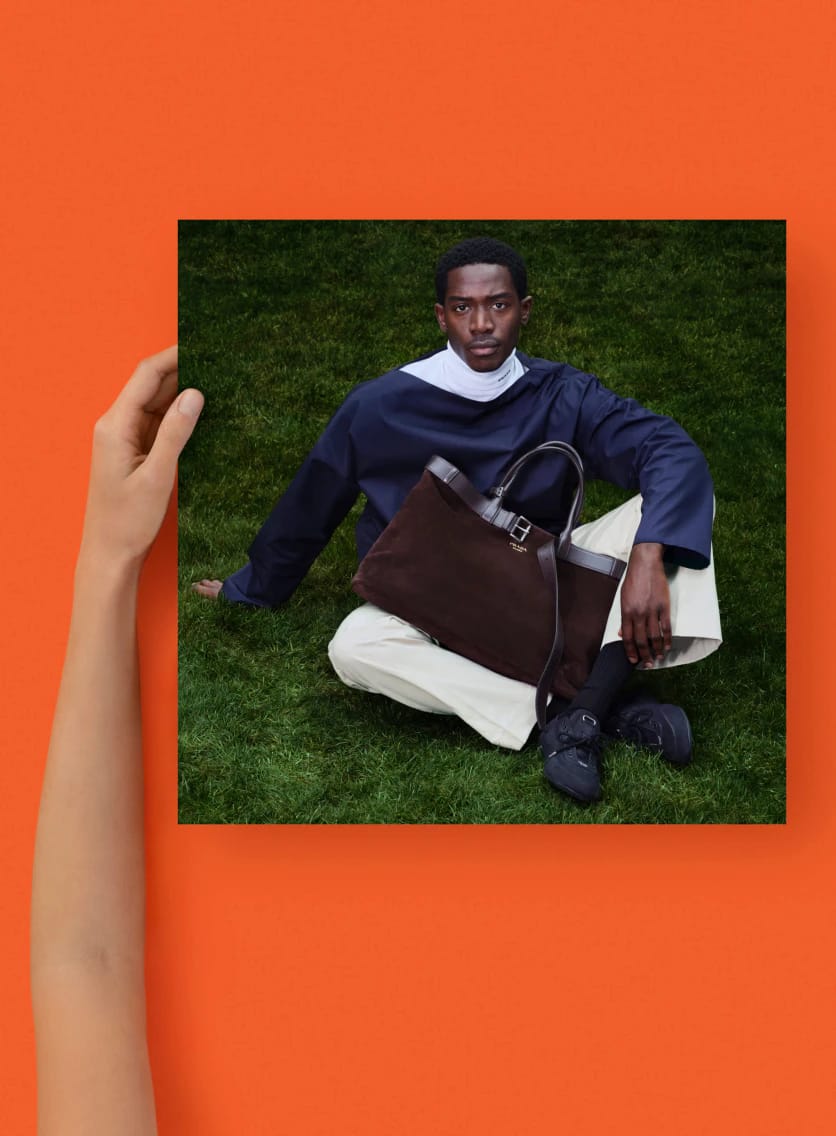
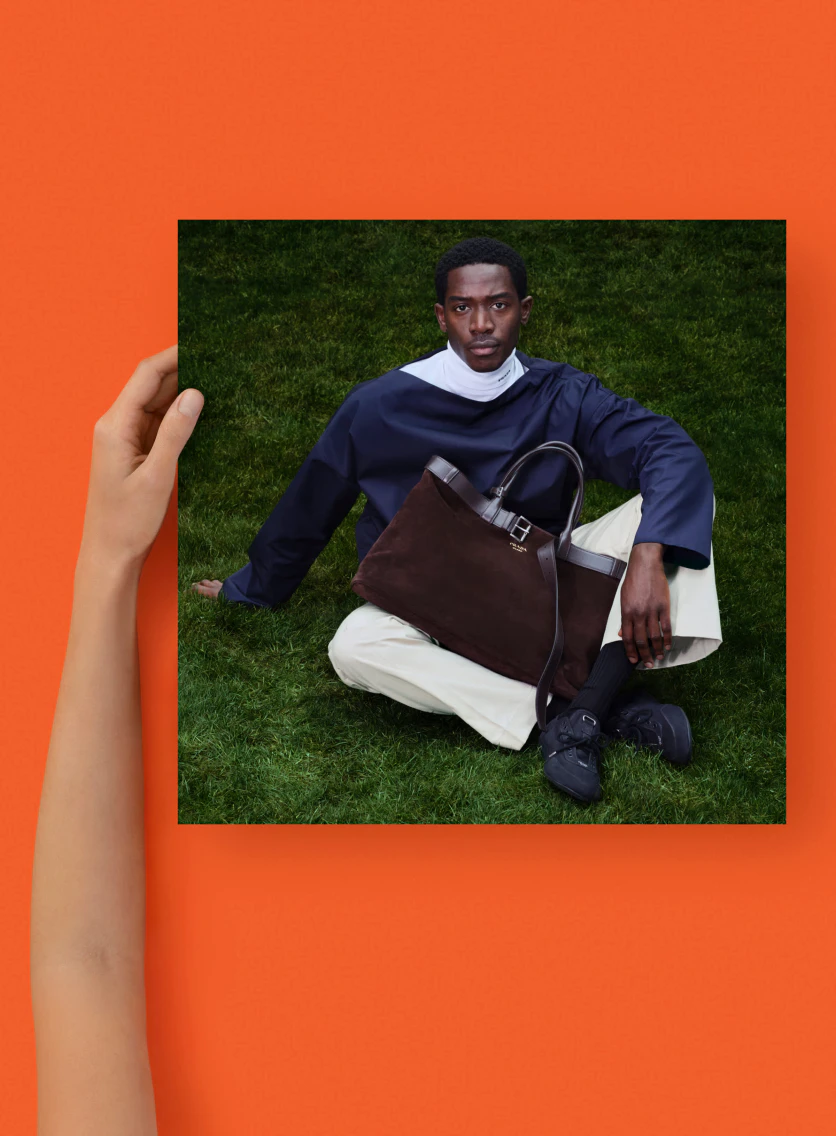
This year, Prada commissioned artist Anne Collier to execute a portfolio of images that re-contextualises our idea of fashion campaigns within the digital age. Collier’s visions turns the SS26 campaign into something physical — a material object to be held and felt.

Shot by Oliver Hadlee Pearch, each still life composition is held by a pair of hands, creating the effect of an additional observer. Consequently, the core of advertising is laid bare as the viewer is forced to identify with the hands of the onlooker who holds the photographs with admiration (and maybe even desire) for the campaign and models.
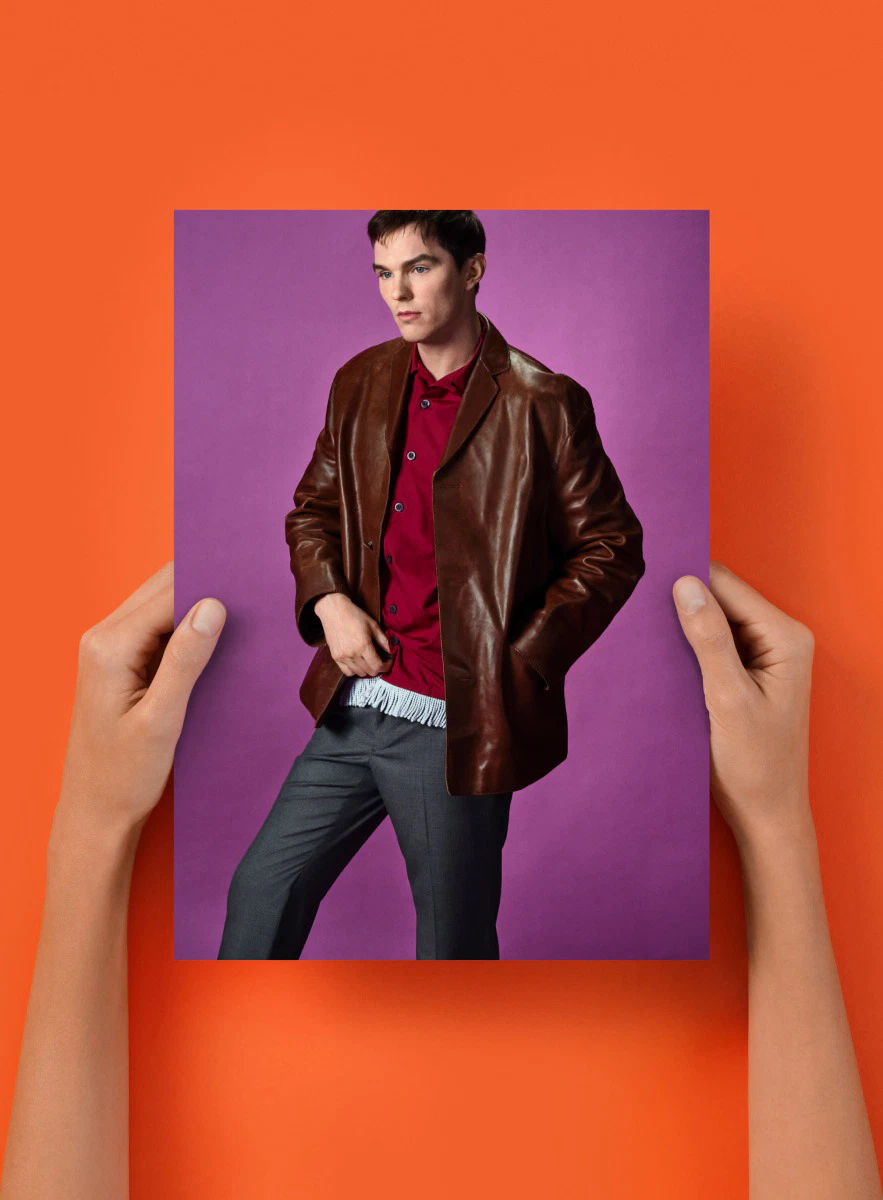
SS26 Prada pieces are worn by an ensemble of actors and personalities in the campaign including: actors Hunter Schafer, Nicholas Hoult, Carey Mulligan, Levon Hawke, and Damson Idris, musician John Glacier, and model Liu Wen. All the models — except for Nicholas Hoult who purposefully averts his gaze — stares straight at the camera. After all, it’s fitting for the campaign models’ occupations in industries built on the importance of perception and visibility.
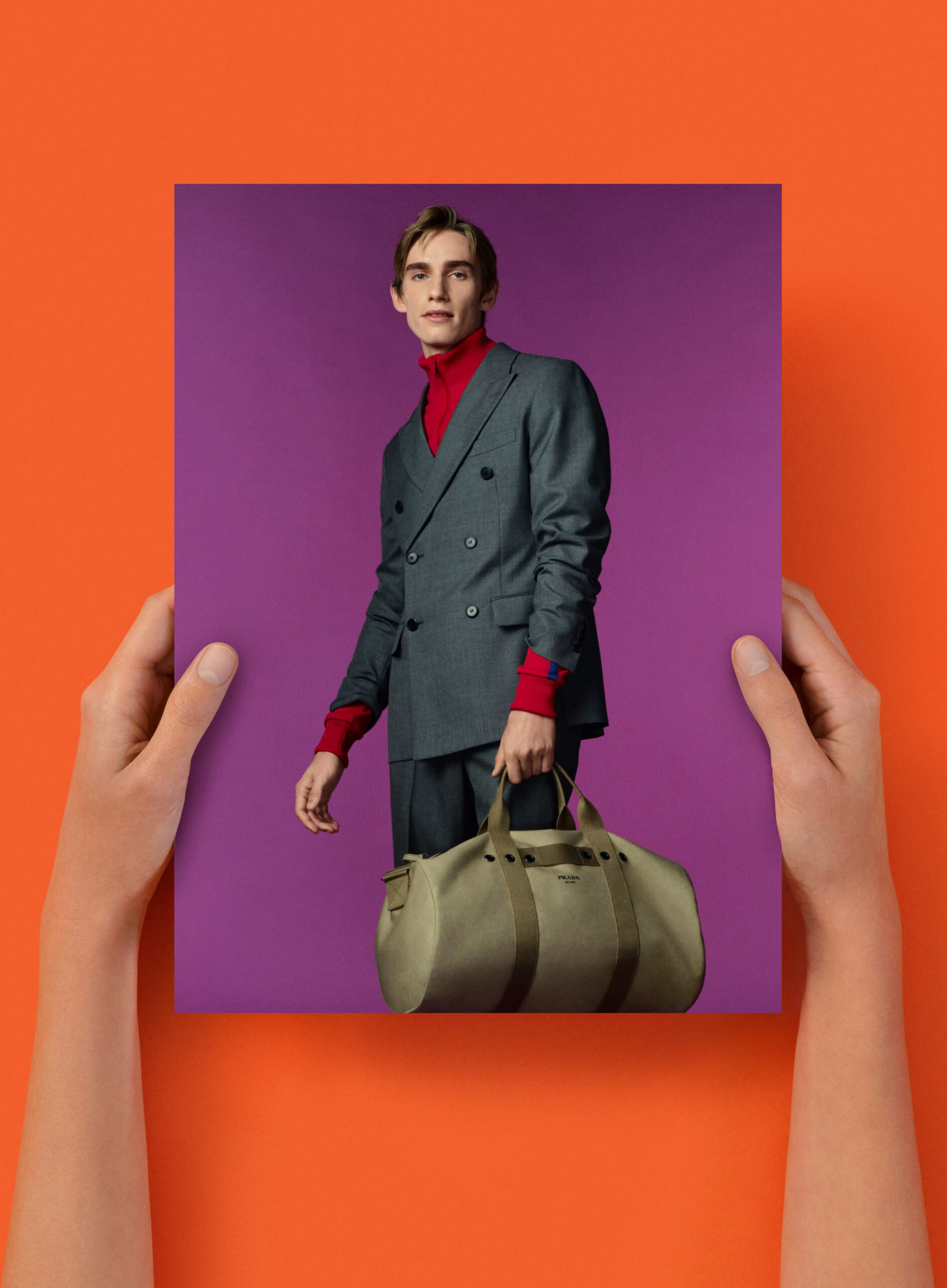
By creating this doubling effect from the models looking at us looking at them, the campaign instantly sparks discourse about our complicity in looking and the common practice of parasociality in the digital age. Image of an Image is both a celebration and a liberation from common fashion imagery; it’s an outside consideration of fashion through the lens of fine art and objective truths.

This article was first seen on Men’s Folio Singapore.

For more on the latest fashion reads, click here.

The post Prada’s Spring/Summer ’26 Campaign Turns the Camera Back on the Viewer appeared first on LUXUO.
Despite the generally out-of-reach nature of celebrities and high fashion, through social media, the internet, and magazines we are able to grasp this foreign world within an arms-length — almost parasocially so. The new campaign ‘Image of an Image’ for Prada’s SS26 collection by Miuccia Prada and Raf Simons is a charming wink at the relationships between advertising, fashion, and viewers.

In its essence, parasocial behaviour is the ways people create illusions of intimacy and closeness by crossing the divide between fan and celebrity. Since celebrities are turned into spectacles, isn’t it only natural that we become spectators? Or is it our constant gaze, admiration, and attention that raise these distant figures onto pedestals of aspiration?

This year, Prada commissioned artist Anne Collier to execute a portfolio of images that re-contextualises our idea of fashion campaigns within the digital age. Collier’s visions turns the SS26 campaign into something physical — a material object to be held and felt.

Shot by Oliver Hadlee Pearch, each still life composition is held by a pair of hands, creating the effect of an additional observer. Consequently, the core of advertising is laid bare as the viewer is forced to identify with the hands of the onlooker who holds the photographs with admiration (and maybe even desire) for the campaign and models.

SS26 Prada pieces are worn by an ensemble of actors and personalities in the campaign including: actors Hunter Schafer, Nicholas Hoult, Carey Mulligan, Levon Hawke, and Damson Idris, musician John Glacier, and model Liu Wen. All the models — except for Nicholas Hoult who purposefully averts his gaze — stares straight at the camera. After all, it’s fitting for the campaign models’ occupations in industries built on the importance of perception and visibility.

By creating this doubling effect from the models looking at us looking at them, the campaign instantly sparks discourse about our complicity in looking and the common practice of parasociality in the digital age. Image of an Image is both a celebration and a liberation from common fashion imagery; it’s an outside consideration of fashion through the lens of fine art and objective truths.

This article was first seen on Men’s Folio Singapore.

For more on the latest fashion reads, click here.

The post Prada’s Spring/Summer ’26 Campaign Turns the Camera Back on the Viewer appeared first on LUXUO.
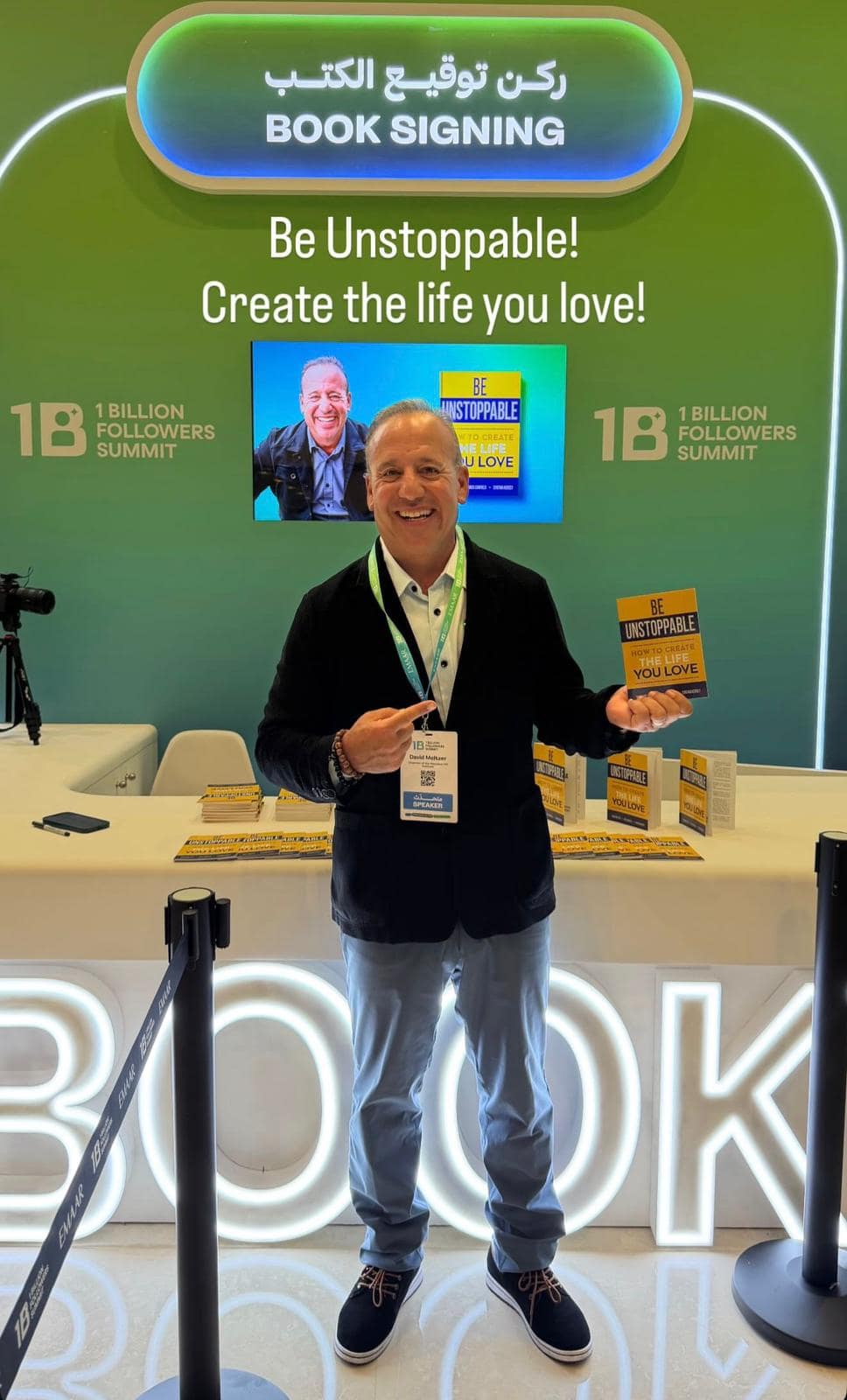
Dubai continues to position itself as the global capital of the creator economy, and today’s 1 Billion Followers Summit brought together some of the world’s most influential minds shaping the future of leadership, media, and digital impact. Among the distinguished attendees was David Meltzer, internationally respected speaker, author, and entrepreneur, whose work has consistently redefined how success, fulfillment, and influence intersect in the modern era.

David Meltzer’s presence at the summit reflects his ongoing commitment to guiding entrepreneurs, creators, and executives toward sustainable success rooted in values, consistency, and service. Known globally for his ability to simplify complex ideas into actionable wisdom, Meltzer has become a trusted voice in leadership development, emotional intelligence, and personal growth.

Over the years, he has built a powerful global following by focusing on one core principle: delivering value at scale. Through daily educational content, keynote sessions, podcasts, and mentorship initiatives, Meltzer has helped millions reframe their relationship with money, time, and purpose. His philosophy centered on accessibility, gratitude, and intentional living resonates deeply in today’s fast-moving digital landscape.

At the 1 Billion Followers Summit, conversations revolved around authenticity, long term brand building, and responsible influence areas where Meltzer’s perspective remains especially relevant. His approach emphasizes that true influence is not measured solely by numbers, but by the ability to empower others, create opportunity, and lead with integrity.

As Chairman of the Napoleon Hill Institute and host of multiple globally recognized media platforms, David Meltzer continues to bridge timeless success principles with the realities of modern digital platforms. His participation in this landmark event underscores a broader shift in the creator economy: influence is evolving from visibility to value, and leadership is defined by impact rather than attention.

In an era where digital presence shapes global narratives, David Meltzer stands out as a figure who consistently demonstrates how purpose driven leadership can scale across industries and borders. His attendance at the 1 Billion Followers Summit reinforces his role as a global catalyst for conscious entrepreneurship, meaningful connection, and long term success in the digital age.

SAN FRANCISCO: OpenAI has officially launched ChatGPT Health, a dedicated feature within its platform designed to integrate personal medical records and wellness data to provide users with tailored health insights.

The tool aims to help users identify patterns in their physical well-being and prepare for professional medical consultations. OpenAI emphasized that the feature was developed in collaboration with hundreds of physicians globally and is meant to support, not replace, professional medical care.

Key Features of ChatGPT Health

  • Data Integration: Users can securely connect health information from providers and wellness apps like Apple Health, Function, and MyFitnessPal.
  • Contextual Assistance: The AI can help explain recent lab results, suggest dietary or workout adjustments based on historical data, and help users navigate health insurance options.
  • Privacy-First Design: Health-related conversations and data are stored in a standalone space, separate from standard ChatGPT interactions. OpenAI ensures that health “memories” do not leak into regular chats and are never used to train models without permission.

Physician-Led Development

To minimize risks of misinformation, OpenAI worked with over 260 physicians across 60 countries over the past two years. These experts provided feedback on model outputs more than 600,000 times to ensure the information provided is helpful and grounded in medical context.

Availability and Restrictions

Currently, access is rolling out in phases:

  • Waitlist: Available to a limited group of Free, Plus, and Pro users via a waitlist.
  • US Priority: Medical record integration is initially exclusive to the United States.
  • Regional Exclusions: Due to stringent data regulations, the feature is not yet available in the United Kingdom, Switzerland, or the European Economic Area (EEA).

OpenAI plans to expand access to all web and iOS users globally “in the coming weeks” as the service is refined.


Would you like me to rewrite any of these articles into a shorter social media post format for LinkedIn or X (formerly Twitter)?

OpenAI Unveils “ChatGPT Health”: A New AI-Powered Personal Wellness Assistant

SAN FRANCISCO: OpenAI has officially launched ChatGPT Health, a dedicated feature within its platform designed to integrate personal medical records and wellness data to provide users with tailored health insights.

The tool aims to help users identify patterns in their physical well-being and prepare for professional medical consultations. OpenAI emphasized that the feature was developed in collaboration with hundreds of physicians globally and is meant to support, not replace, professional medical care.

Key Features of ChatGPT Health

  • Data Integration: Users can securely connect health information from providers and wellness apps like Apple Health, Function, and MyFitnessPal.
  • Contextual Assistance: The AI can help explain recent lab results, suggest dietary or workout adjustments based on historical data, and help users navigate health insurance options.
  • Privacy-First Design: Health-related conversations and data are stored in a standalone space, separate from standard ChatGPT interactions. OpenAI ensures that health “memories” do not leak into regular chats and are never used to train models without permission.

Physician-Led Development

To minimize risks of misinformation, OpenAI worked with over 260 physicians across 60 countries over the past two years. These experts provided feedback on model outputs more than 600,000 times to ensure the information provided is helpful and grounded in medical context.

Availability and Restrictions

Currently, access is rolling out in phases:

  • Waitlist: Available to a limited group of Free, Plus, and Pro users via a waitlist.
  • US Priority: Medical record integration is initially exclusive to the United States.
  • Regional Exclusions: Due to stringent data regulations, the feature is not yet available in the United Kingdom, Switzerland, or the European Economic Area (EEA).

OpenAI plans to expand access to all web and iOS users globally “in the coming weeks” as the service is refined.


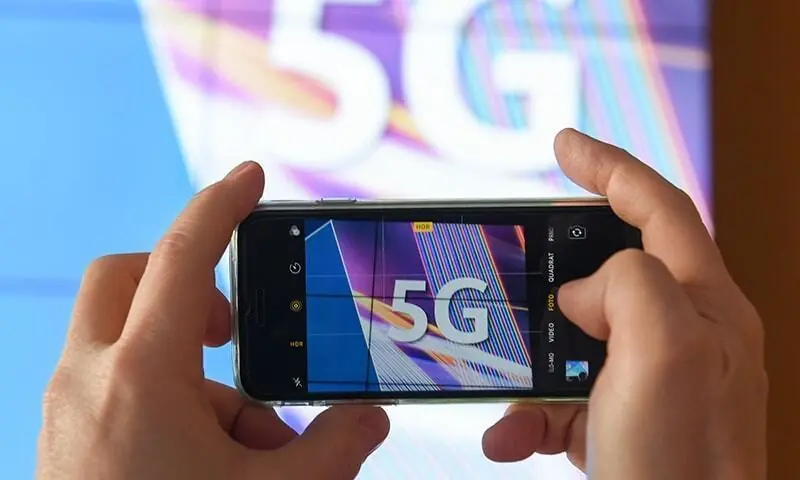
ISLAMABAD: The Telecom Operators Association of Pakistan (TOA) has formally cautioned the government against a rushed rollout of 5G technology, citing severe concerns over device affordability and the potential drain on foreign exchange reserves.

In a letter addressed to the Ministry of Information Technology and Telecom, TOA Chairman Amir Ibrahim emphasized that a premature launch could result in an “expensive and empty” network that fails to serve the majority of the population.

The Affordability Gap

The association highlighted a stark reality regarding the current mobile landscape in Pakistan:

  • Current 5G Handset Ownership: Only 2% of mobile users.
  • Cost Barriers: Entry-level 5G smartphones start at approximately Rs. 90,000, with high-end models reaching up to Rs. 700,000.
  • Usage Gap: Roughly 25% of mobile customers in Pakistan still do not use 4G mobile broadband, a decade after its introduction.

“Technology introduction by itself does not transform societies. Using that technology does,” the TOA stated, noting that adding 5G capabilities increases manufacturing costs, pushing devices further out of reach for mass-market consumers.

Economic and Social Risks

The TOA warned that focusing on rollout timelines without addressing demand-side barriers carries several risks:

  1. Digital Divide: 5G may only benefit a small urban elite, further isolating those in rural or lower-income brackets.
  2. Capital Diversion: Capital could be diverted from improving basic 4G connectivity, which remains the backbone of the country’s digital economy.
  3. Underutilized Infrastructure: A lack of compatible handsets could lead to multi-million dollar networks sitting idle.

Proposed Solutions

To ensure a successful transition, the association urged the government to adopt a more balanced approach by:

  • Reducing Taxes: Lowering the taxation on 5G-enabled handsets to make them accessible.
  • Financing Models: Introducing smartphone installment options to help consumers upgrade.
  • Spectrum Realism: Aligning spectrum auction policies with the actual purchasing power of the Pakistani consumer.

The TOA concluded that for 5G to be a national success rather than a failure, the government must prioritize the ability of ordinary citizens to connect to and find value in the new network.

ISLAMABAD: The Pakistani Rupee (PKR) recorded a slight gain against the US Dollar in the interbank market on Wednesday, appreciating by 01 paisa. According to the State Bank of Pakistan (SBP) and the Forex Association of Pakistan (FAP), the local currency closed at Rs. 280.06, compared to the previous day’s closing of Rs. 280.07.

In the open market, the buying and selling rates for the US Dollar were recorded at Rs. 280.75 and Rs. 282.8, respectively.

Performance Against Major Currencies

While the movement against the dollar was marginal, the rupee showed significant strength against several other major international currencies:

  • Euro: Decreased by Rs. 1.46 to close at Rs. 327.16.
  • British Pound (GBP): Dropped by Rs. 2.06 to close at Rs. 377.80.
  • Japanese Yen: Fell by 01 paisa to settle at Rs. 1.78.
  • Emirates Dirham (AED): Declined by 01 paisa to reach Rs. 76.24.
  • Saudi Riyal (SAR): Remained stagnant, closing at Rs. 74.67.

Market Context

The stability in the exchange rate comes despite a volatile day at the Pakistan Stock Exchange (PSX), which saw a sharp decline of 976 points, closing at 185,543 points. Financial analysts note that while the equity market faced pressure, the currency market remained relatively firm due to balanced demand and supply of foreign exchange.

The World Health Expo (WHX) Dubai 2026 (formerly known as Arab Health) is a premier global healthcare exhibition and conference scheduled for February 9–12, 2026, primarily at the Dubai Exhibition Centre (DEC) in Dubai, United Arab Emirates.

As one of the world’s largest healthcare events, it is expected to host over 4,800 exhibitors and 270,000 professionals from 180+ countries, focusing on medical innovation, digital health, and sustainable healthcare solutions. The event runs concurrently with WHX Labs Dubai (Feb 10–13) at the Dubai World Trade Centre, together providing a comprehensive week of accredited medical conferences, networking, and technology showcases across the entire spectrum of healthcare.