
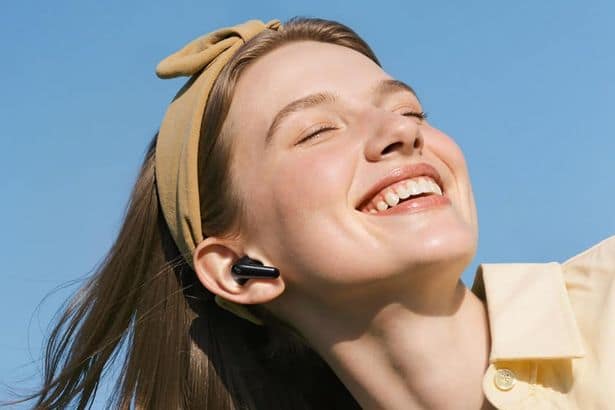
Shoppers have been ‘blown away’ by these budget earbuds that are currently on a 30 per cent discount.
Trends
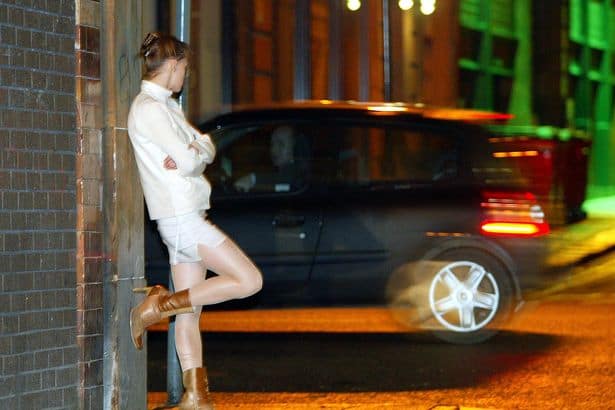
The Daily Record’s Crime Reporter Norman Silvester looks at the fatal violence sex workers have suffered at the hands of their customers and the problems bringing the killers to justice.
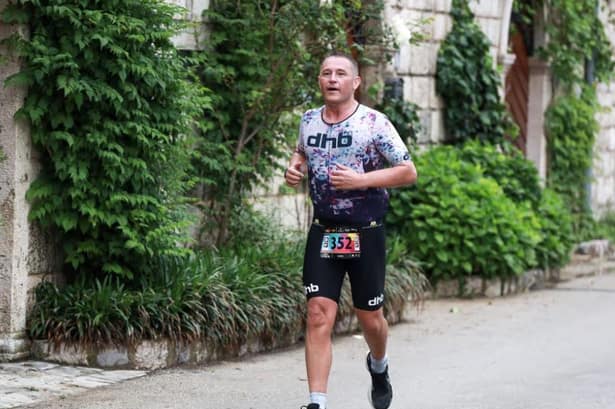
Derek McEwan, from East Kilbride, will take on the epic challenge in April.
Derek McEwan, from East Kilbride, will take on the epic challenge in April.
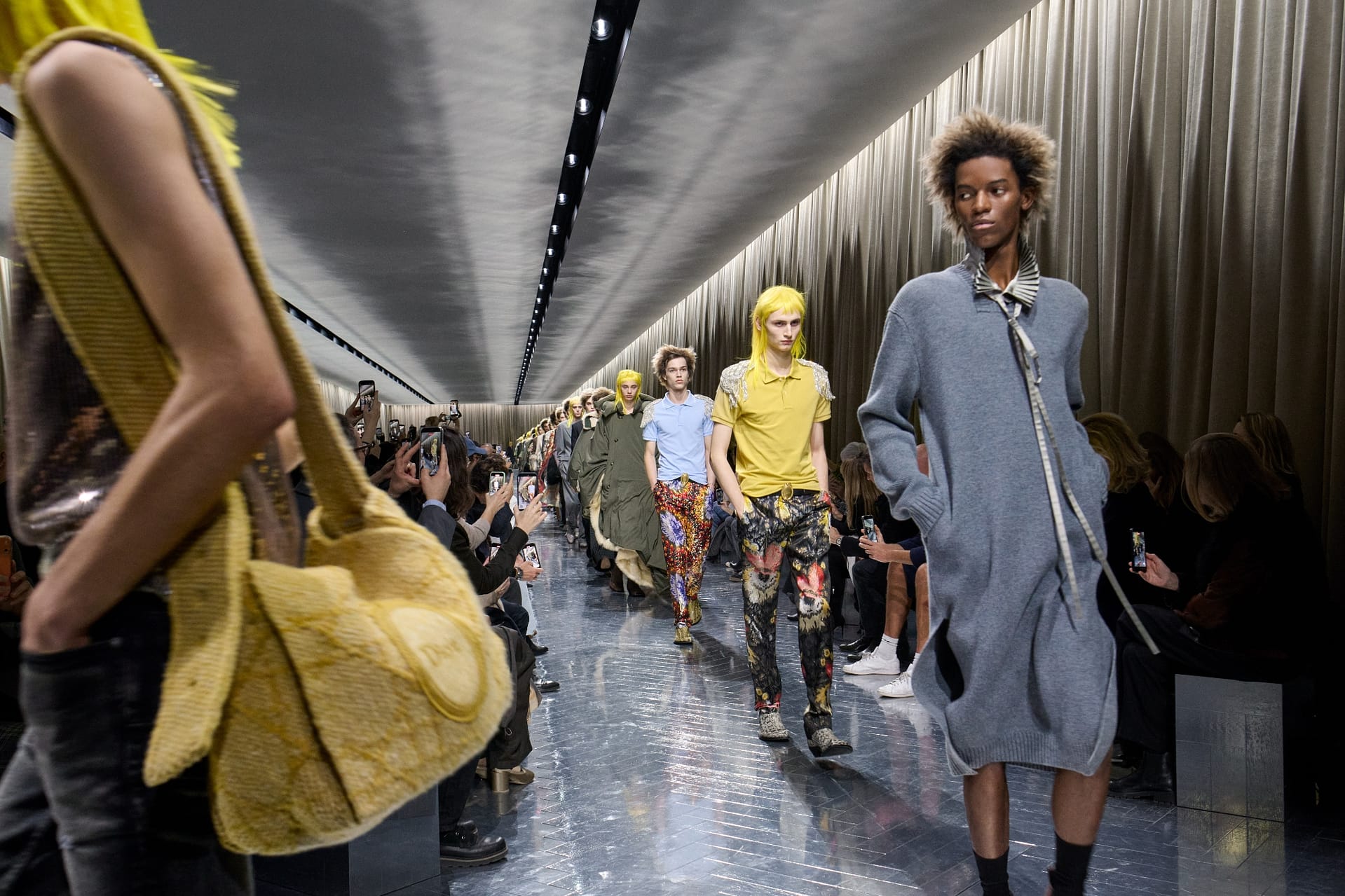
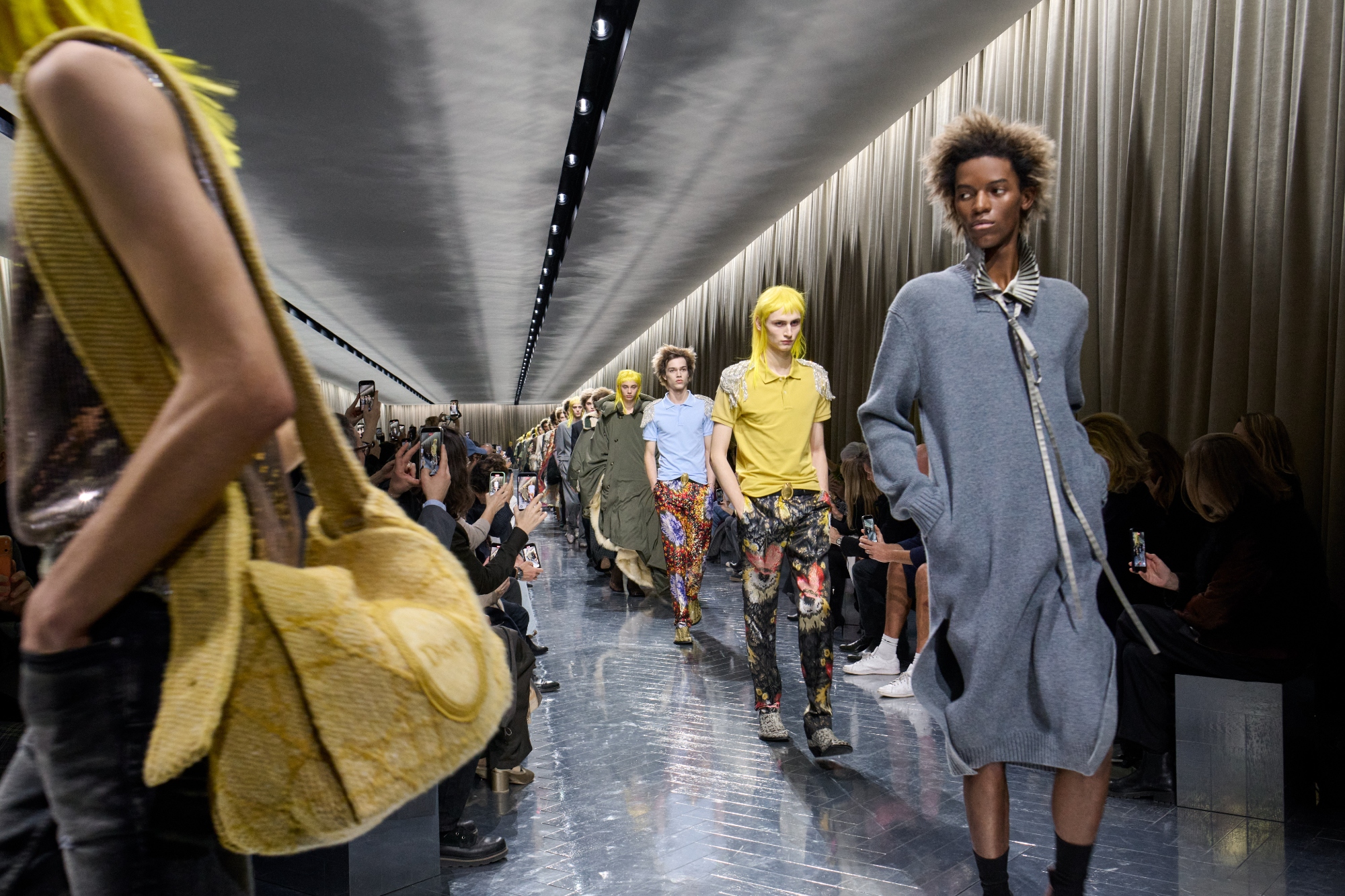
LUXUO explores what the recent concluded Men’s Autumn/Winter ’26 Fashion Week reveals about the current state of menswear. The pared-back Milan and Paris calendars this January were a reflection of a luxury sector under pressure. The absence of key players and the scaling back of major shows exposed a recalibration underway, as luxury brands rethink the role of menswear in an increasingly cautious market.
With fewer labels showing and several major names absent, Milan and Paris Men’s Autumn/Winter ’26 Fashion Weeks signalled a shift towards sartorial fundamentals and commercial reliability. Maisons placed an emphasis on what men will realistically wear, reach for in their closets and are more likely to invest in over time. This renewed focus was reinforced through artisanal leather and refined textures — positioning tactile quality as central to modern menswear’s value proposition.
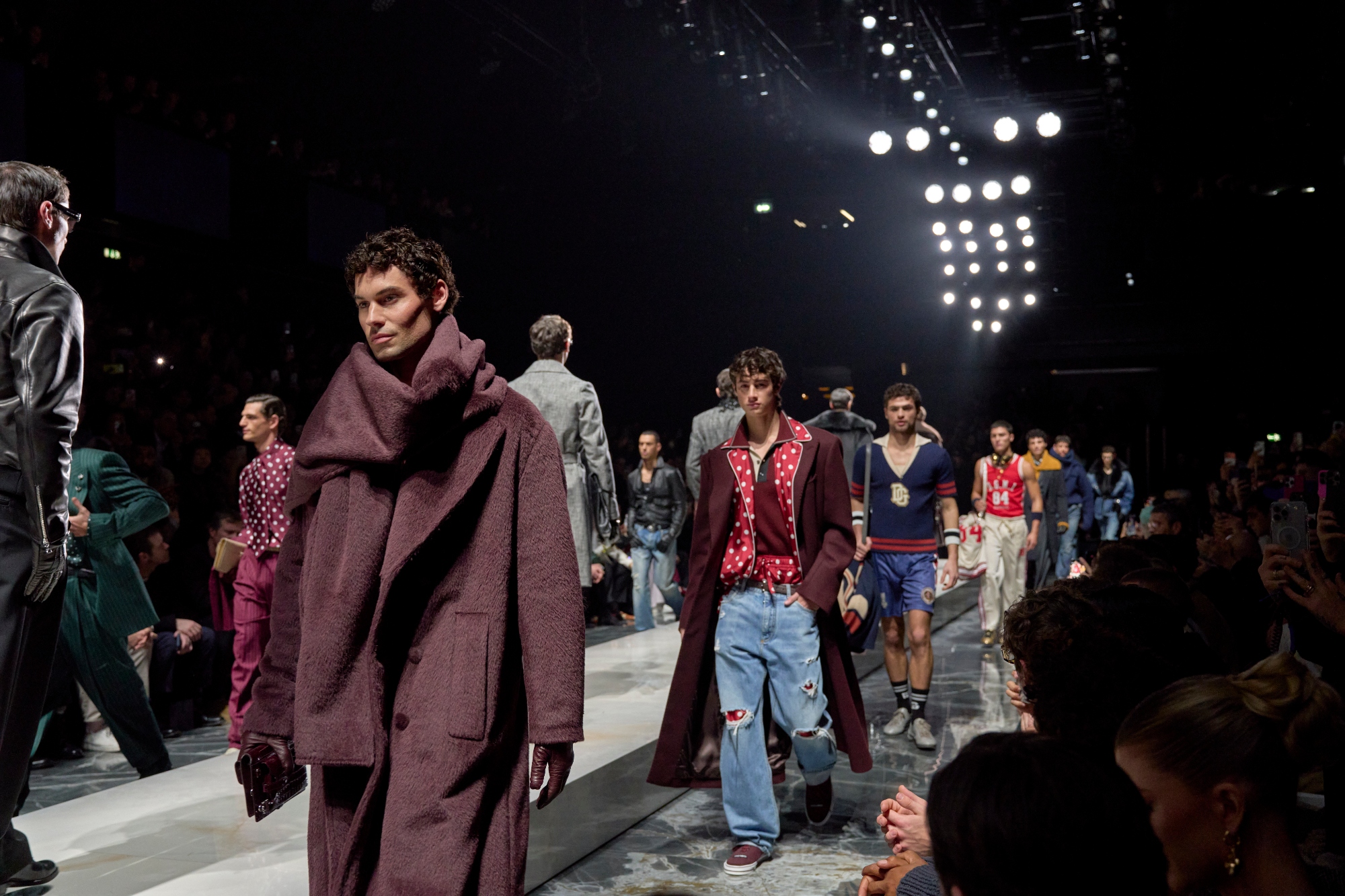
Tailoring re-emerged as a cornerstone of modern menswear, ties quietly returned as styling signifiers, bags took on practical prominence and familiar menswear codes were reworked into hybrid forms of what streetwear once represented. Experimentation remained, but it was grounded in recognisable silhouettes and refined materials. In a season where Gucci did not show, Emporio Armani collapsed its menswear presentation and Zegna’s cultural influence appeares to have waned (for now), Men’s Autumn/Winter ’26 underscored a broader shift in priorities. What emerged from Milan and Paris was a reflection on how men dress today and how luxury brands must respond — commercially and creatively — to sustain their profit margins.
The Return of Tailored Suiting
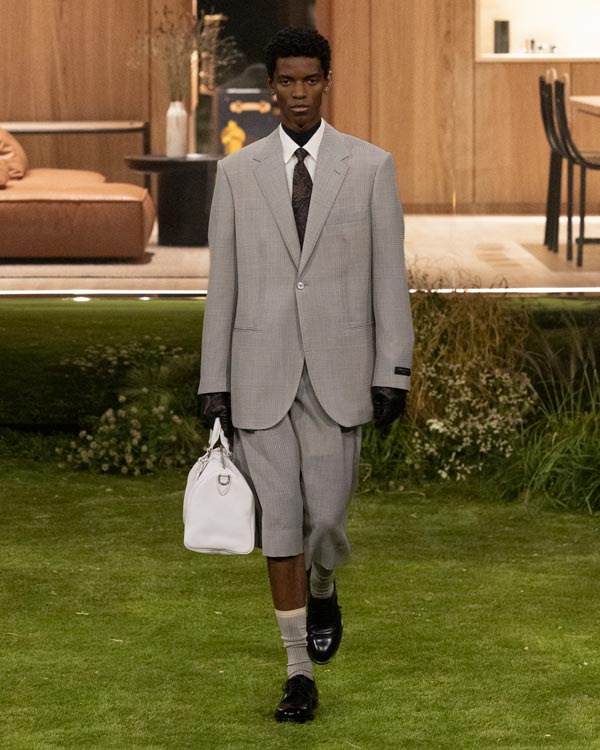
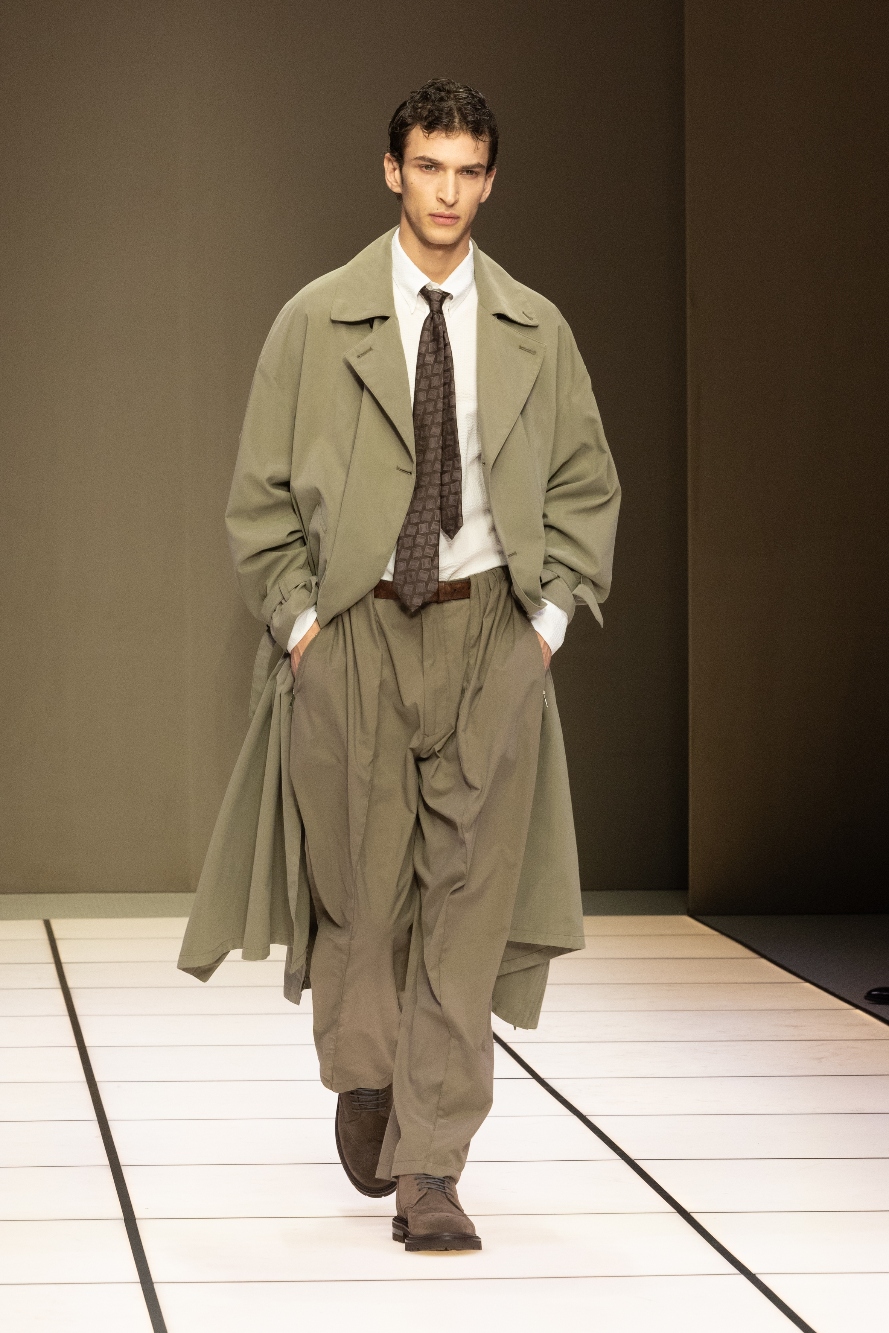
Louis Vuitton (left), Giorgio Armani (right)
Suits are the backbone of menswear and where previous seasons saw the rise of streetwear, this season saw the return of the suit but with a twist. After seasons dominated by relaxed silhouettes, sharp tailoring is resurfacing as a core menswear language. Autumn/Winter ’26 saw suiting reclaim the spotlight, but not in a purely conventional sense. Dolce & Gabbana, Louis Vuitton and Ralph Lauren reinforced tailored staples, yet designers injected modern tension through unexpected pairings and material experimentation. At Louis Vuitton, Pharrell Williams referenced classic houndstooth and checks, but with reflective yarns and bonded shirting that gave traditional tailoring a technical, almost sculptural quality. The suit was also accompanied by the unmistakable resurgence of the tie.
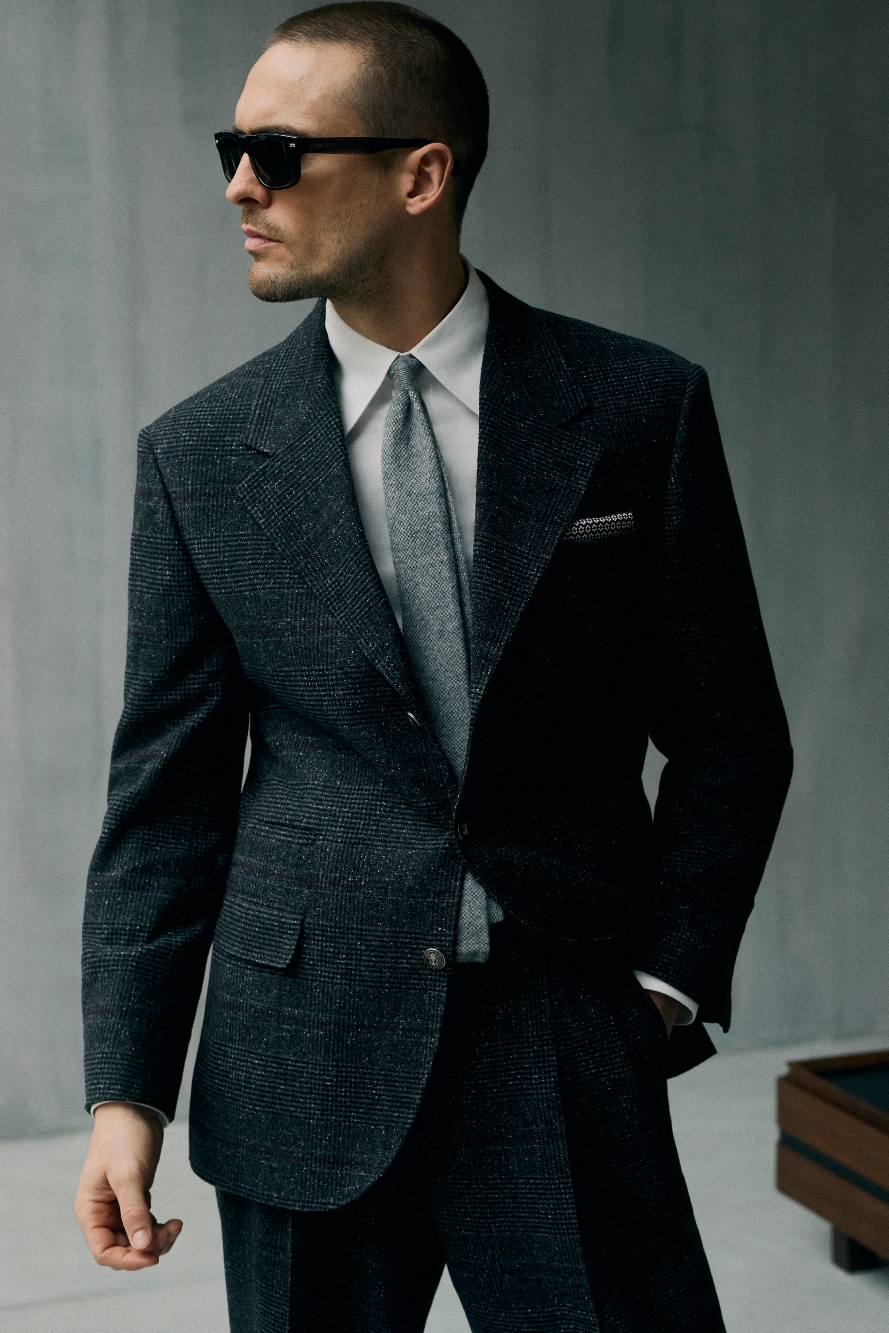
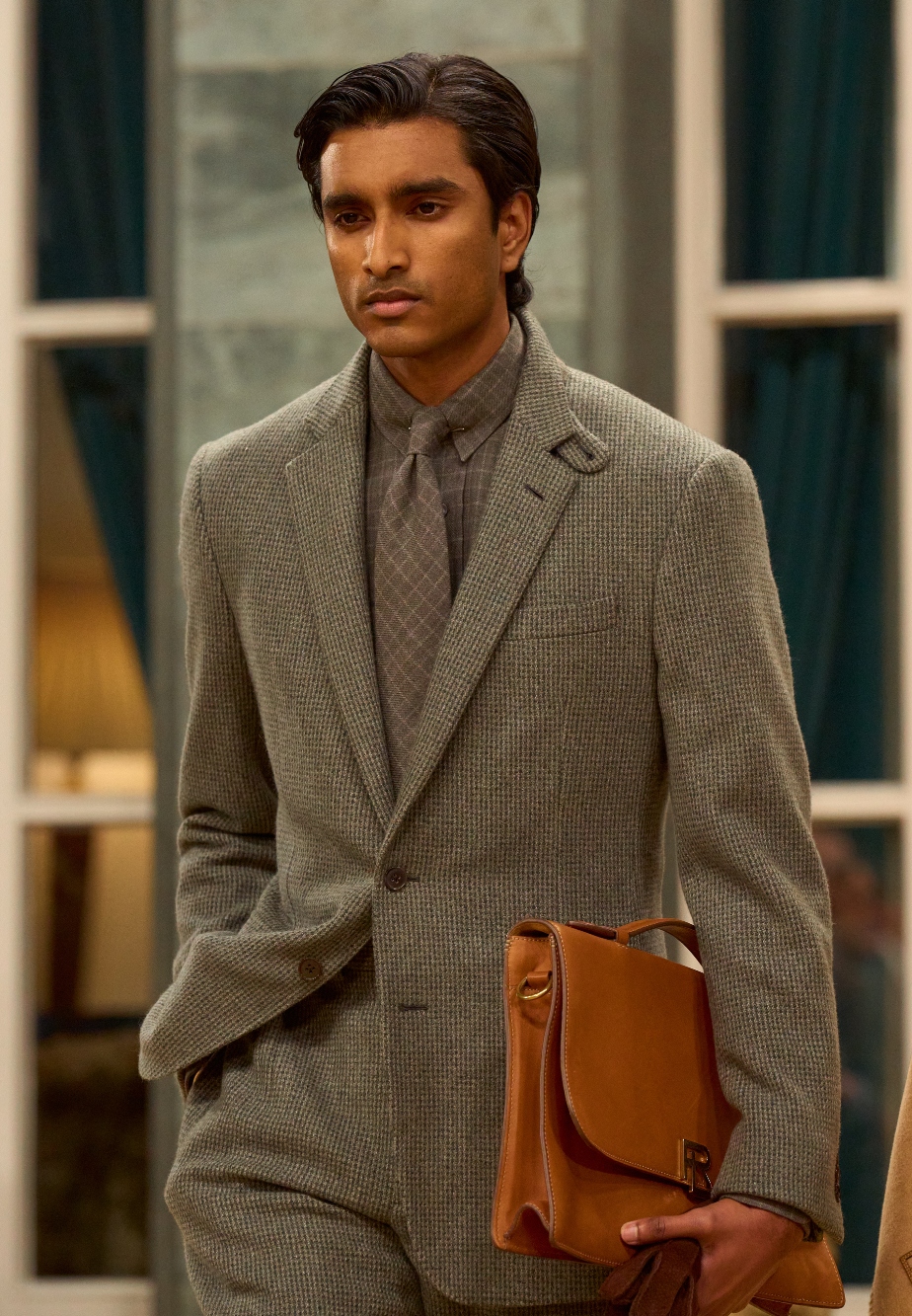
Brunello Cucinelli (left), Ralph Lauren (right)
Brunello Cucinelli echoed this recalibration through softened blazers with subtly structured shoulders, paired with garment-dyed trousers featuring cargo and utility pockets. The reintroduction of the tie as a key accent signalled a renewed confidence in classic menswear codes, albeit relaxed and modernised. At Ralph Lauren, tailoring anchored both the brand’s Purple Label and Polo presentations. From cashmere sport coats to relaxed suiting silhouettes, tailoring was presented as lifestyle dressing rather than occasion wear, reinforcing its role as a long-term wardrobe staple. Meanwhile, Dior reframed tailoring through hybridisation. Cropped Bar jackets, elongated blazers and tailcoats were paired with denim, parkas and long johns, demonstrating how formal structure can coexist with experimentation.
The Rise of Purpose‑Driven Bags
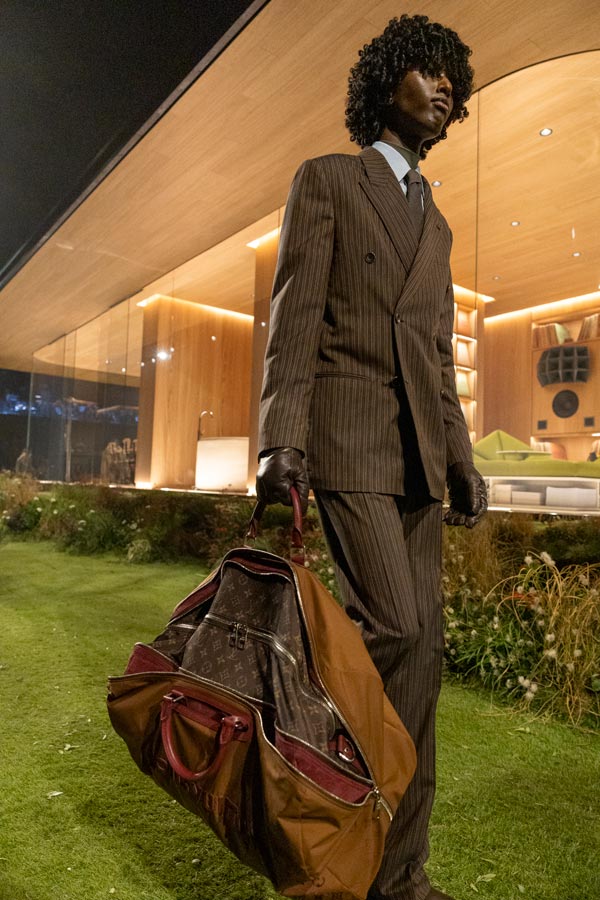
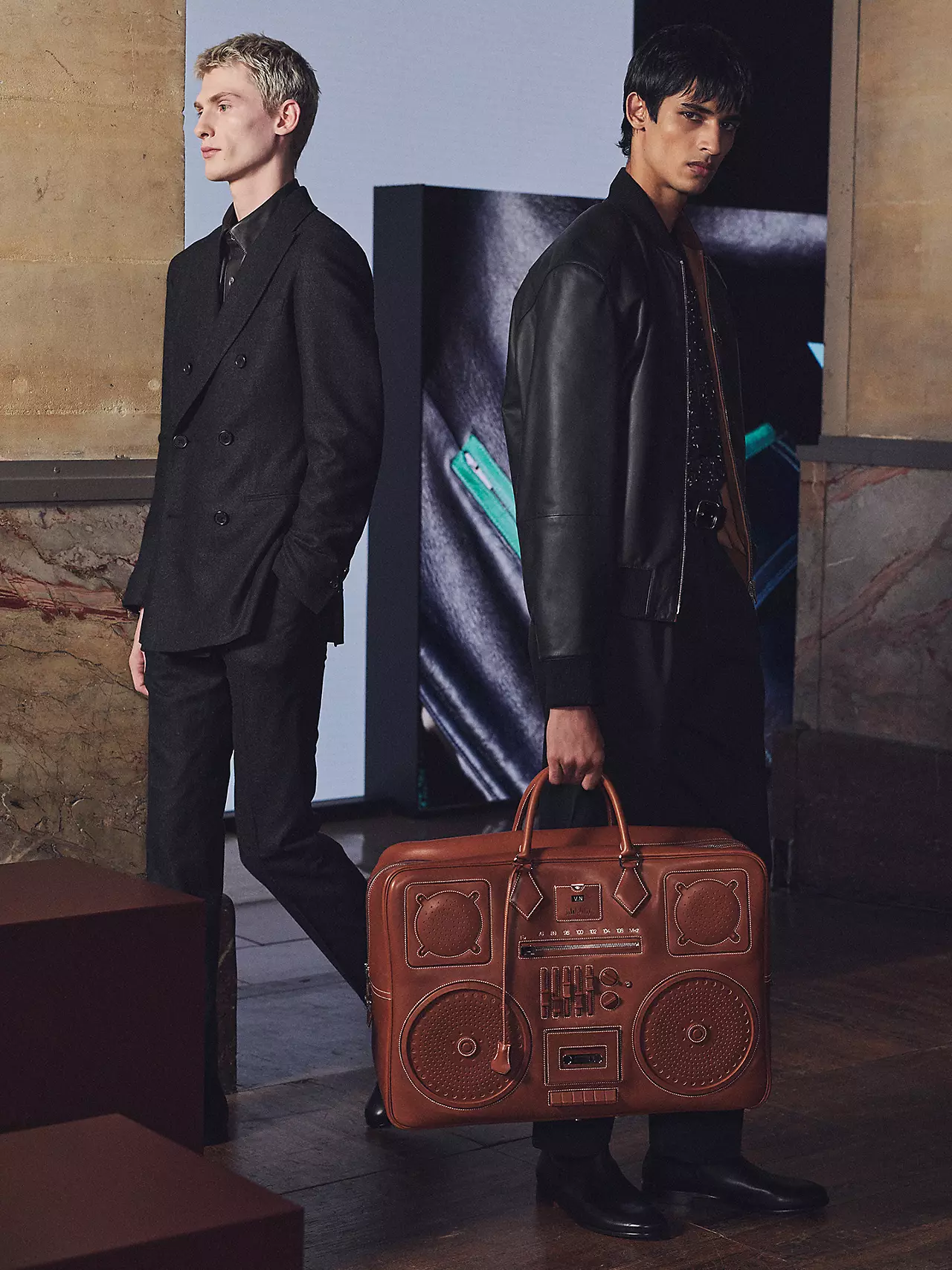
Louis Vuitton (left), Hermes (right)
Accessories took on purposeful weight across Paris and Milan. Men’s bags this season are built to be used. There was a pragmatic shift toward functional silhouettes — crossbodies, utility pouches and structured totes — that underscore its utilitarian nature and everyday use. From Hermès’ reimagined Plume bags — including lightweight canvas versions with leather trims — to Dior’s slouchy knit messenger bags featuring Cannage stitching, Autumn/Winter ’26 emphasised just how menswear bags are built to be used. Louis Vuitton introduced silk-nylon hybrids and technical backpacks that balance durability with luxury, while still nodding to brand heritage with the Christopher backpack and the Shoulder Alma. Across shows, this utilitarian energy signals that accessories are an essential, commercially operational element of menswear.
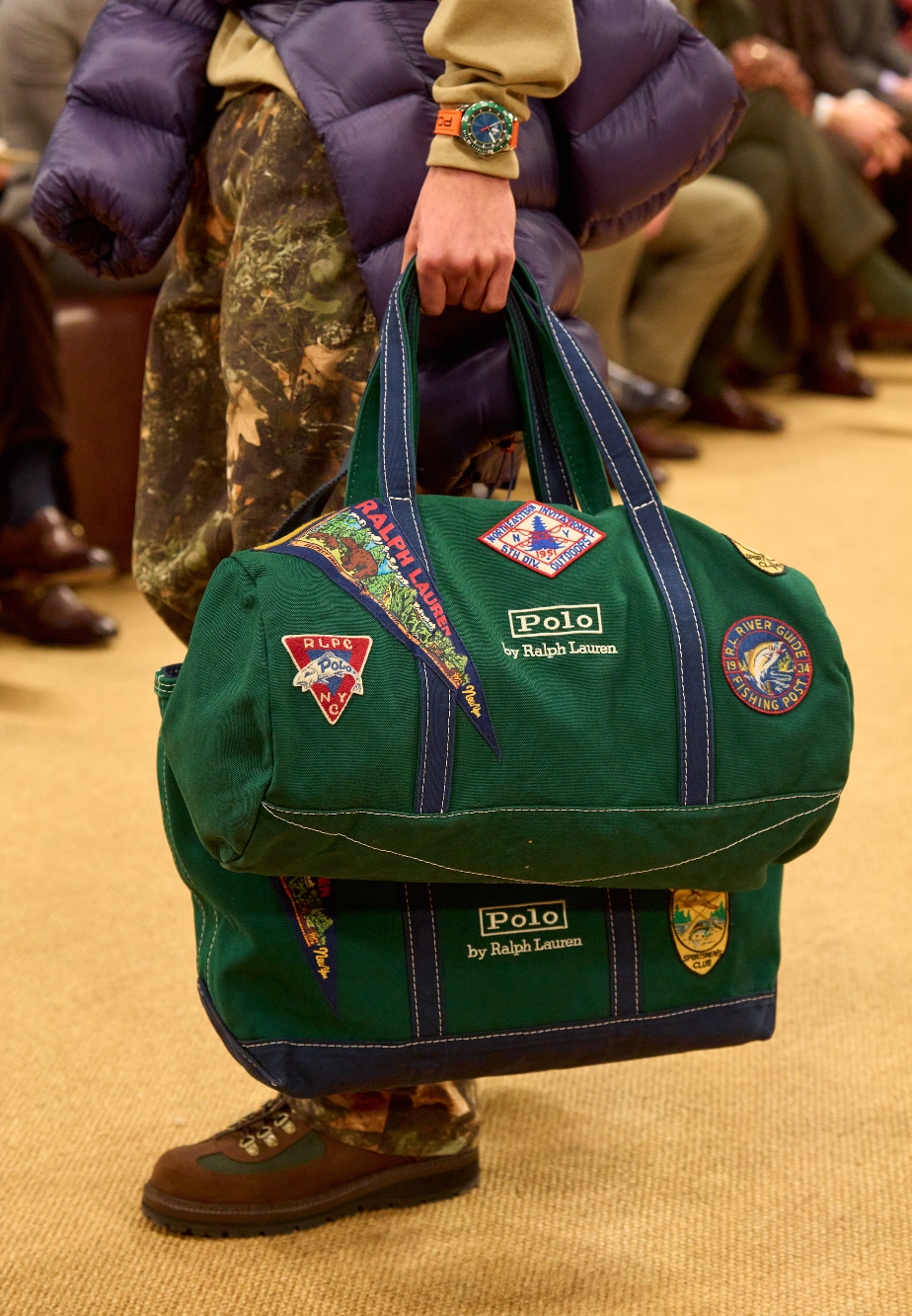
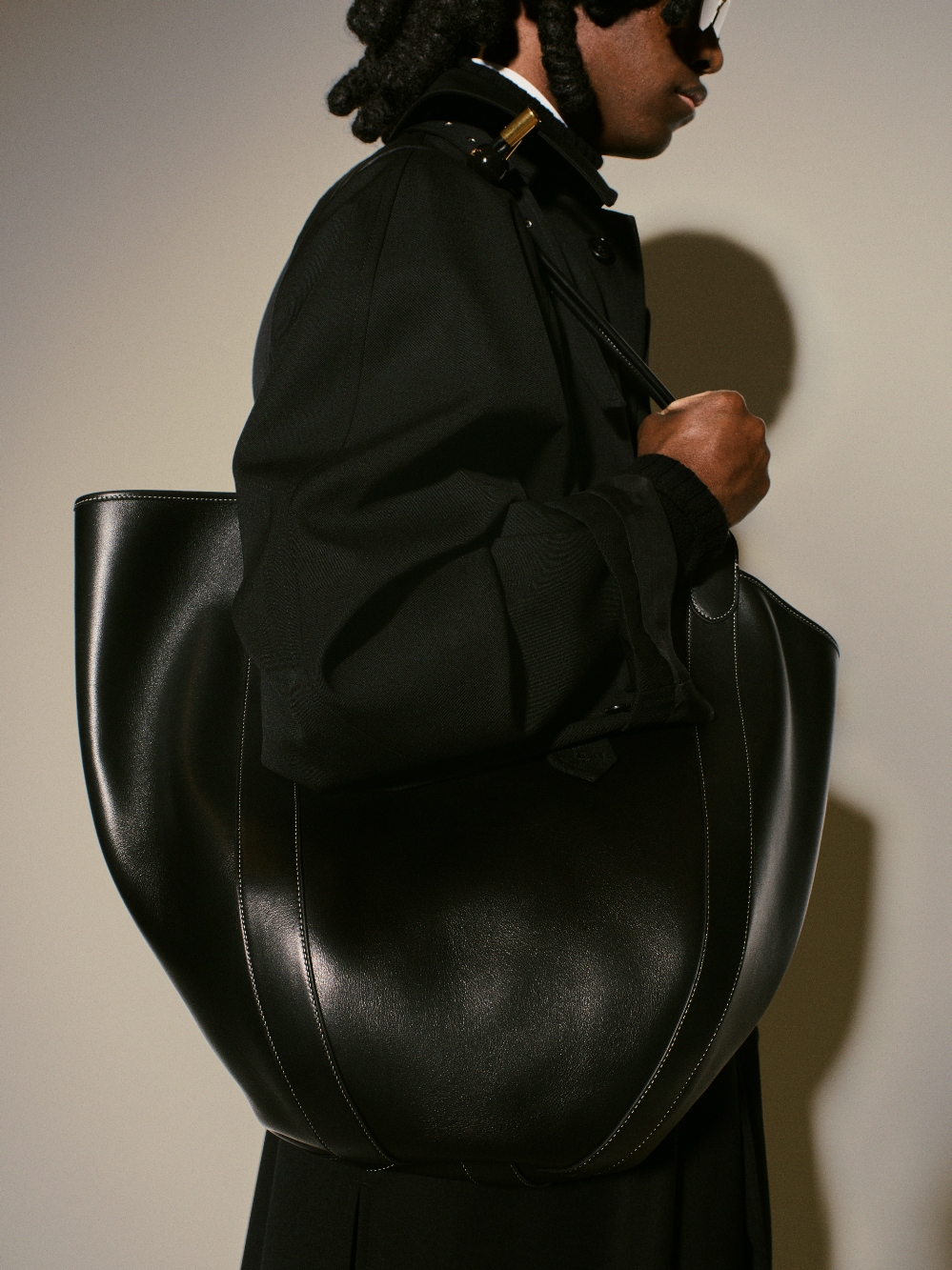
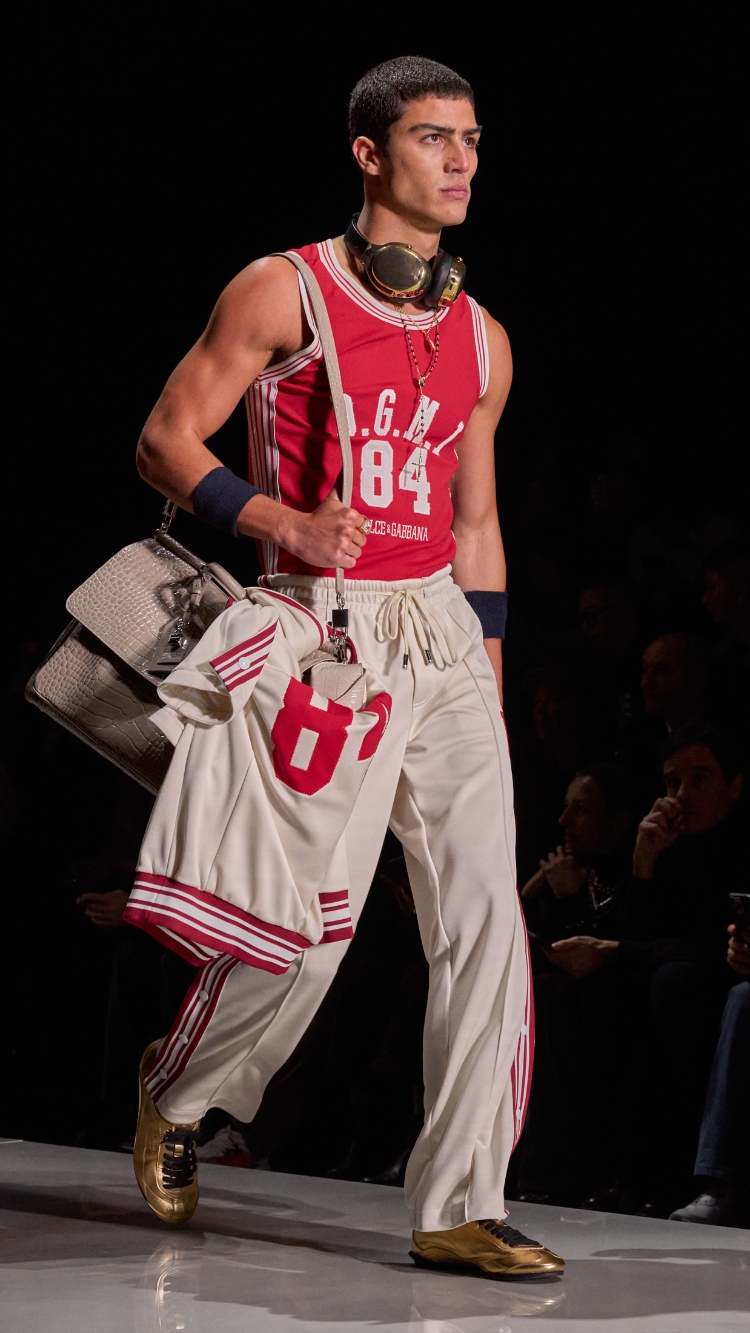
Ralph Lauren (left), CELINE (centre), Dolce & Gabbana (right)
While Ralph Lauren anchored looks with Heritage Collection bags and Alpine boots, reinforcing the idea of accessories as lifestyle tools, Emporio Armani’s generous totes and crossbody bags reflected the prioritising of ease and movement. As menswear shows are further streamlined, accessories now carry a significant commercial weight making bags one of the most reliable revenue drivers on the runway.
Experimentation with Familiarity
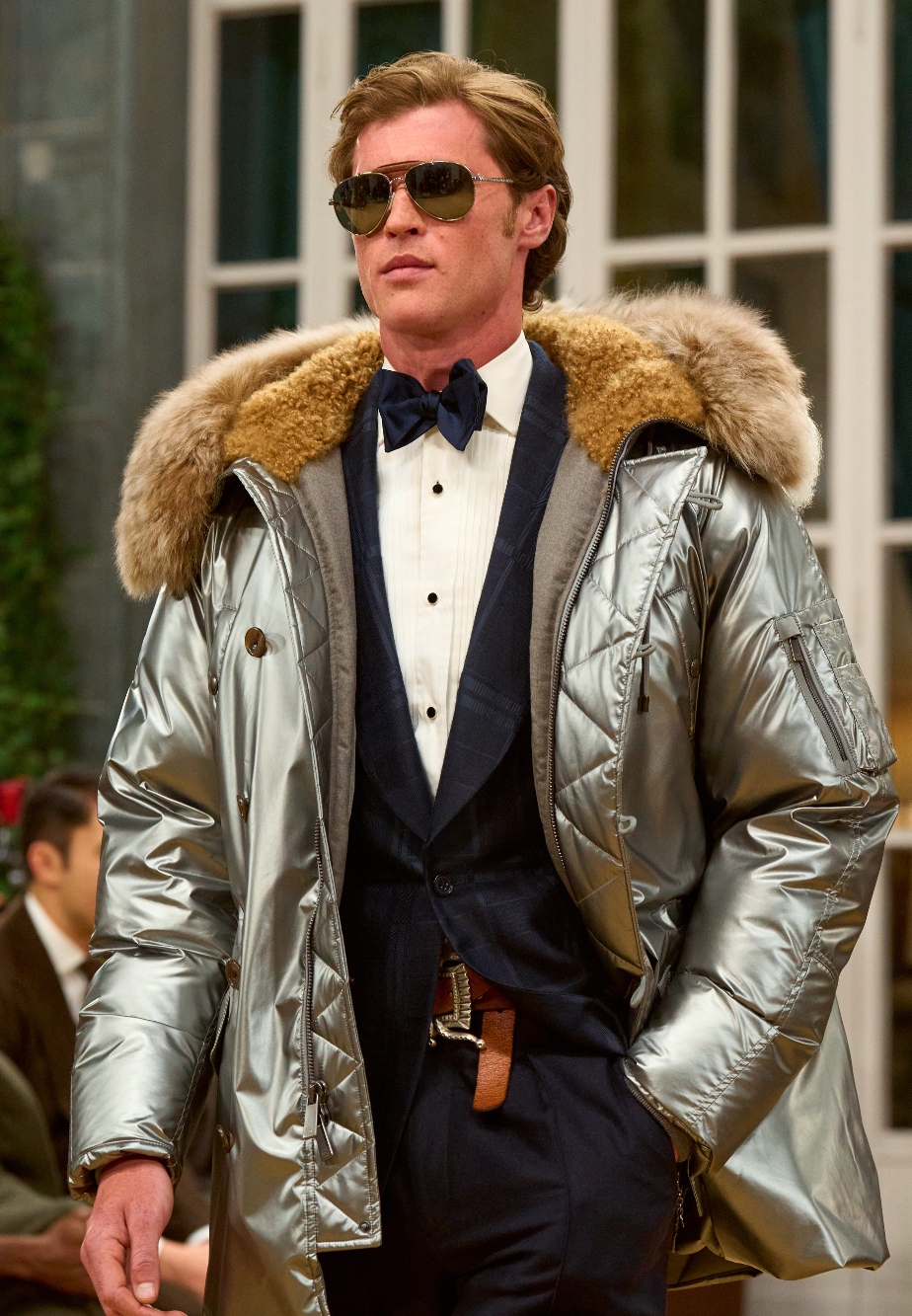
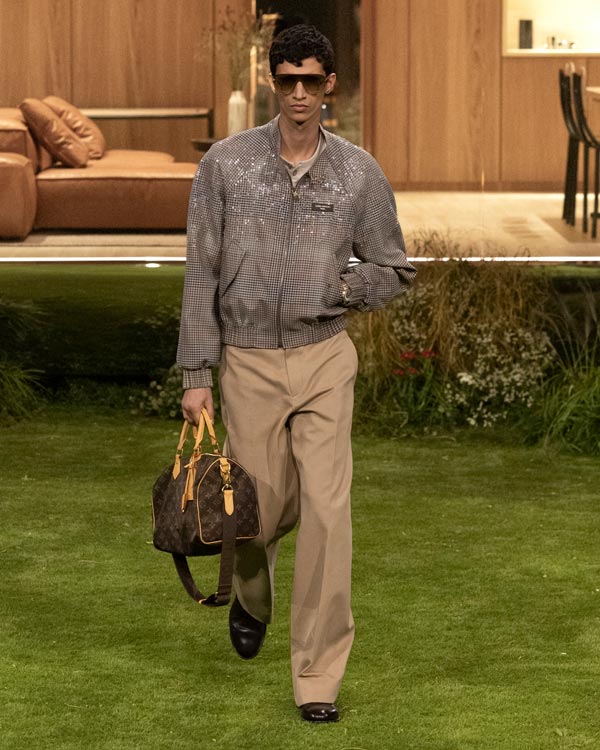
Ralph Lauren (left), Louis Vuitton (right)
Across Paris and Milan, experimentation was grounded in familiarity. Outerwear was simultaneously wearable and experimental. At Dior, contradictions drove creativity. Technical bombers flowed into brocade capes, while military references collided with couture detailing. Bar jackets were reimagined in denim and technical fabrics, with cropped and elongated silhouettes offering versatile sartorial codes between formal and casual. Louis Vuitton highlighted performance-infused tailoring and workwear references, combining classic “gentlemanly” coats with technical fabrics and reflective fabrics. Even Hermès leaned into elongated silhouettes and geometric leather patchwork.
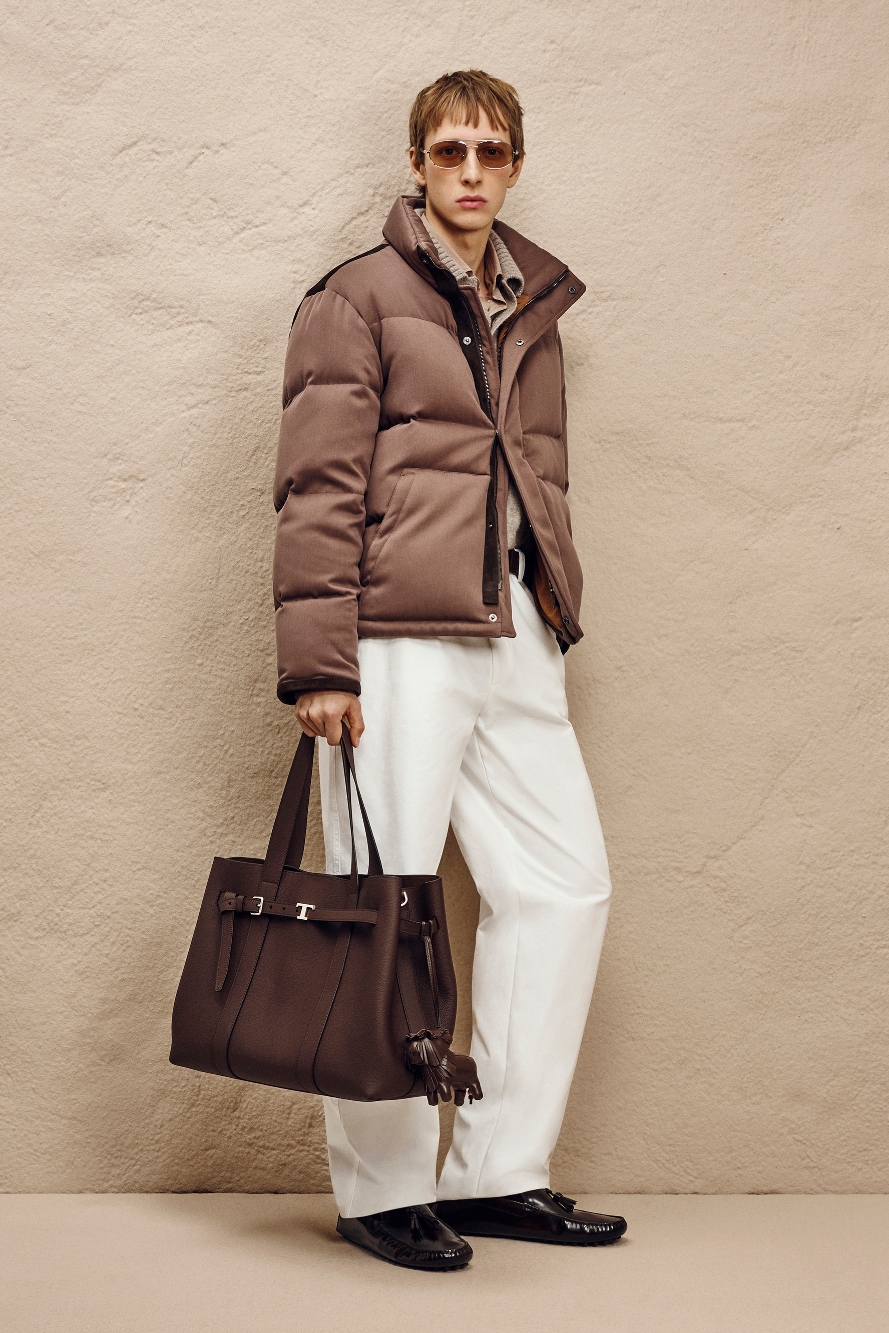
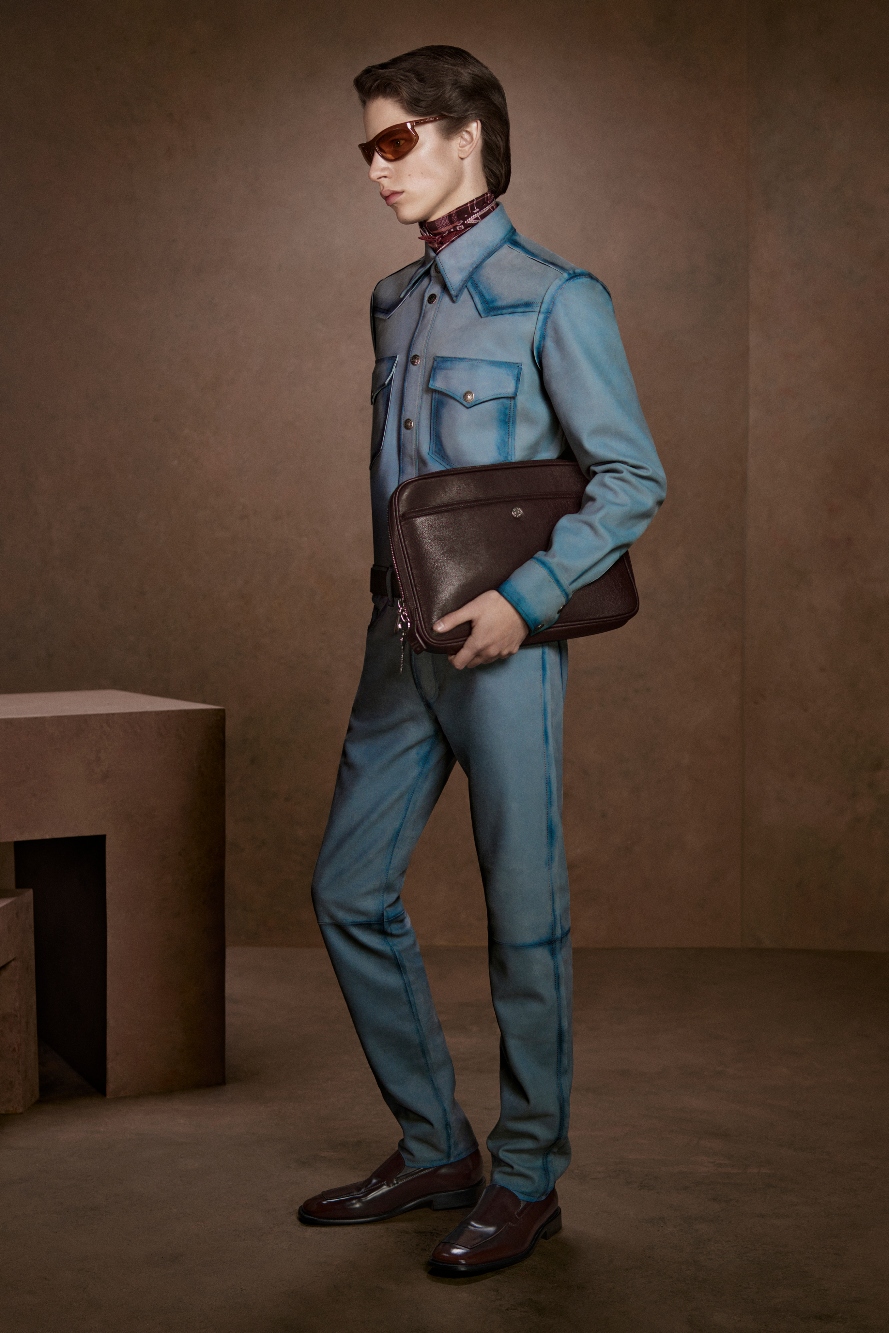
Tod’s (left), Acne (right)
This shift reflects men’s fashion reacting to practical needs by prioritising movement and catering to the elements without forsaking style — a response to cultural demand for functional, wearable luxury. Acne Studios explored the evolution of menswear codes through lived-in denim, elegant tailoring and heritage silhouettes such as the revived 1996 straight-leg jean. Trompe-l’œil treatments and visible repair played with illusion, but the foundation remained deeply recognisable.
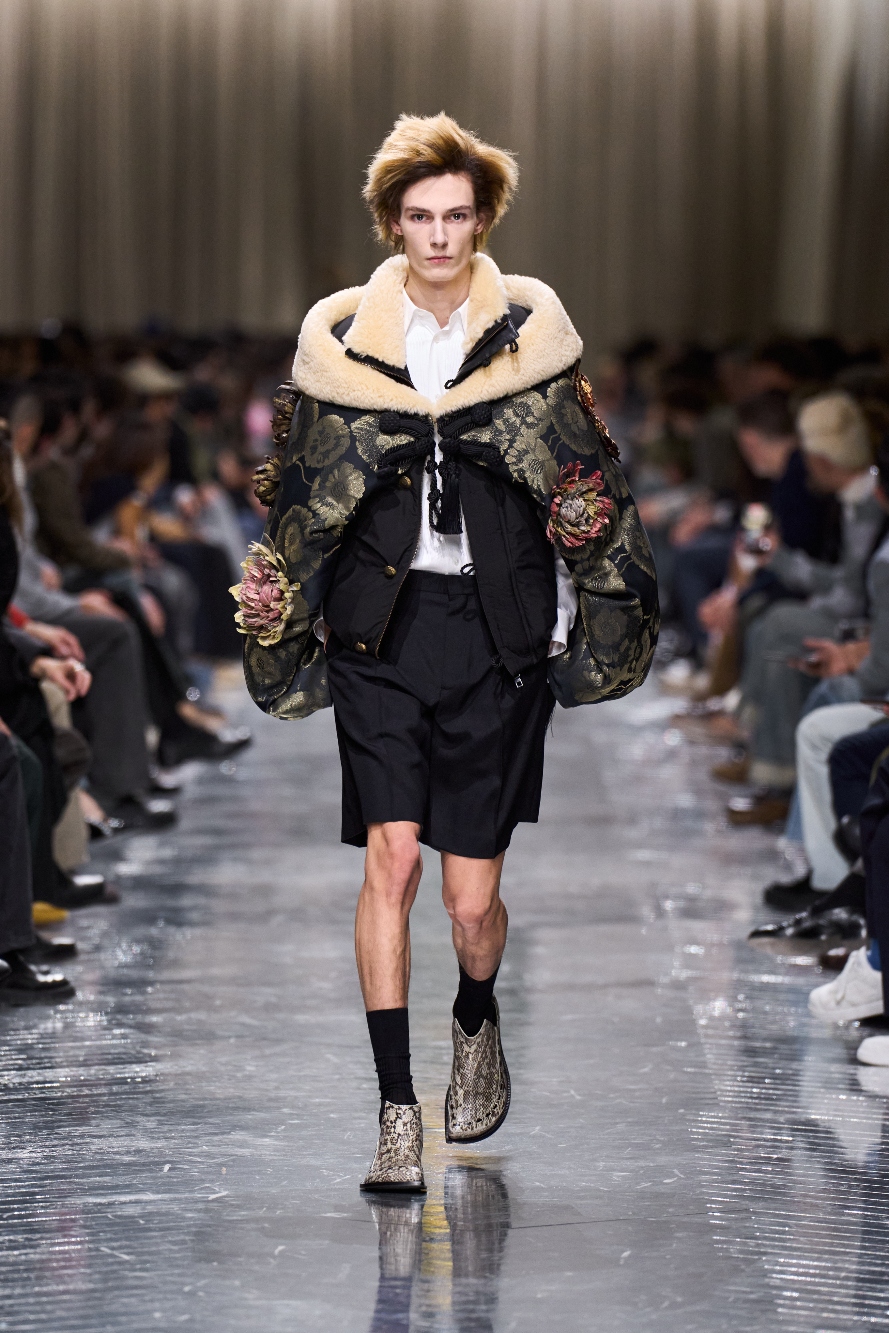
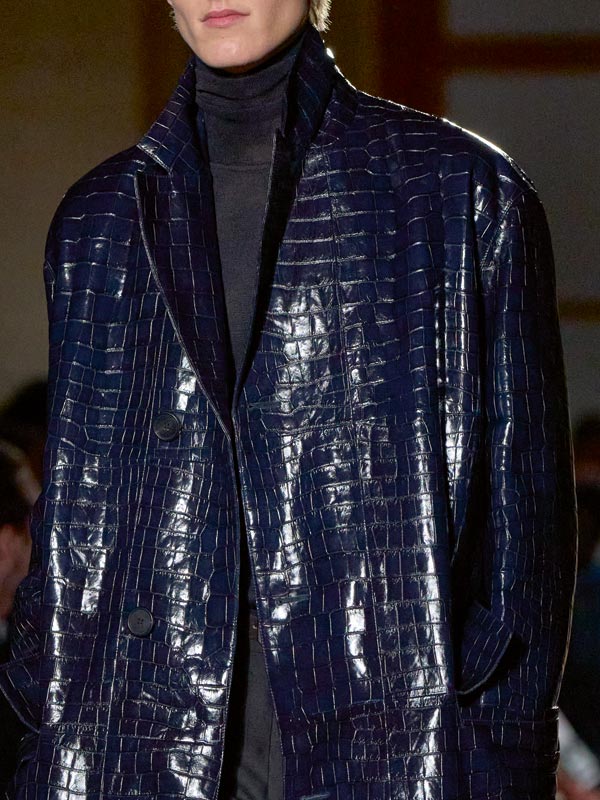
Dior (left), Hermes (right)
At Dior, contradictions drove creativity. Technical bombers flowed into brocade capes, while military references collided with couture detailing. Cropped Bar jackets, elongated blazers and tailcoats were paired with denim, parkas and long johns — demonstrating how formal structure can coexist with experimentation. Hermès — under Véronique Nichanian — offered perhaps the clearest example of evolution without rupture. Elongated silhouettes, leather shirting and cropped jackets maintained balance and restraint. Archival references were folded seamlessly into new looks, reinforcing the idea that timelessness itself is innovation, as elongated silhouettes, leather shirting and cropped jackets anchored the collection.
Subtle Luxury
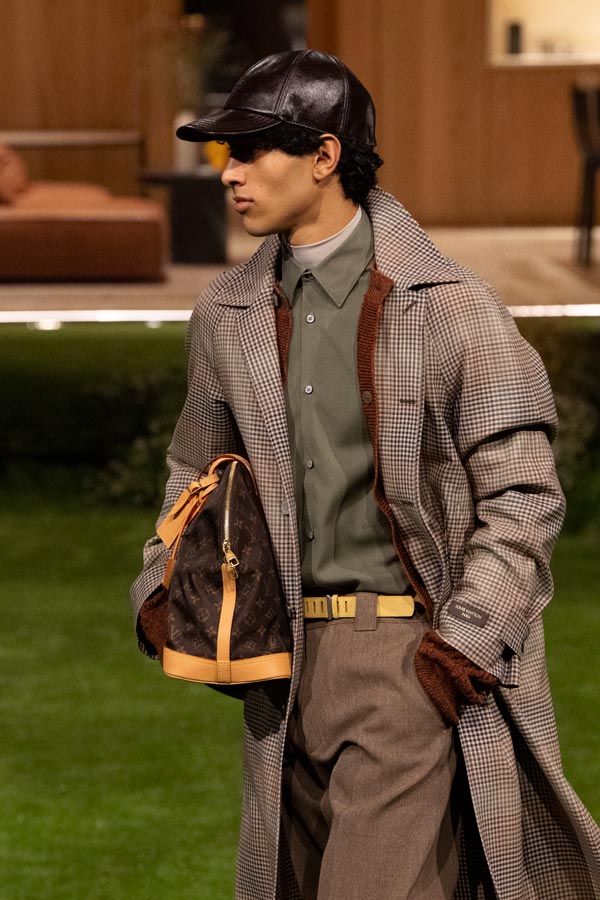
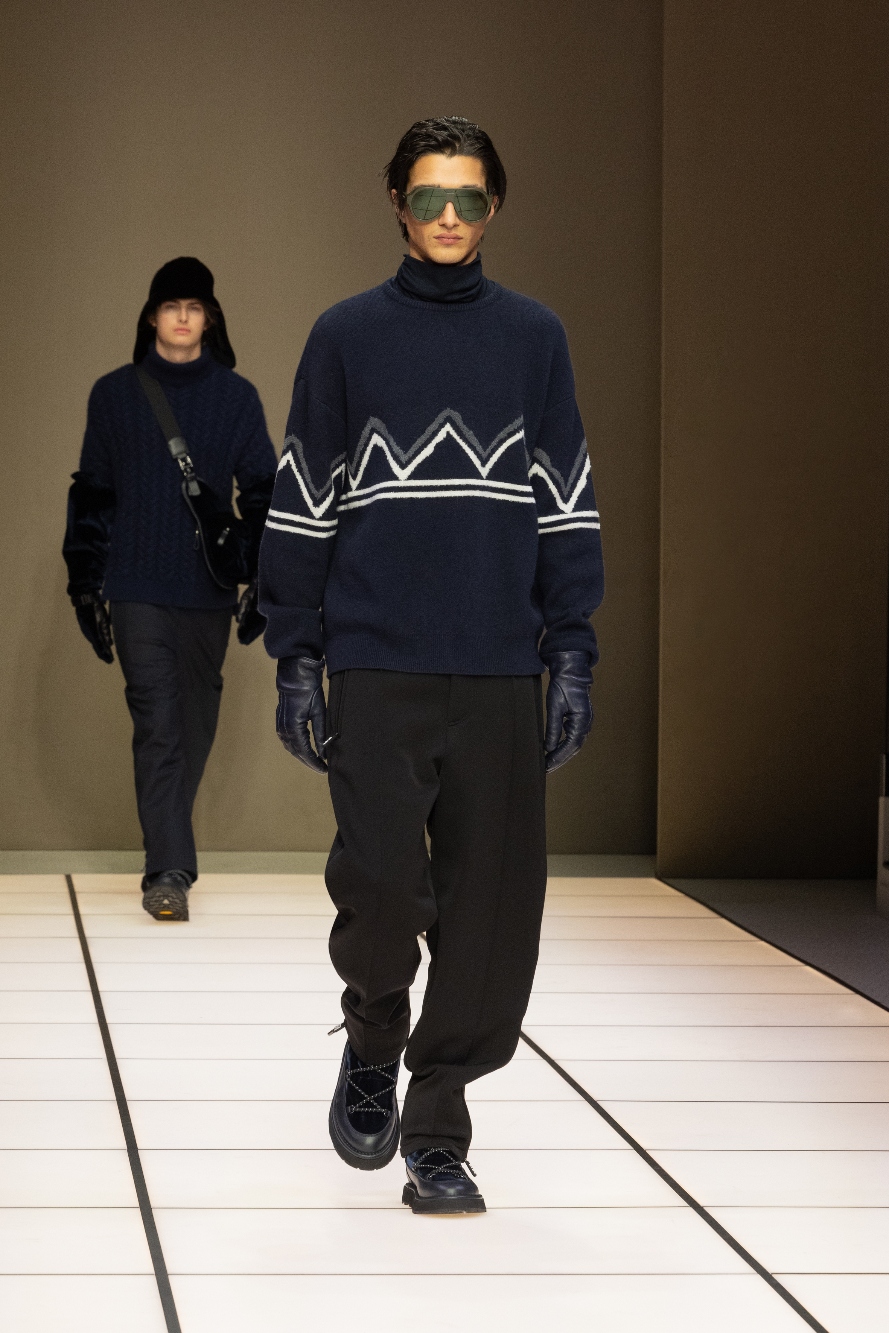
Louis Vuitton (left), Giorgio Armani (right)
Men’s Autumn/Winter ’26 saw the commercialisation of wardrobe staples with luxury detailings. The inclusion of intricate knitwear, elevated sweaters in cashmere, leather jackets and tailored coats were positioned as long-term investments rather than seasonal pieces. Tod’s exemplified this through its focus on leather — particularly the Pashmy project — where classic jackets were elevated through exceptional materials rather than trend-led design. The Winter Gommino also became a symbol of understated longevity. At Brunello Cucinelli, knitwear took centre stage. Cashmere, tweeds and Donegal fabrics were reworked into cosy cardigans and textured knits that could define an entire look. Celine — under Michael Rider — framed menswear as “everything you could need”. Classics with bite, clothes that feel necessary and personal, and fabrics that last reinforced the idea of menswear as a dependable wardrobe system.
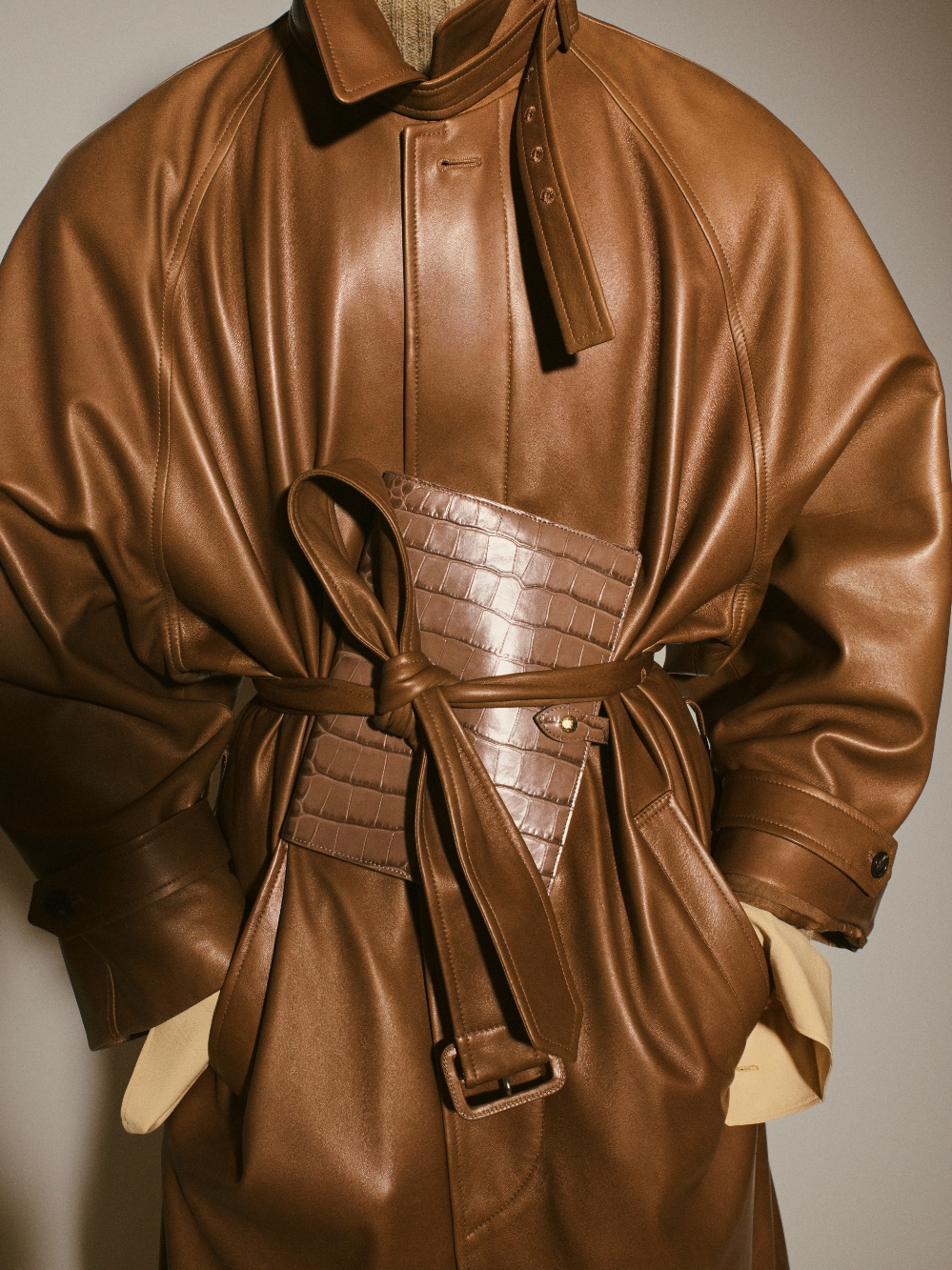
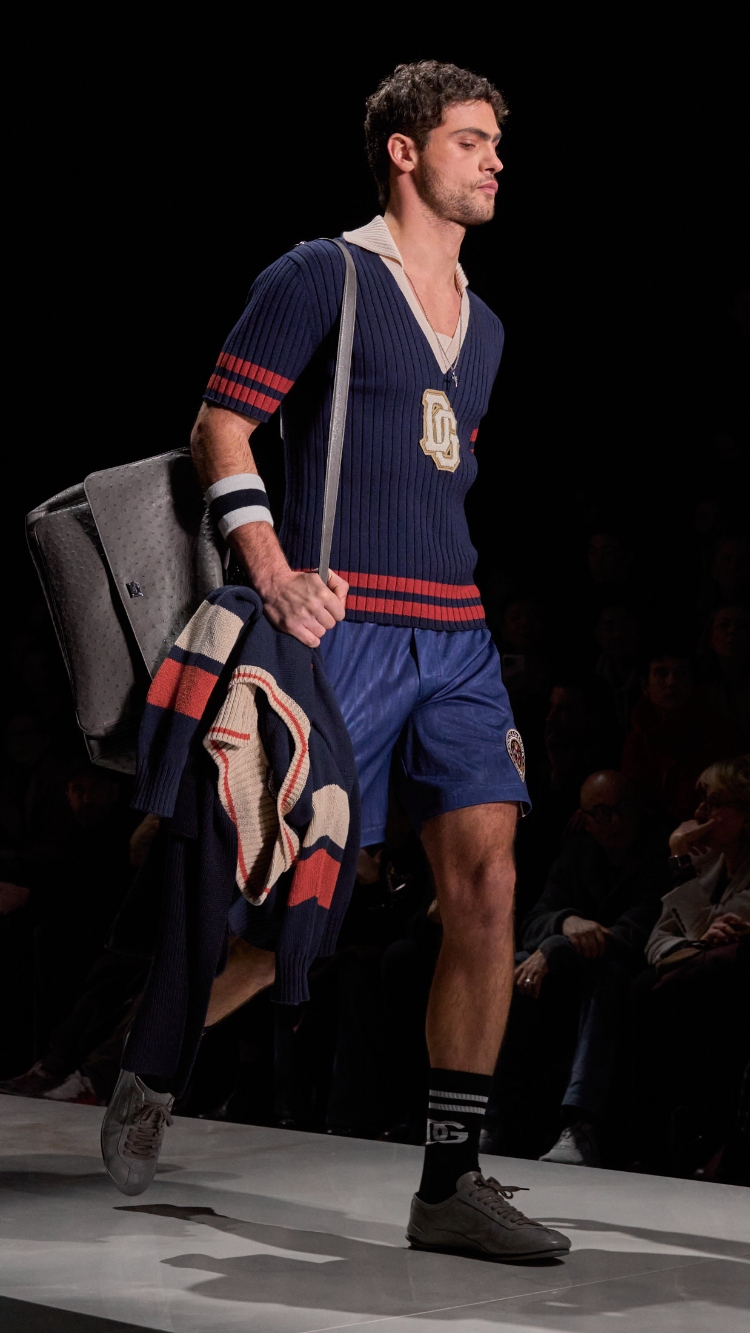
Celine (left), Dior (right)
Dior’s knit tops paired with sequinned vests, Bar jackets over denim jorts and D-shaped boots borrowed from womenswear highlighted fluid, high-low styling. Hermès maintained elongated, balanced proportions while incorporating sensual materiality, including leather shirting, cropped jackets and archival nods that could appeal across traditional gender boundaries. Acne Studios echoed this through cashmere layering, argyle knits and refined outerwear archetypes such as Harrington and suede flight jackets.
For more on the latest in luxury fashion and style reads, click here.
The post Commercialising the Familiar: Key Takeaways from Men’s Autumn/Winter ’26 Fashion Week appeared first on LUXUO.
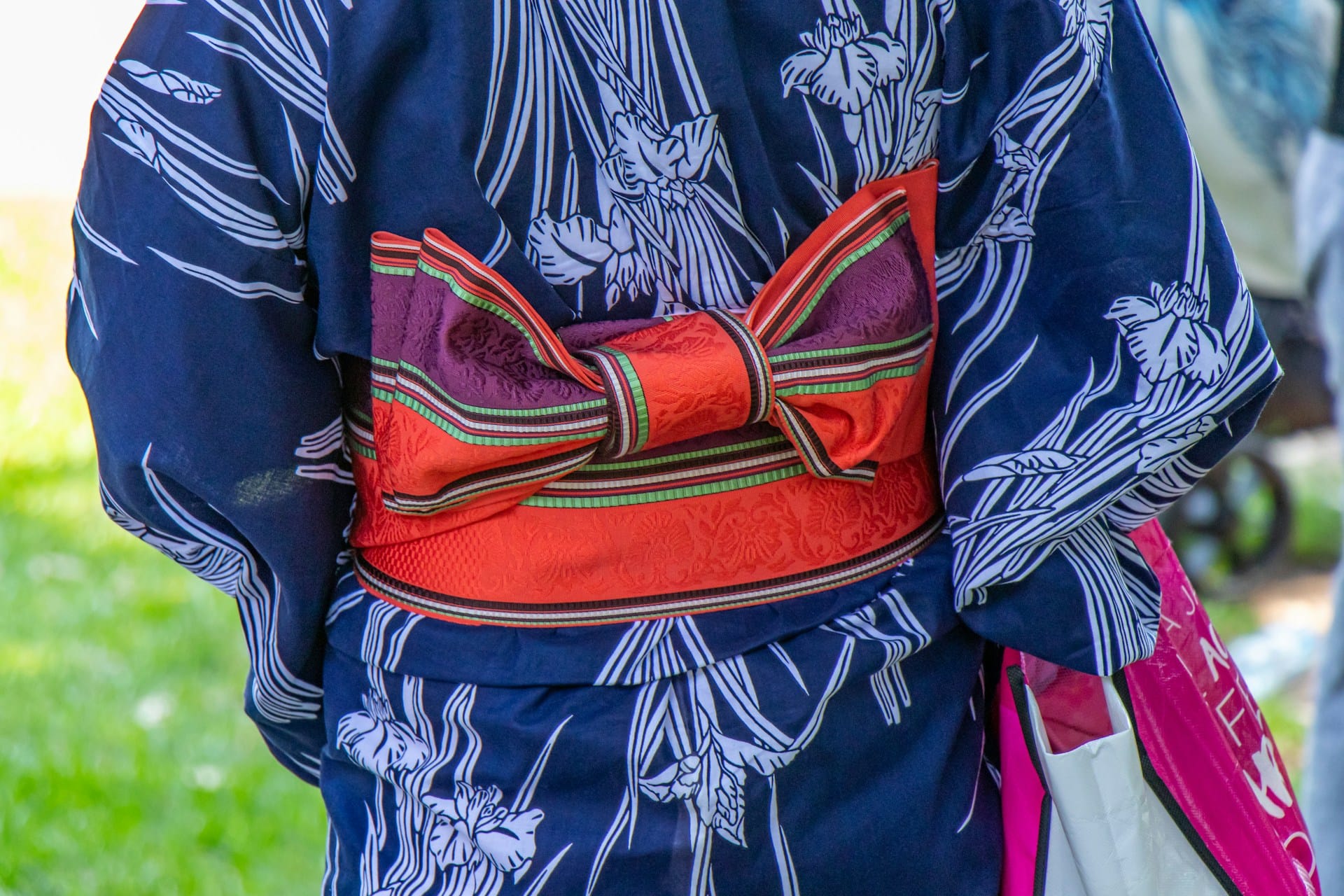
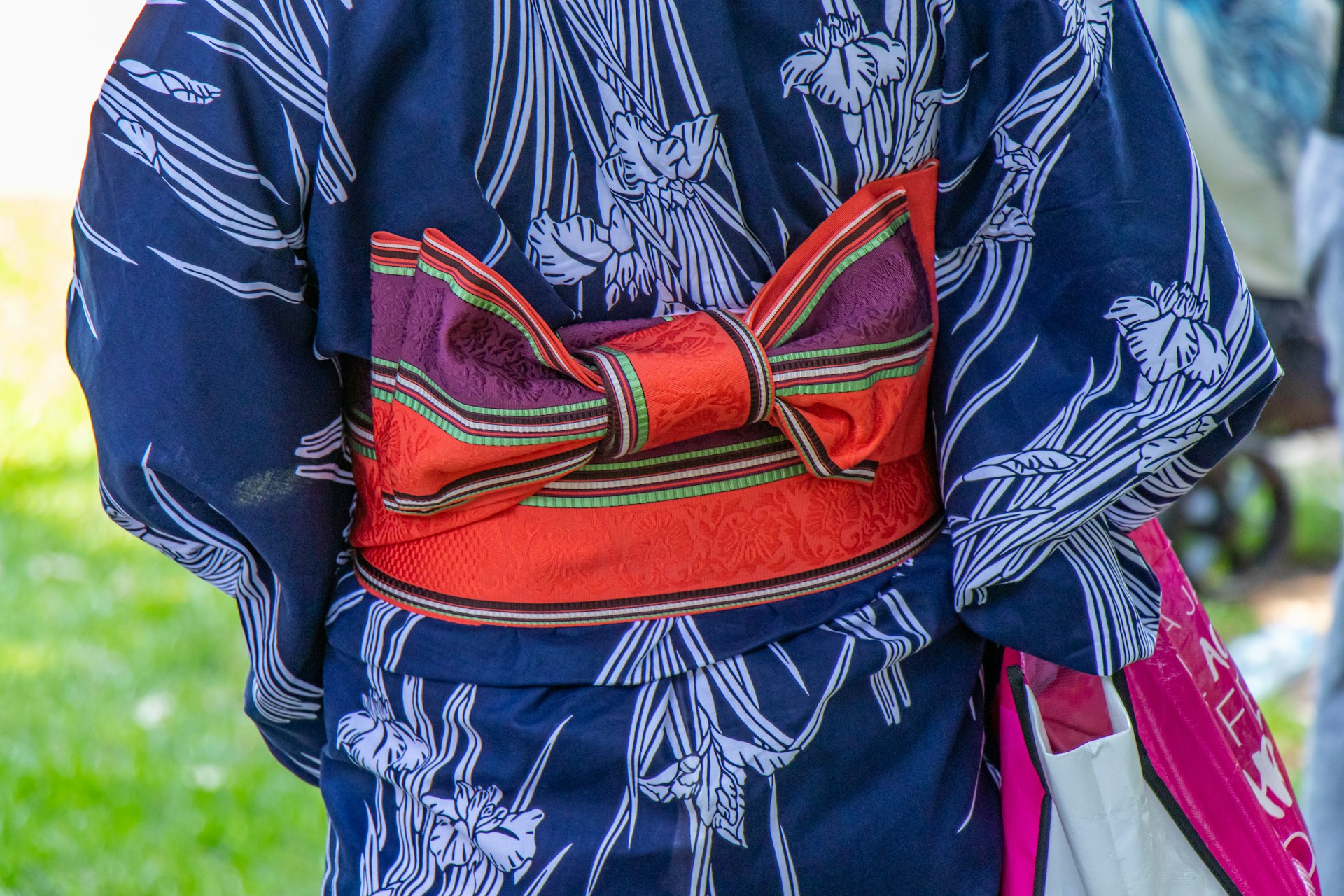
Kimono jackets have quietly become one of those wardrobe pieces people don’t realize they need until they own one. They’re effortless, expressive, and surprisingly versatile, which is exactly why so many women turn to them when they want to look styled without feeling overdone. Statement styling doesn’t always mean bold or complicated; sometimes, it simply means choosing the right layer.
You’ll often see shoppers searching for curated finds like Johnny Was kimonos on sale, not necessarily because of brand loyalty, but because they value quality, comfort, and unique design in a single piece. The kimono jacket delivers on all three, making it a favorite for women who want style that feels personal and wearable.
Below are practical, real-world styling tips to help you make the most of a kimono jacket, no fashion stress required.
Start with a Simple Base Outfit
One of the simplest ways to make a kimono jacket truly pop is to let it speak for itself. This can be achieved by pairing it with a clean canvas, such as a white t-shirt, black tank top, or basic dress. This is a strategy that consumers have been drawn to again and again because it takes the guesswork out of creating a balanced look.
This styling technique is particularly effective for women who like to wear effortless clothing but also want to make a statement. The kimono is the center of attention without detracting from the overall look.
Use a Kimono to Instantly Elevate Casual Wear
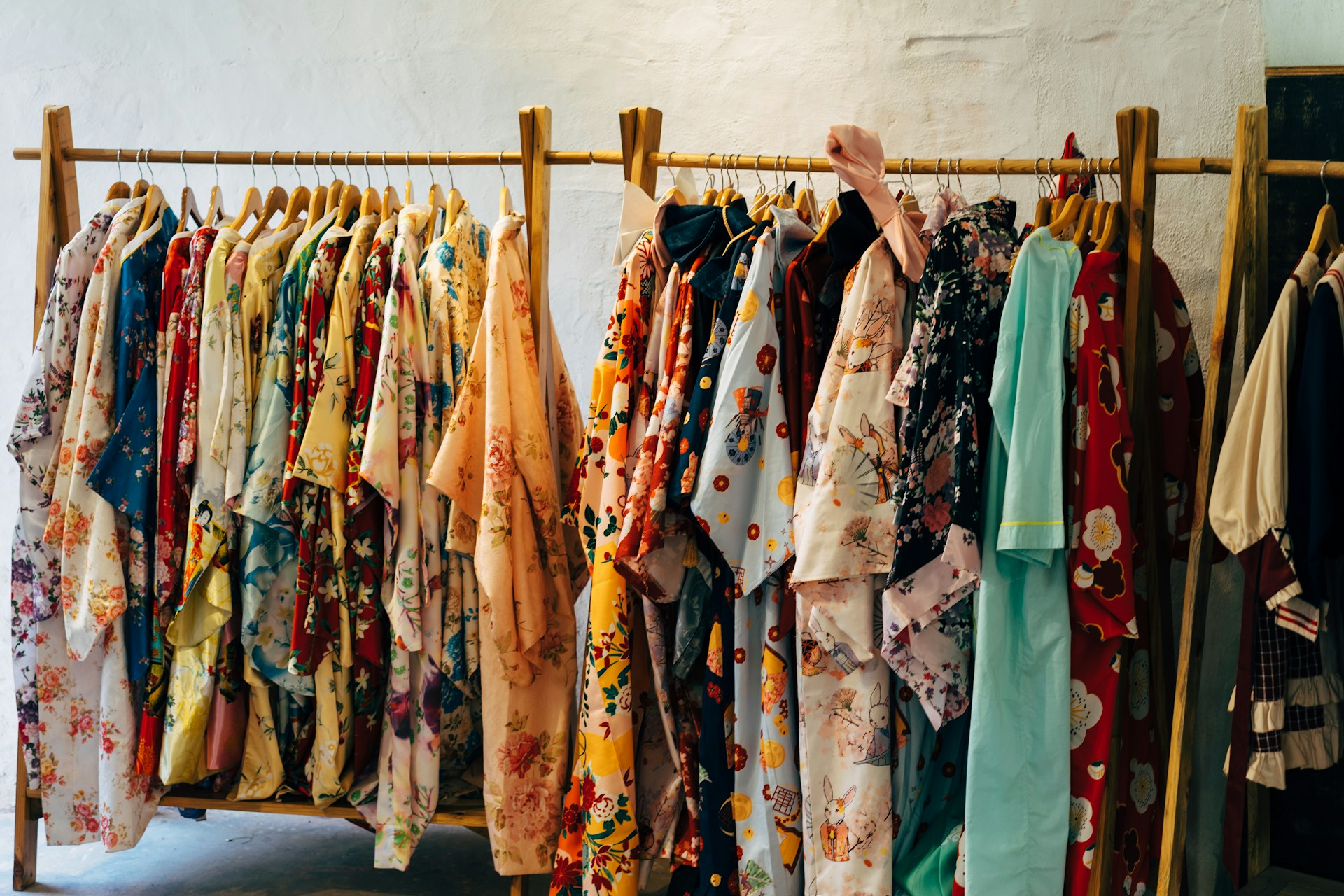
A kimono jacket can elevate a wardrobe into something deliberate. Slipping one over a pair of jeans, leggings, or even lounge-inspired looks will give the impression that the outfit is styled, not just thrown together.
From a user experience point of view, this is why kimono jackets are considered “confidence pieces.” You don’t have to work on your comfort level; you just have to add a layer to reframe the outfit.
Pay Attention to Length and Proportion
Length is an important factor in the appearance and feel of a kimono jacket. A shorter kimono jacket will give a playful, trendy look, while a longer kimono will create a dramatic effect.
For many consumers, mid-length kimonos are the most wearable option for daily wear, as they are more flattering to different body types and can be paired with both pants and dresses. Selecting the right length of kimono will help the kimono accentuate your body rather than overpower it.
Let Prints Do the Styling Work
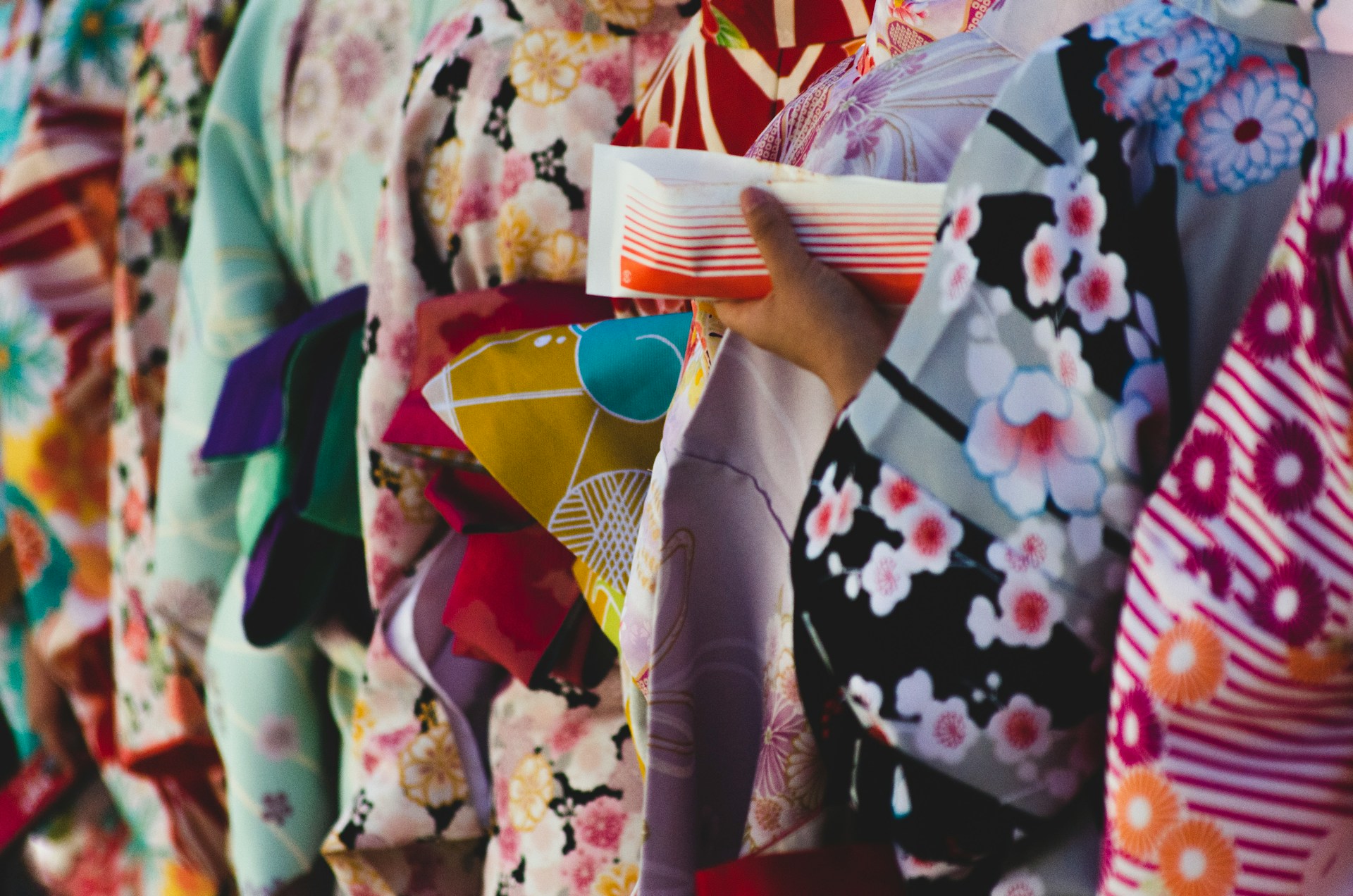
The printed kimono is especially popular because it eliminates the need for accessories. Floral, abstract, and bohemian prints are attention-grabbing and make a statement without any additional work.
This is very appealing to consumers who want to express their style but do not want to take the time to layer pieces of jewelry or decide how to coordinate multiple pieces. One statement kimono can eliminate several styling choices.
Use Solid Kimonos for Long-Term Versatility
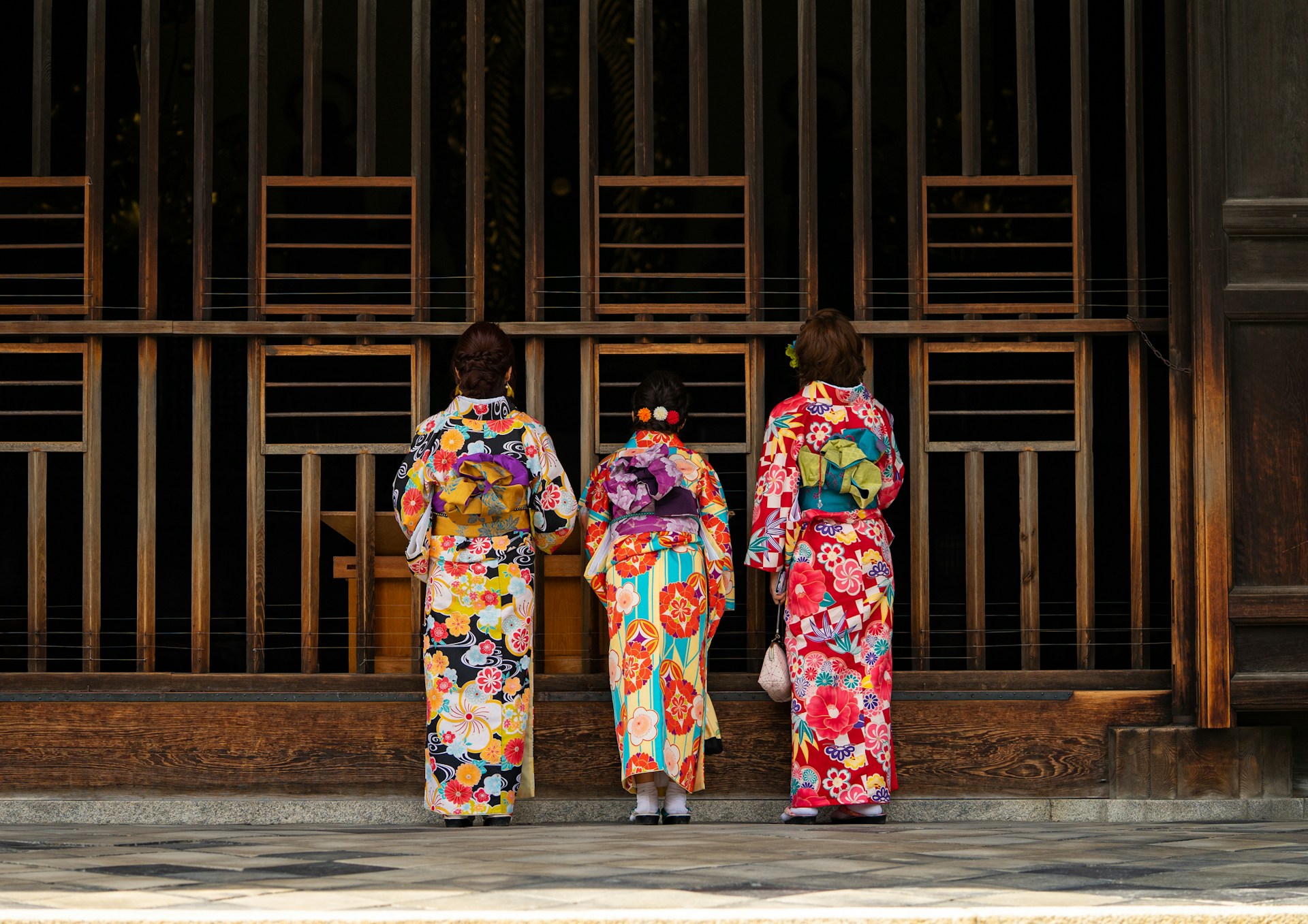
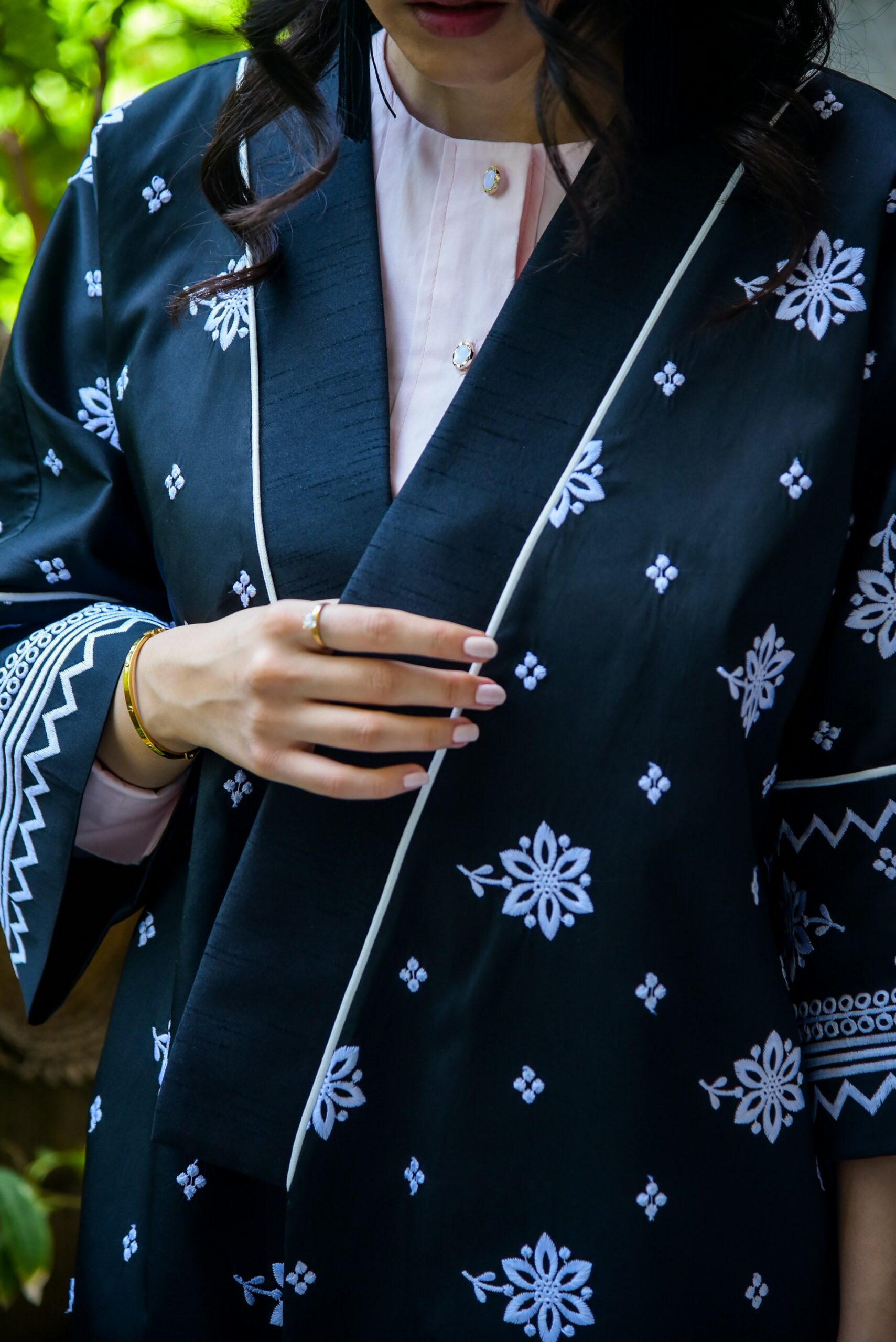
Although prints are very striking, the advantage of monochromatic kimonos is their longevity. Shades of black, ivory, or earth tones can easily be incorporated into existing collections.
Consumers who shop with longevity in mind tend to favor solids because they can easily be restyled and are less trend-driven. This makes them perfect for capsule wardrobes or conscious shopping behaviors.
Style a Kimono Jacket for Work-Friendly Looks
The kimono jacket is not only suitable for casual occasions. When paired with formal trousers or a formal top, it can be worn in a professional or semi-formal setting.
This is especially appreciated by women who value flexibility, particularly in a creative or hybrid work environment where personal expression is encouraged. The kimono provides a soft and unique touch without losing sophistication.
Use Kimonos as Transitional Layers
Kimono jackets are best during the transition periods of the seasons. They are lightweight enough to wear during warm weather but offer protection during slightly cooler temperatures.
Practically speaking, this makes them a popular choice for spring and autumn wardrobes. Customers love items that can adjust to the weather without having to change the entire wardrobe.
Belt It When You Want More Structure
If you ever think that a kimono is too loose-fitting or flowy, you can add a belt to give it a whole new look. This will not only give the kimono some shape but also help it function as a wrap top or a jacket.
This tip will appeal to consumers who enjoy having multiple styling options from one piece, one item, multiple styles.
Make It Your Travel Go-To Layer
Kimono jackets are a favorite among travelers because of their versatility and portability. They can be folded easily, do not wrinkle, and can be worn in various ways while traveling.
Whether worn over a tank during flights or layered for dinners out, kimonos offer fashion versatility that perfectly complements travel needs.
Choose Comfort First Style Will Follow
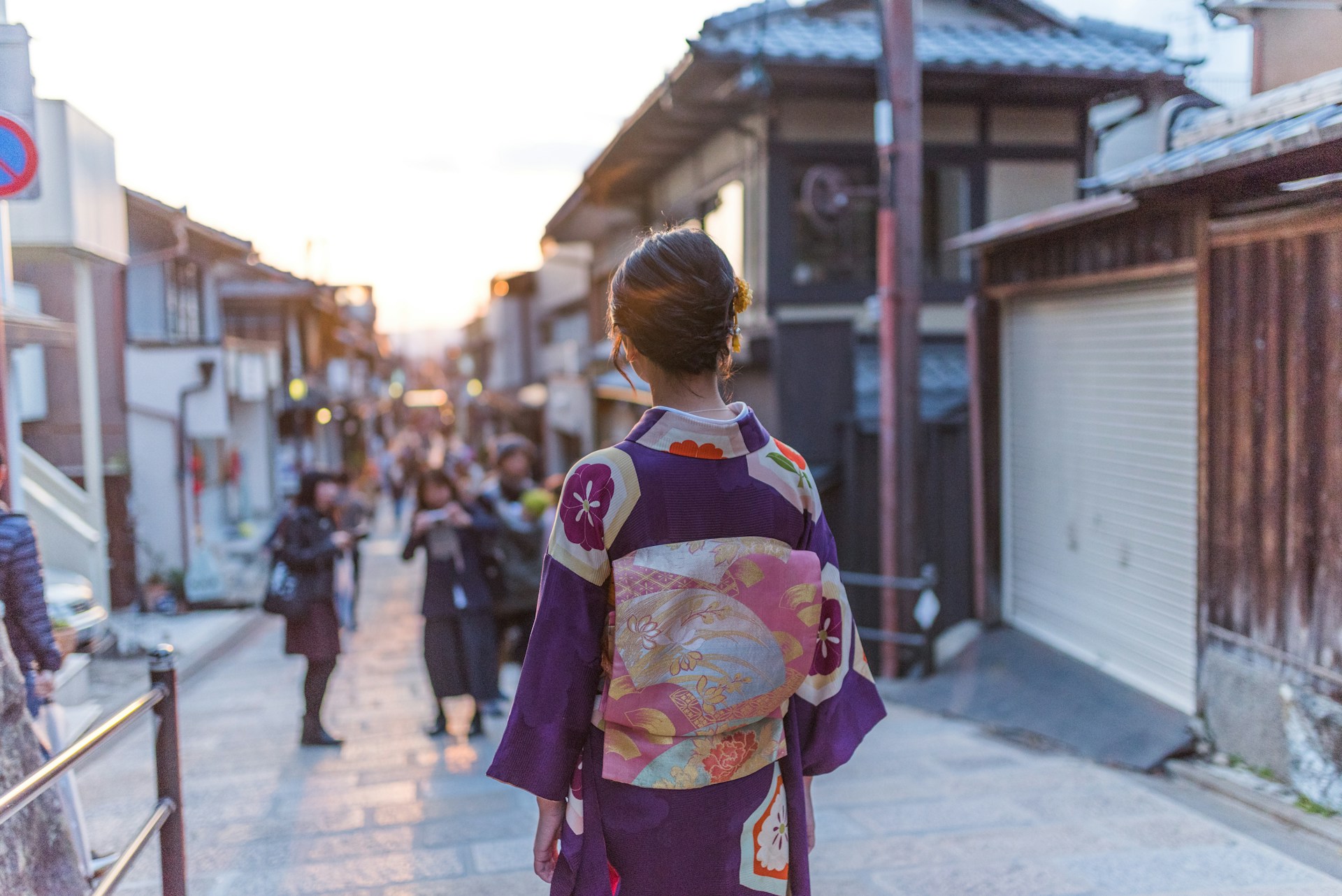
The key to statement jackets is comfort. Kimono jackets are in fashion because they are comfortable to wear. Comfortable fabrics, loose-fitting designs, and natural fibers all add up to a pleasant wearing experience.
When consumers feel comfortable, they’re more confident, and confidence is what ultimately makes any outfit stand out.
Why Kimono Jackets Make Styling Easier
Statement styling doesn’t have to be complicated. A kimono jacket simplifies the process by offering visual interest, comfort, and adaptability in one piece. That’s why so many women keep reaching for them season after season.
By focusing on ease, versatility, and personal expression, kimono jackets align perfectly with how modern consumers actually dress comfortably, intentionally, and on their own terms.
For more on the latest in luxury fashion and style reads, click here.
The post Statement Styling with a Kimono Jacket appeared first on LUXUO.
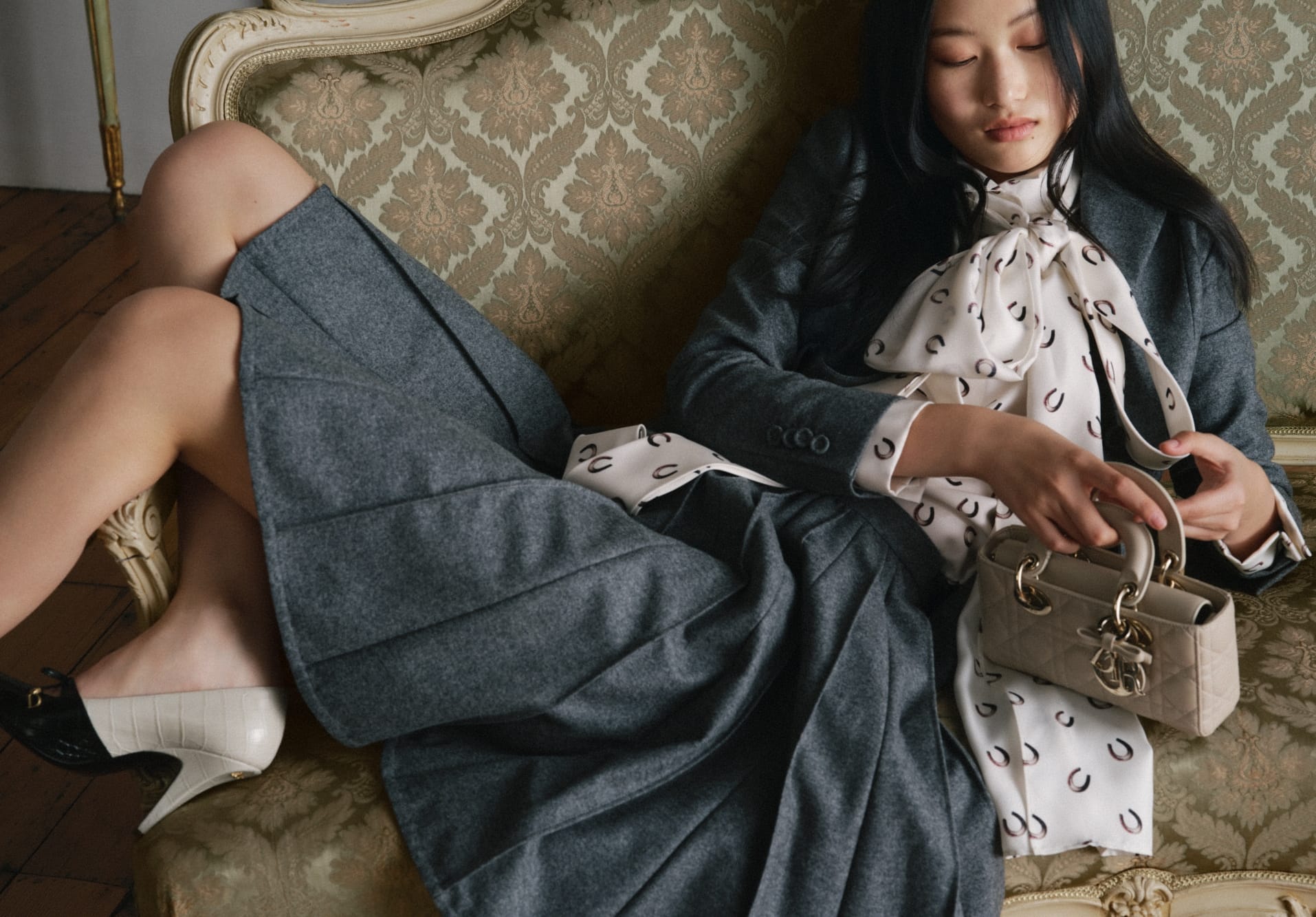
In a bid to appeal to a growing East and Southeast Asian market, luxury fashion brands are increasingly integrating local cultural references into their global design narratives by leveraging Lunar New Year capsule collections to deliver products that are both culturally impactful and desirable. For 2026, the Year of the Horse has inspired a wave of curated offerings that reinterpret traditional symbols — from zodiac motifs and good fortune iconography to folk tales and Chinese craftsmanship — across ready-to-wear, accessories and lifestyle pieces.
These collections serve multiple purposes: they reinforce brand relevance in key Asian markets, provide regionally focused storytelling and offer collectors exclusive — highly detailed pieces that extend beyond standard seasonal releases. Utilising short films with star-studded casts, immersive installations and collaborations with local artists, these capsule collections translate festive traditions into contemporary fashion experiences that resonate both culturally and commercially.
Dior by Jonathan Anderson
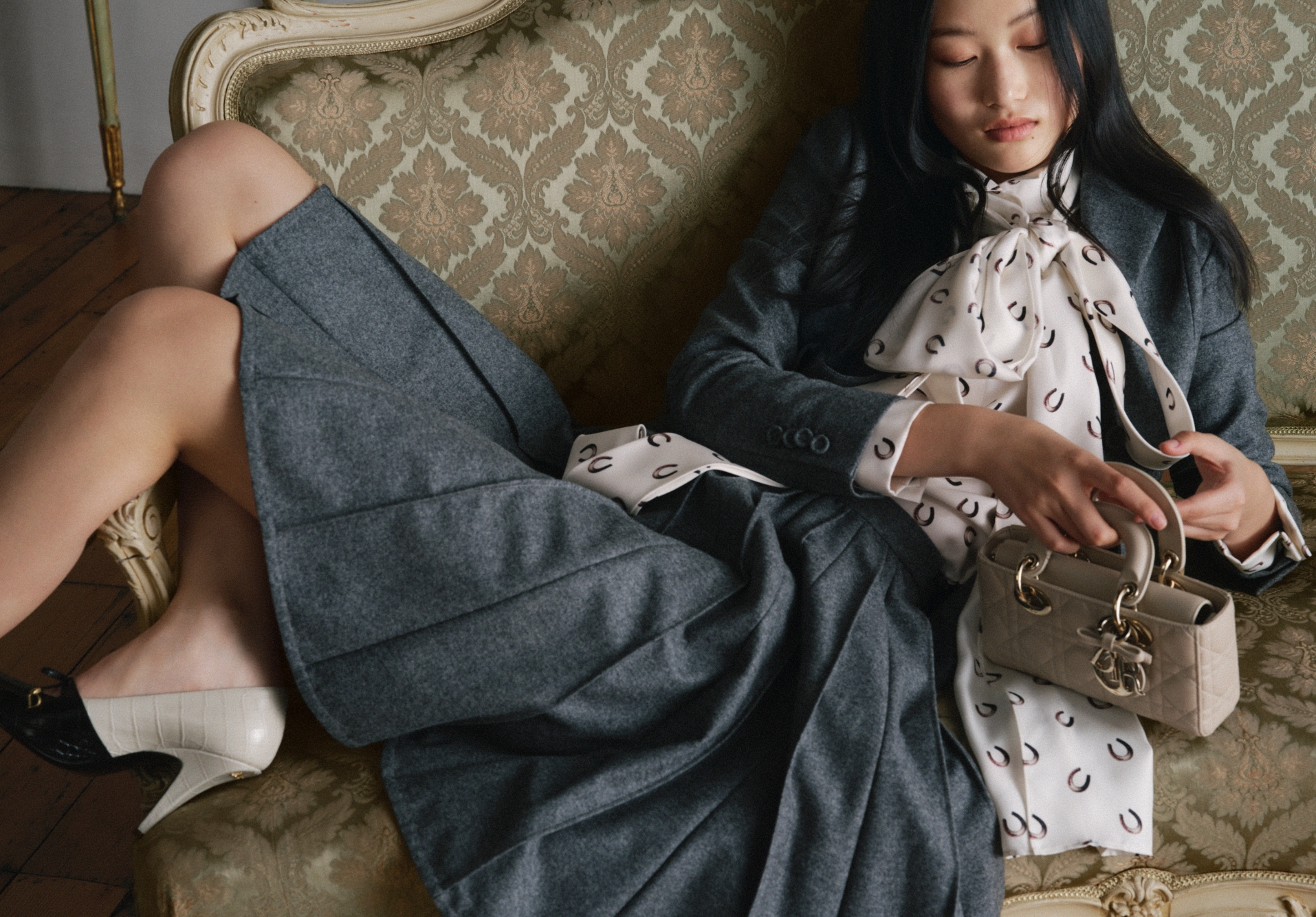
Centered on the Year of the Horse, Dior’s creative director Jonathan Anderson has unveiled a Lunar New Year capsule collection that draws on themes of luck, vitality and renewal. A highlight motif is the Dior Clover Garden — a reinterpretation of the 18th-century pastoral toile de Jouy, now infused with luminous four-leaf clovers and horse illustrations that reference the zodiac. This design is applied across ready-to-wear pieces including skirts, jackets, jeans and shirts, as well as accessories such as silk scarves, Mitzah bags and sneakers — creating a cohesive visual language that bridges fashion and cultural storytelling.
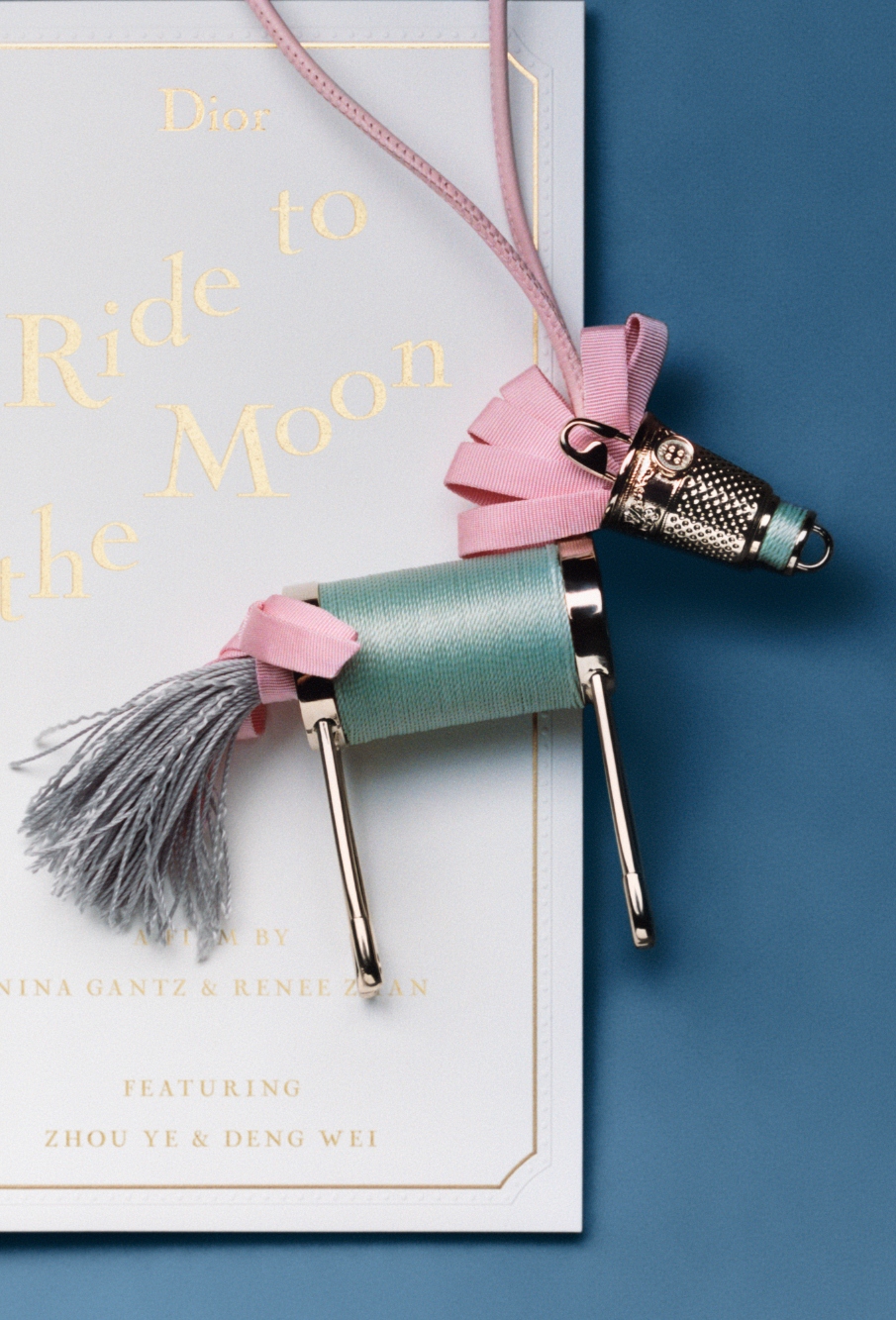
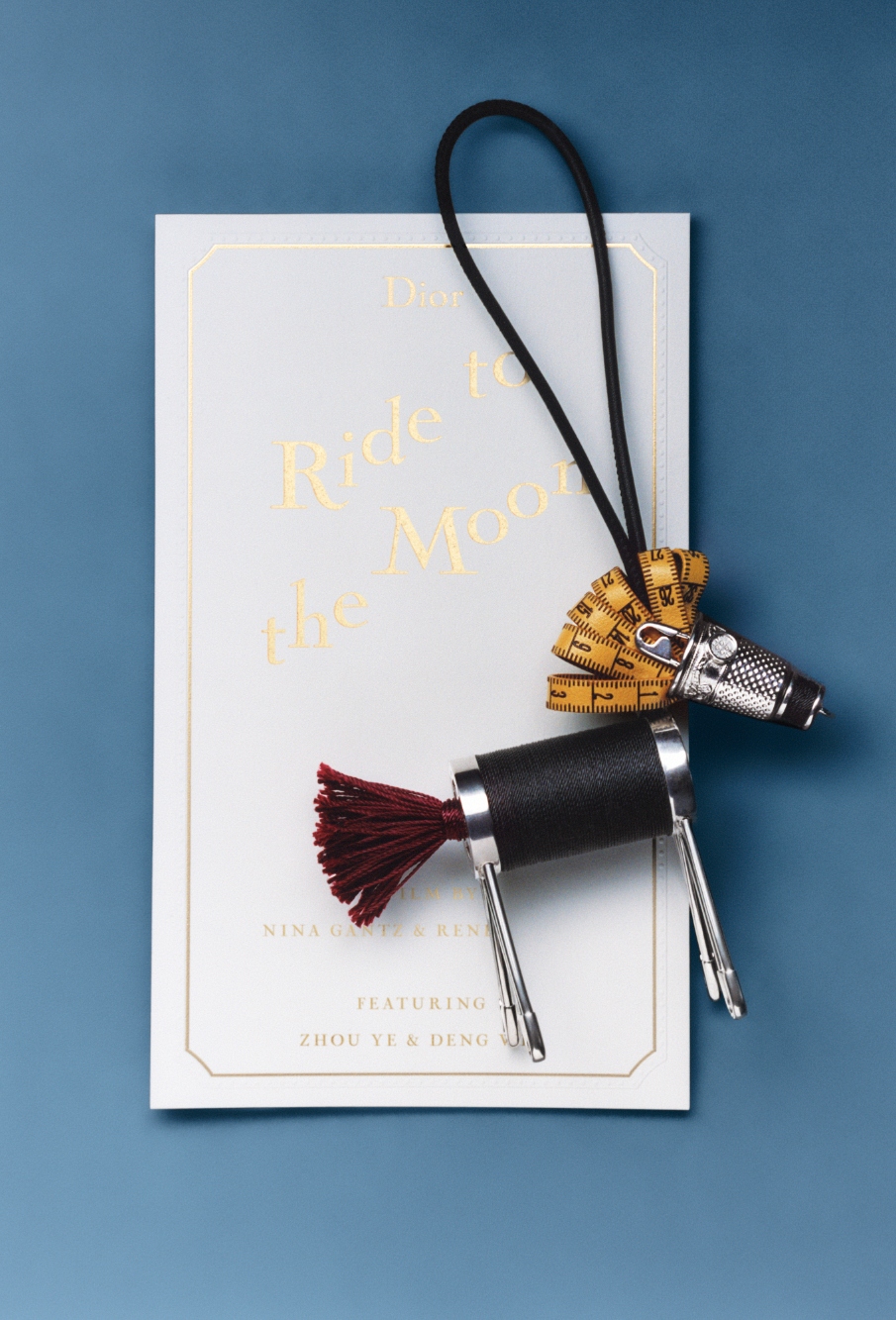
Iconography associated with good fortune — particularly the horseshoe — appears in jewellery and charms, reinforcing the zodiac theme throughout the collection. Dior’s signature bags — including the Lady Dior and Dior Book Tote — are presented in shades of pink, echoing the colour’s association with joy and femininity within the Maison’s heritage. By integrating these zodiac-inspired motifs into both apparel and accessories, Dior delivers a capsule that sees the amalgamation of traditional references with contemporary design, offering limited-edition pieces that celebrate the festive spirit of the Lunar New Year without seeming like a performative gesture to appeal to a growing Asian market.
LOEWE
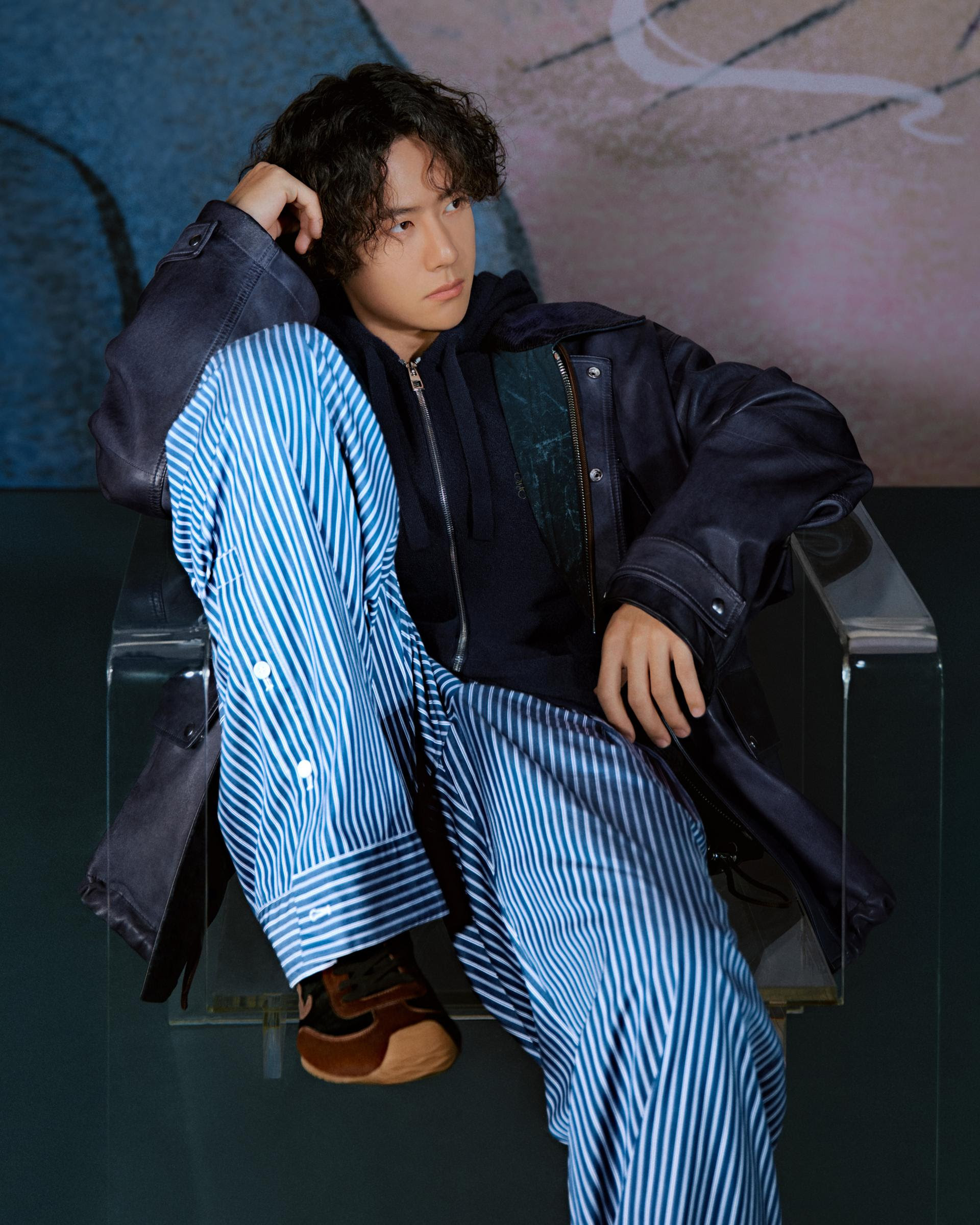
LOEWE celebrates the Year of the Horse with a Lunar New Year capsule that draws directly on Chinese artistic traditions. At the centre of the campaign is an animated short film co-created with Shanghai Animation Film Studio, following a young horse tasked with fetching lanterns for its village. Along the way, it meets a deer, a platypus and LOEWE Global Brand Ambassador Wang Yibo, reflecting the themes of courage and self-belief from Peng Wenxi’s fable “Little Horse Crossing the River”. The film also demonstrates LOEWE’s ongoing collaboration with Chinese animation studios and its engagement with literary and visual storytelling.
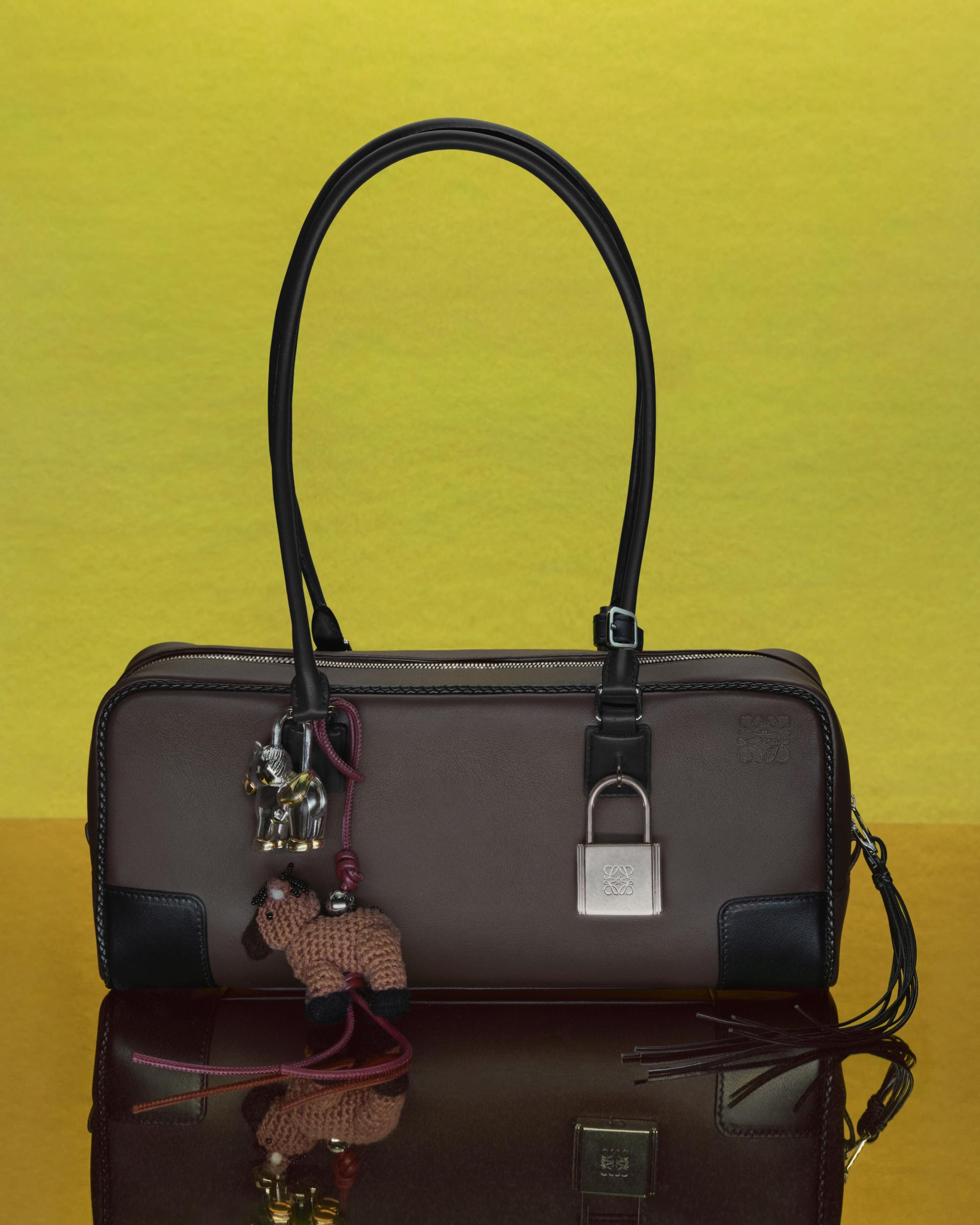
The 2026 collection translates the horse motif into products across ready-to-wear and accessories. Special editions of the Puzzle and Amazona 31 cropped bags feature hand-knotted fringes and tassels reminiscent of a horse’s mane, while charms and dice echo the zodiac animal. A leather overshirt —created for Wang Yibo and worn by him in the short film — will be sold exclusively in select Chinese stores. The campaign — photographed by Nick Yang and including model Wei Yiting — visually links the collection’s motifs with the film’s narrative.
LOEWE is also staging lantern installations in Shanghai, Chengdu and Nanjing to accompany the collection. At CASA LOEWE Shanghai, lanterns inspired by the film’s characters and landscapes will fill the garden square, while at LOEWE Gaozhai, Chengdu, sun and horse lanterns will complement the New Year window displays. In Nanjing’s historic Yuyuan Garden, lanterns integrating LOEWE designs with the site’s architecture will provide a public celebration of the festival. LOEWE tapping into tier-two and select tier-three cities alongside leveraging China’s explosive growth in short-form drama content highlights luxury fashion’s strategic focus on the Asian market.
Loro Piana
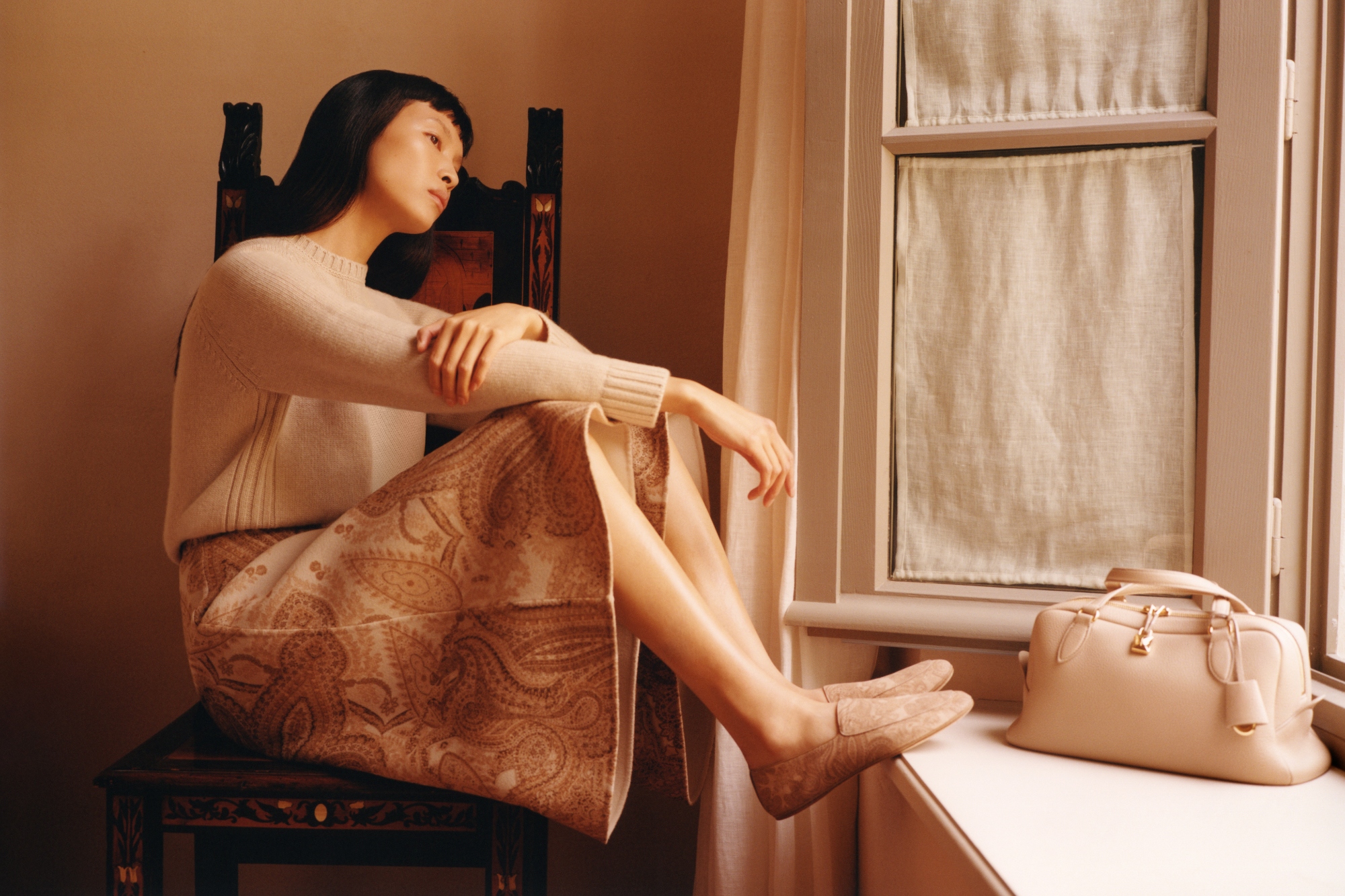
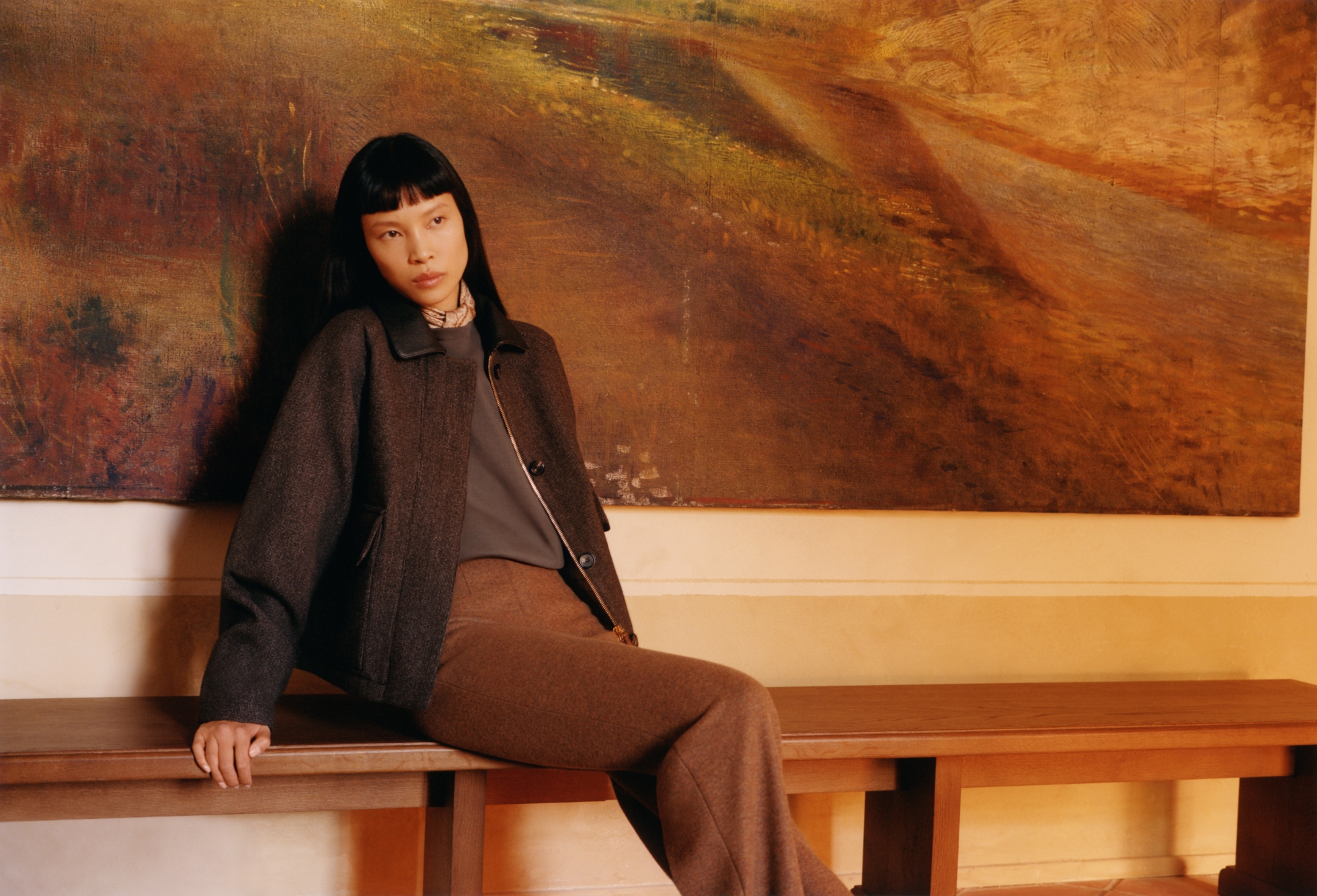
Loro Piana honours the Year of the Horse with a capsule collection that combines heritage sportswear and subtle equestrian references. Central to the offering is a reimagined version of the Horsey jacket for men and women — retaining signature features from the 1992 original created for the Italian show jumping team — including patch pockets, a stand-up collar with anti-rain and anti-wind flap and concealed horn buttons. The jacket bears the Maison’s Blue Label marking iconic sportswear pieces, while a delicate paisley print — the Chandani Horse — weaves the horse motif into women’s garments, scarves, slippers and the Extra Pocket L19 bag.
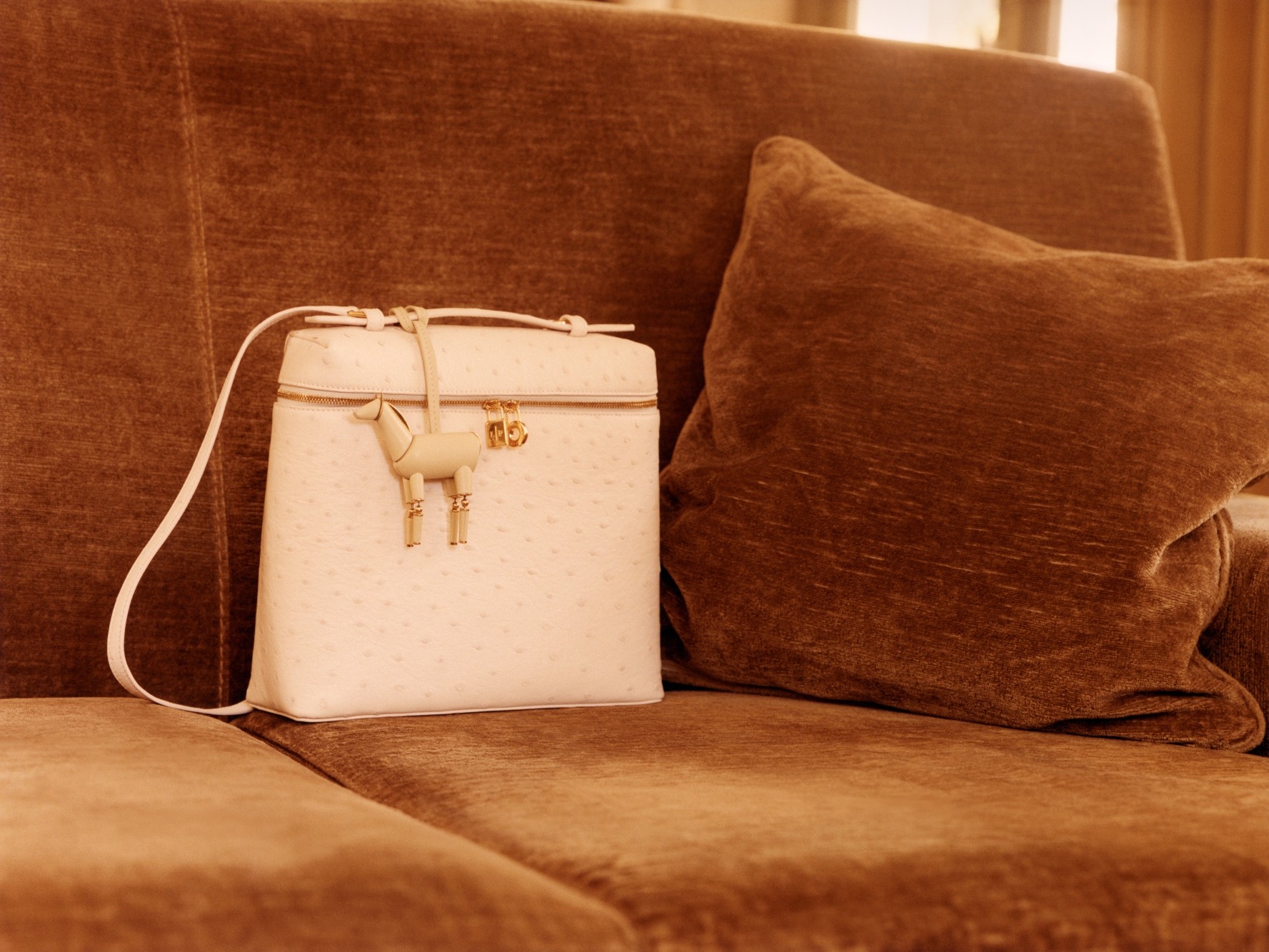
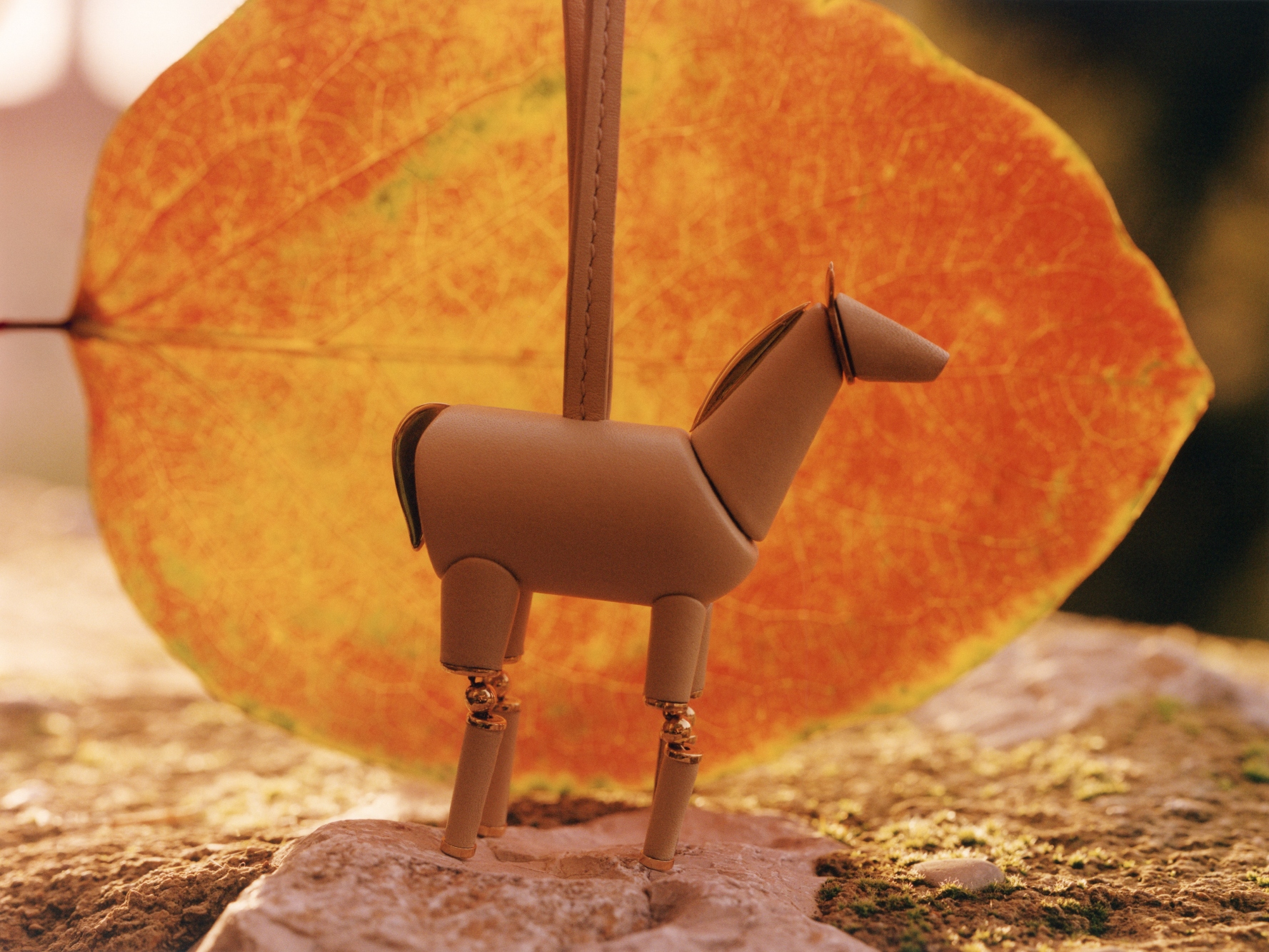
Women’s looks — such as the Cellina parka, vest and jogging pants — mix structured tailoring with relaxed fluidity, crafted from exclusive mouliné wool, linen and silk jersey. Men’s pieces emphasise ease of movement through cashmere knitwear, jersey trousers and outerwear in earthy tones, made from Sea Island Cotton and other refined materials. Accessories include Tennis Walk shoes in leather or canvas and a Moonlight gift set in Baby Cashmere for newborns. The collection — available in Loro Piana boutiques across China, South Korea, South Asia and Japan — demonstrates the Maison’s ongoing focus on understated tactile craftsmanship while integrating zodiac-inspired symbolism.
Balenciaga
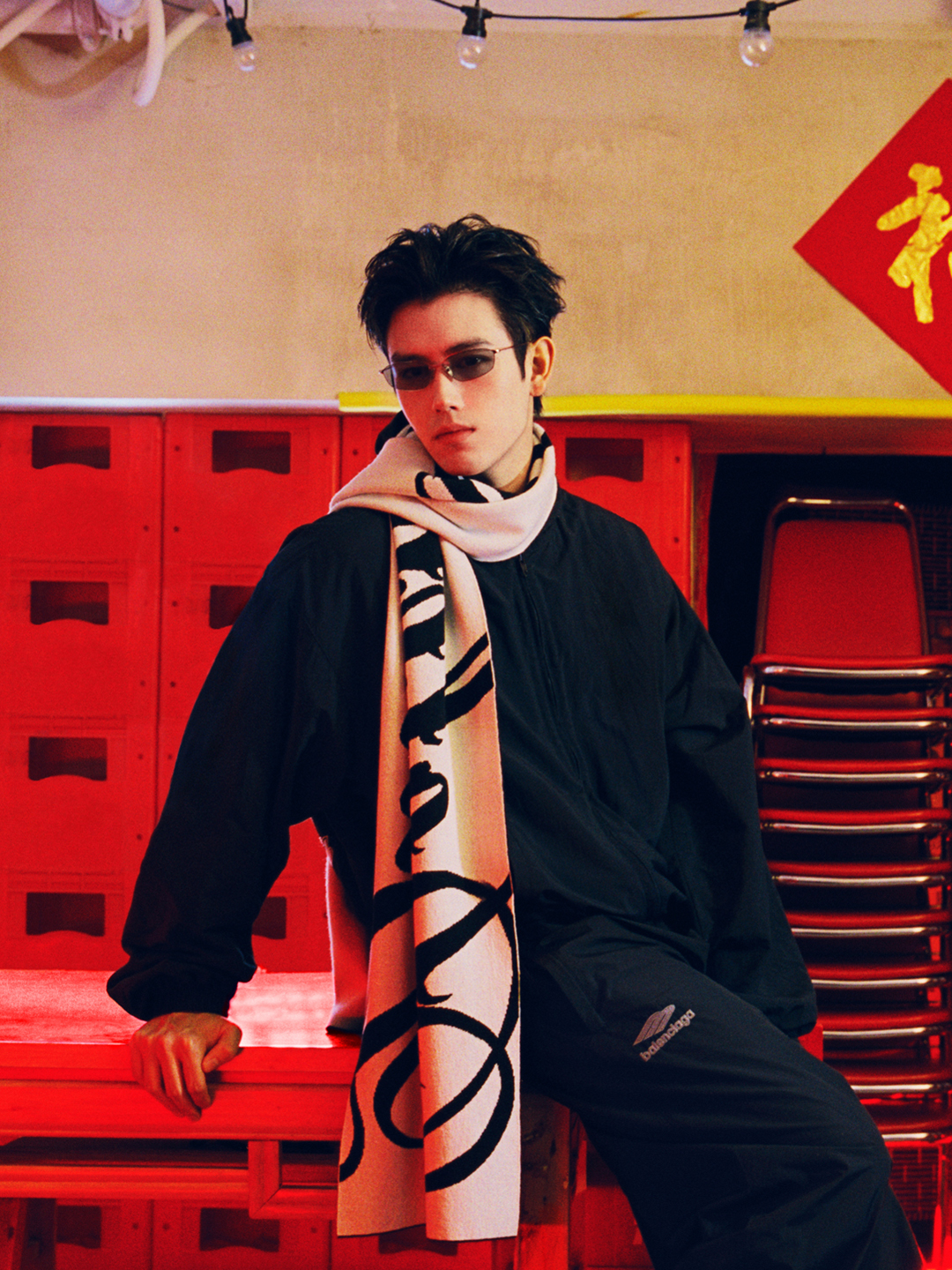
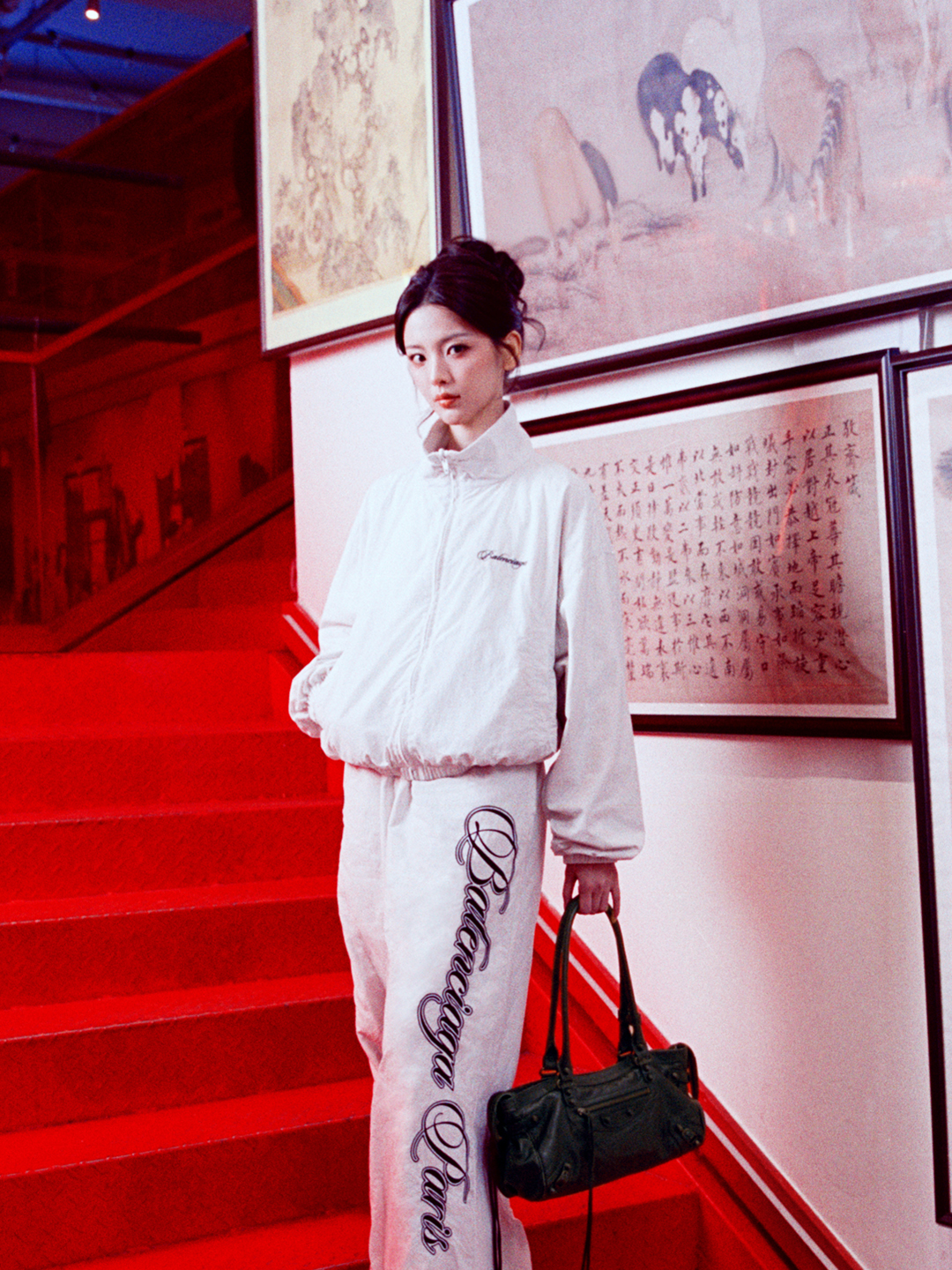
Balenciaga’s 2026 New Year Series marks the Year of the Horse with a collection that combines oversized graphics, signature logomarks and zodiac-inspired accessories. The ready-to-wear offering spans tracksuits, hoodies, T-shirts, scarves and layering pieces such as leather track jackets and wide-neck polo shirts, many featuring an oversized cursive Balenciaga Paris motif or embroidered script. Bags are updated for the occasion — including a light grey Arena leather Le City East-West bag — while bag charms in the form of lucky horseshoes and red strass-set hearts reference the zodiac.
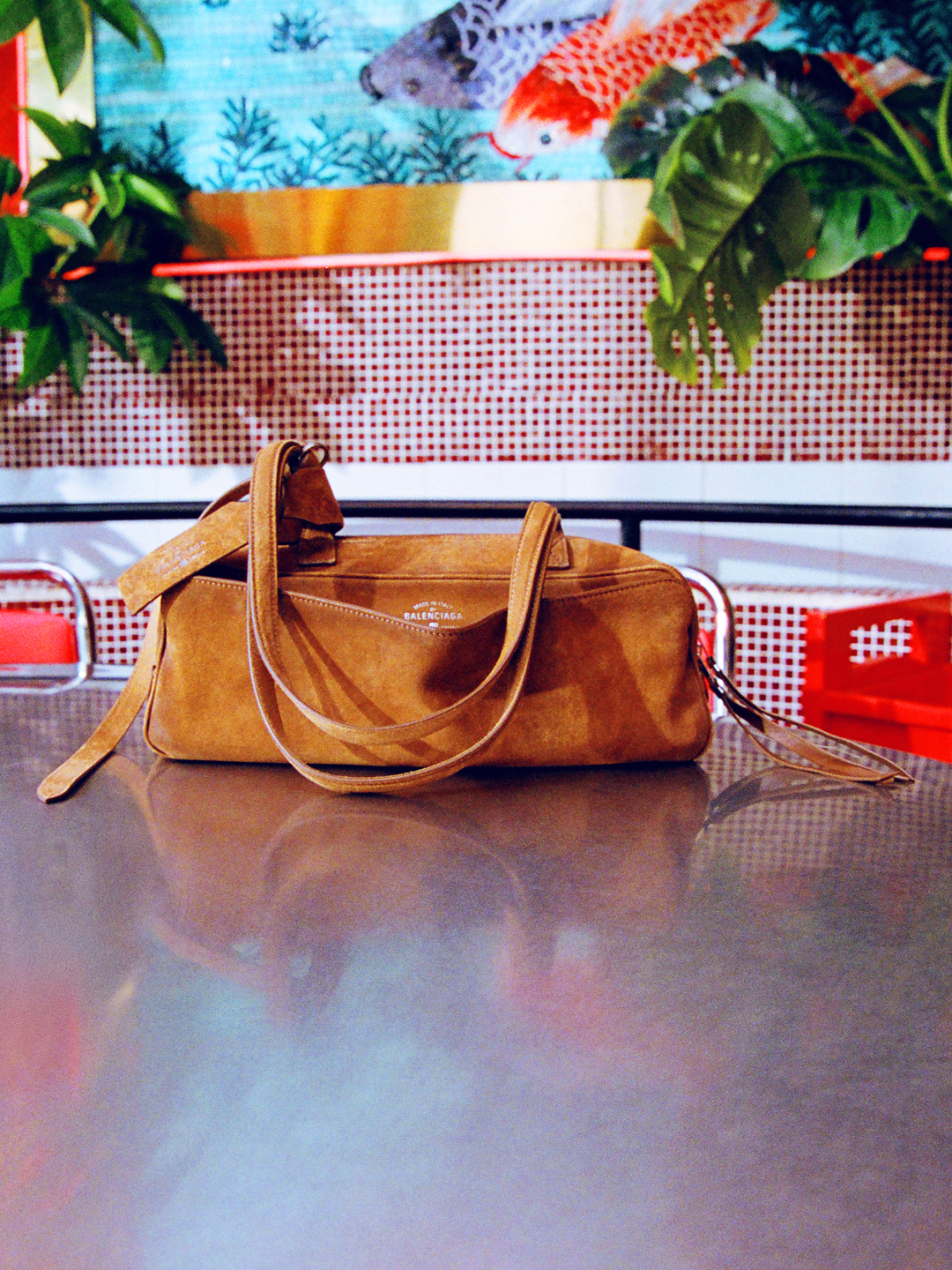
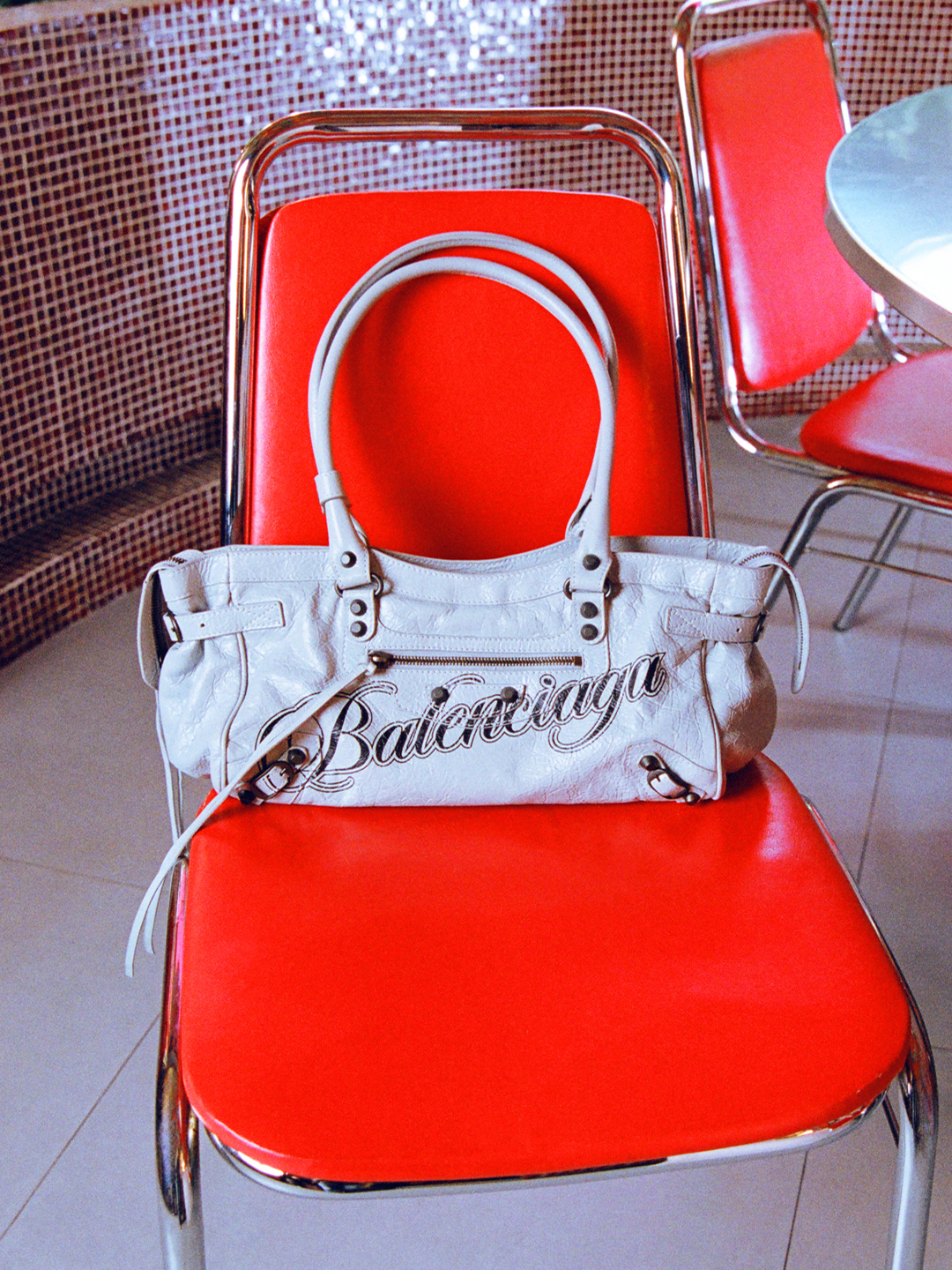
Footwear receives seasonal treatments with the Hamptons and Track Sneakers presented in exclusive colourways accented with red detailing and scribbled laces. Supporting the launch is a short film and photography series shot in Shanghai by John Yuyi which captures actors Ma Sichun, Yang Chaoyue and Chen Feiyu alongside content creators JM and Tan Suan enjoying Lunar New Year traditions, from shopping for Bingtanghulu fruit sticks to taking in the city skyline from a rooftop. This Balenciaga capsule collection integrates the Maison’s visual identity with cultural symbolism for a regionally resonant celebration.
Ralph Lauren 2026 Lunar New Year Gift Guide
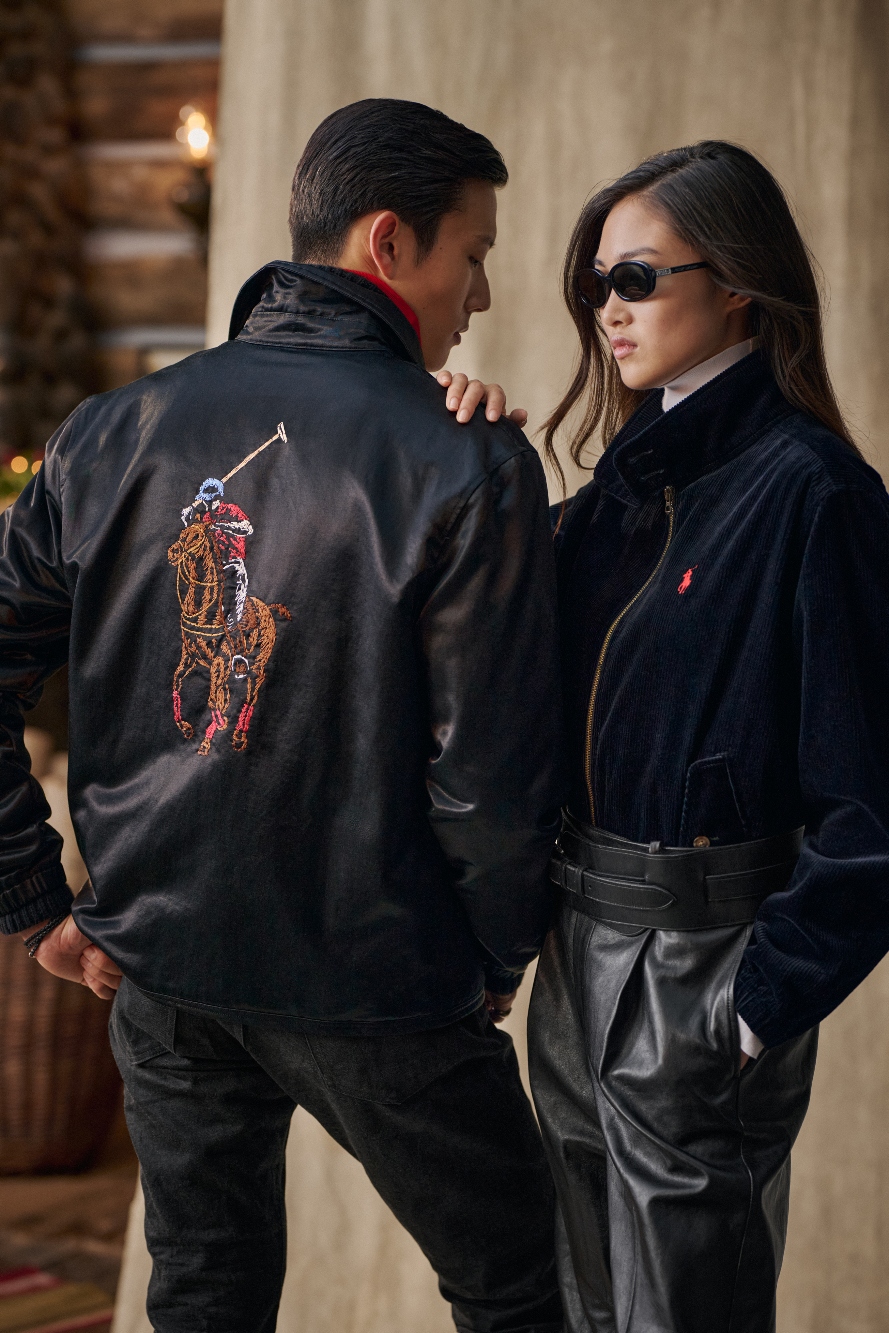
Ralph Lauren marks the Year of the Horse with a comprehensive Lunar New Year capsule highlighting “Lunar New Year Essentials” spanning multiple lines — from Ralph Lauren Collection and Purple Label to Polo Ralph Lauren, Lauren Ralph Lauren and children’s ranges. Across the offering, festive designs reinterpret wardrobe staples through seasonal motifs and colourways associated with prosperity and renewal.
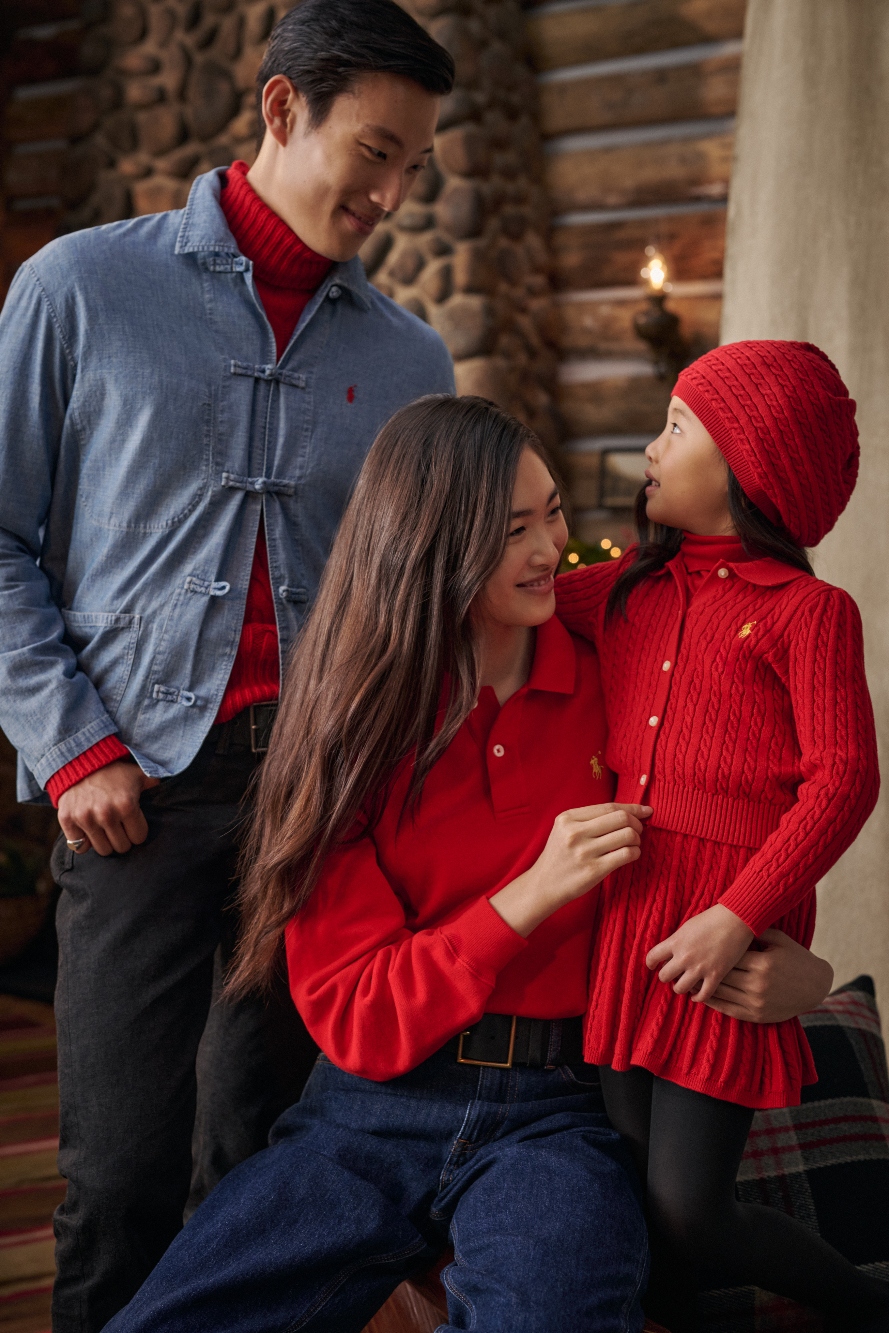
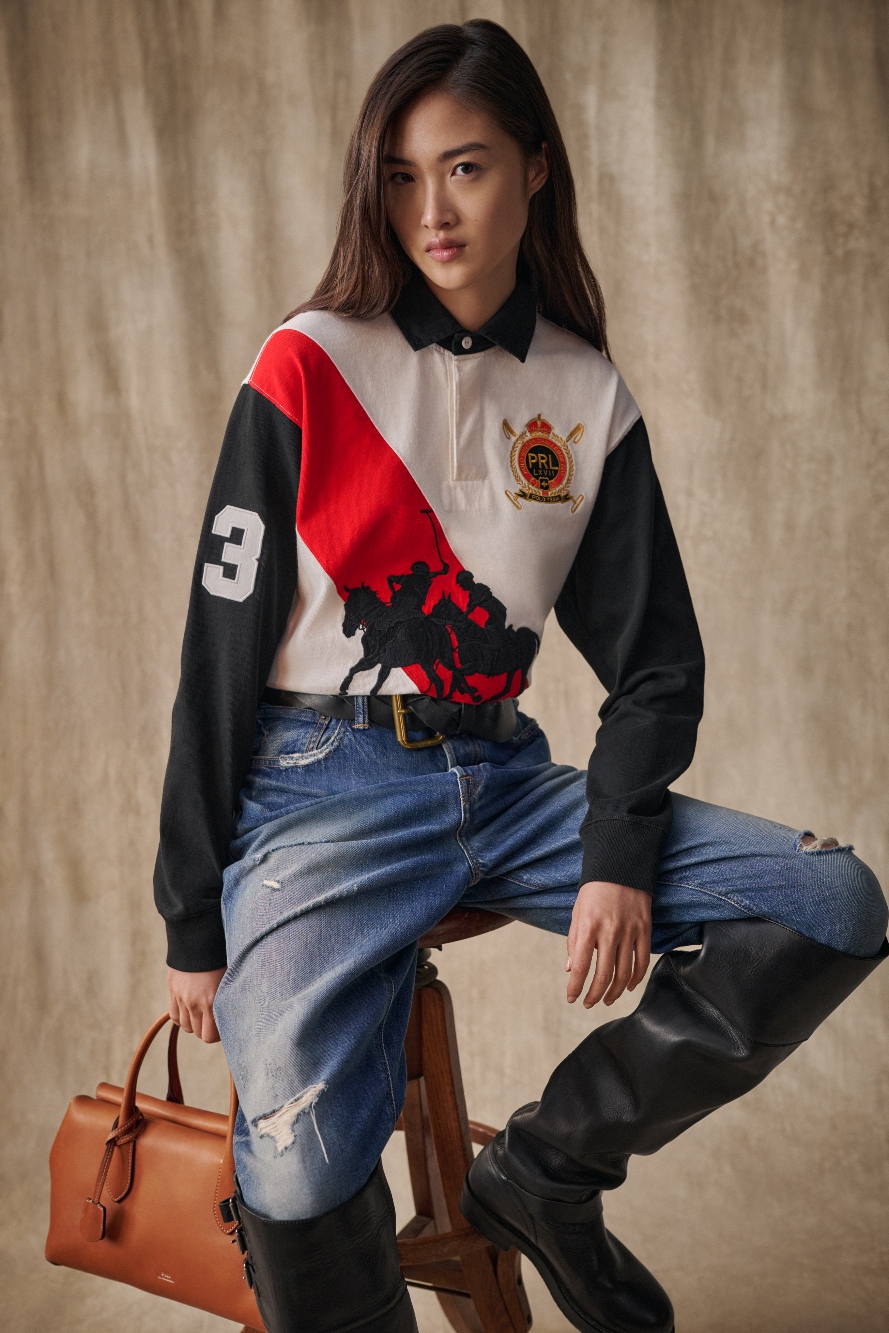
Key pieces include silk blouses, lambskin jackets, wool-silk sweaters, cashmere knits and the Lunar New Year Polo Bear sweaters, alongside coordinating skirts and dresses. Accessories complement the apparel, with calfskin and suede bags, tote and crossbody options and seasonal scarves, beanies and caps. The children’s range mirrors adult themes with Polo Bear and horse-inspired prints on reversible jackets, zip sweaters and cotton-wool ensembles. Ralph Lauren’s capsule integrates signature silhouettes with Lunar New Year motifs, offering a full wardrobe and accessory edit designed for gifting and festive dressing, while extending the Maison’s equestrian and preppy aesthetic into culturally resonant seasonal editions.
CELINE
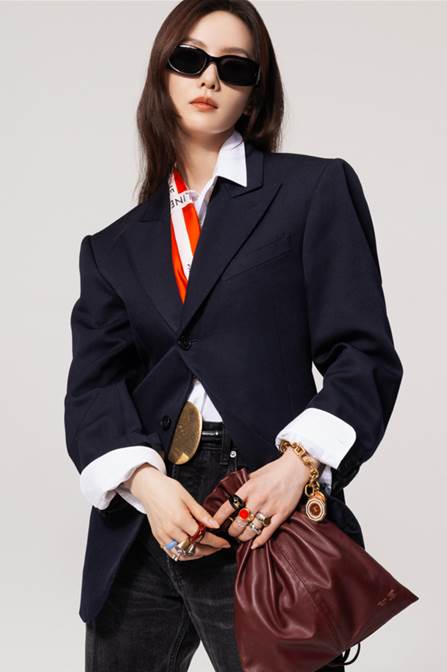
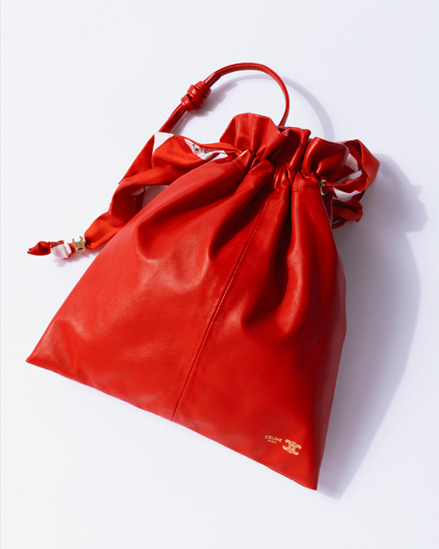
CELINE celebrates the Year of the Horse with a Lunar New Year capsule centred on the symbolism of wishing trees, a folk tradition representing hopes, fortune and renewal. The collection is visually anchored by a central installation of a towering evergreen adorned with thousands of CELINE scarves and ribbons, creating a striking interplay between fashion and cultural ritual. Campaign imagery by Kin Chan Coedel captures this installation within a scenic Chinese landscape, while fashion photography by Zhong Lin presents the collection on models in a variety of festive silhouettes, underscoring the collection’s vibrant, celebratory mood. Through scarves, accessories and ready-to-wear, CELINE translates the traditional motifs of prosperity and aspiration into pieces that are both wearable and culturally resonant, emphasising colour and narrative over overt festive branding.
Fendi
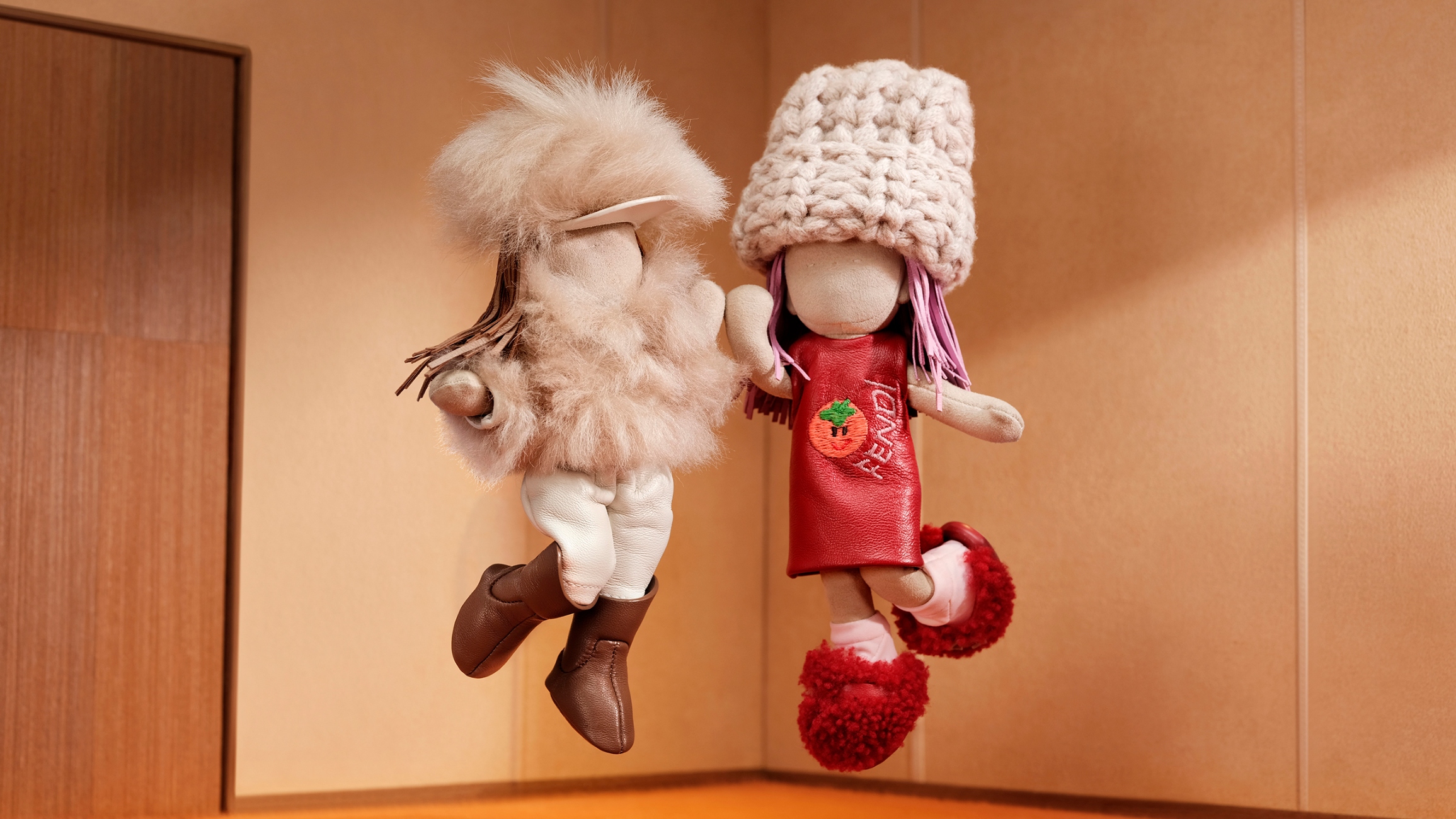
Fendi marks the 2026 Year of the Fire Horse with a capsule collection for women and men that draws on the colour-blocking and floral motifs of the Spring/Summer 2026 runway, reinterpreted in shades of light blue, pink and yellow to infuse energy into the label’s signature FF logo knits. The capsule’s accessories on the other hand, feature new BFF Mini and Maxi charms adorned with red hues and auspicious motifs — including persimmons and peanuts, referencing the Chinese phrase for good fortune. Women’s ready-to-wear pieces include dresses, coats and accessories with delicate embroidery and floral-inspired FENDI logos, while menswear features windbreakers, hoodies and T-shirts that translate the Spring/Summer palette into wearable festive elegance.
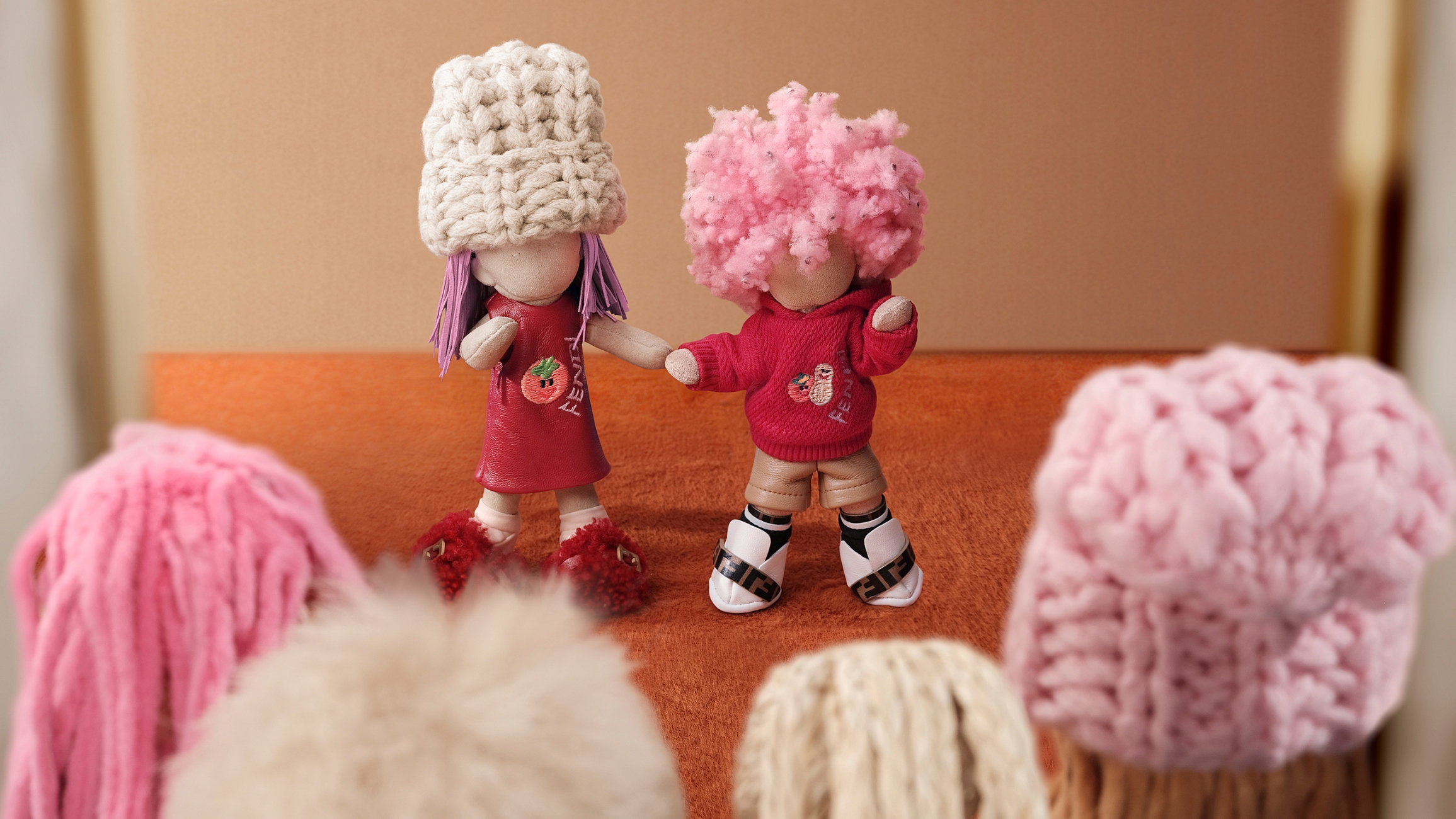
A short film accompanying the launch depicts the BFF charms preparing Jiaozi together, culminating in the dumplings arranged to form the FENDI logo, underscoring the collection’s themes of family, reunion and craftsmanship. Additional jewellery pieces incorporate the Maison’s signature gold and red colour accents to offer limited-edition, highly detailed pieces that convey celebration while bringing consumers’ attention to artisanal detail and opening the brand to further avenues of profit aside from their ready-to-wear pieces.
Montblanc Chinese New Year 2026
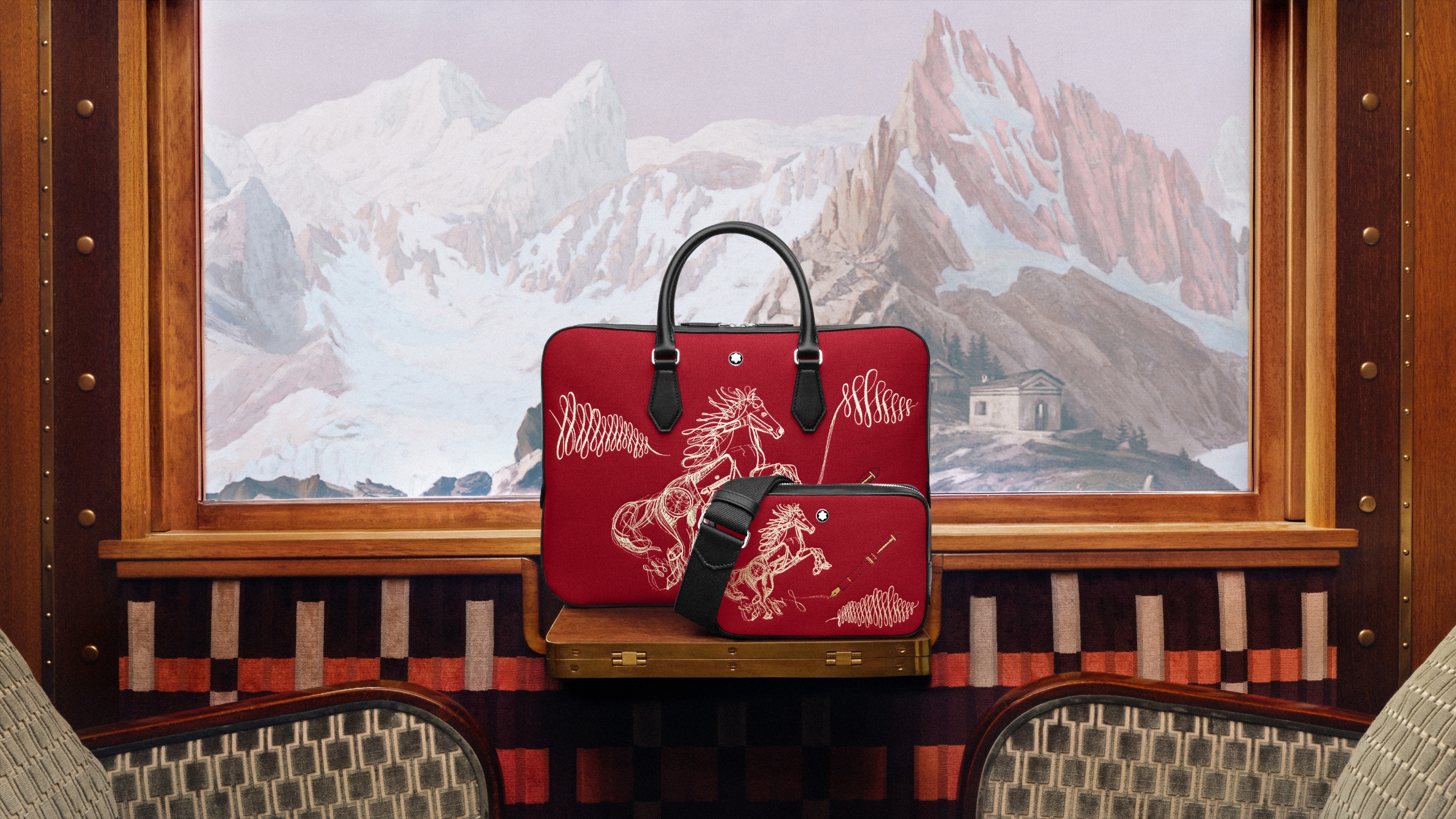
Montblanc celebrates the Year of the Horse with a Lunar New Year capsule collection that highlights the Maison’s expertise across writing instruments, leather goods and timepieces while reflecting themes of renewal and optimism. At the centre of the collection is The Montblanc Horse — an original illustration by artistic director Marco Tomasetta depicting a galloping horse emerging from a flowing fountain pen line, accompanied by infinity-shaped clouds that reference both the brand’s craftsmanship and the cultural significance of the number ‘eight’ as a symbol of prosperity.
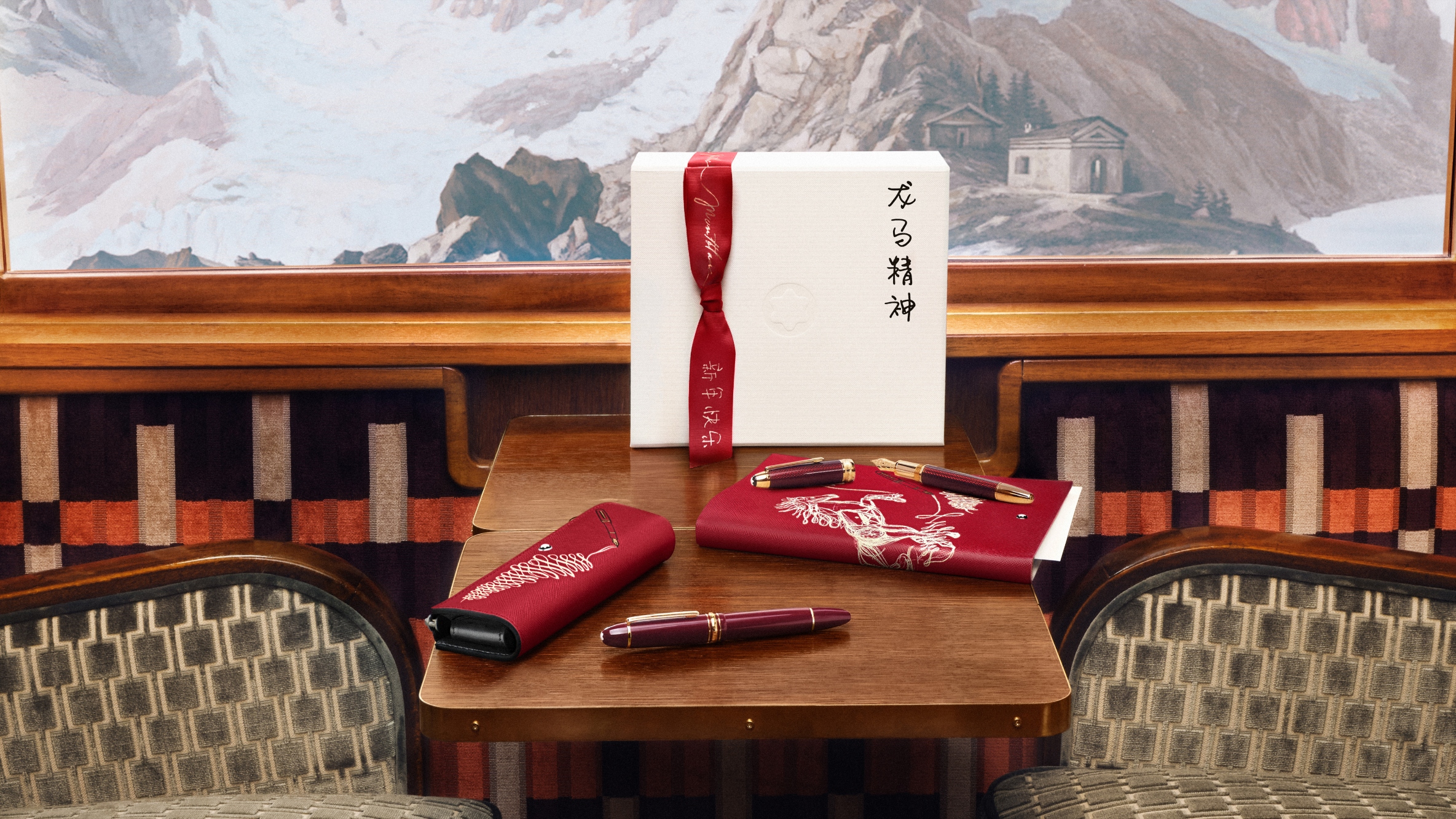
The capsule includes a Thin Briefcase and Mini Crossbody in embroidered gabardine with leather detailing, alongside a Pen Pouch, Passport Holder and Notebook in printed Sartorial leather. Writing instruments feature the Meisterstück Golden Hour Solitaire, with engraved hexagon patterns beneath translucent burgundy lacquer, gold-coated fittings and a handcrafted Au 750 gold nib and the Meisterstück Burgundy Red, reimagining Montblanc’s classic pen in deep burgundy resin with a bi-colour Au 585 nib.
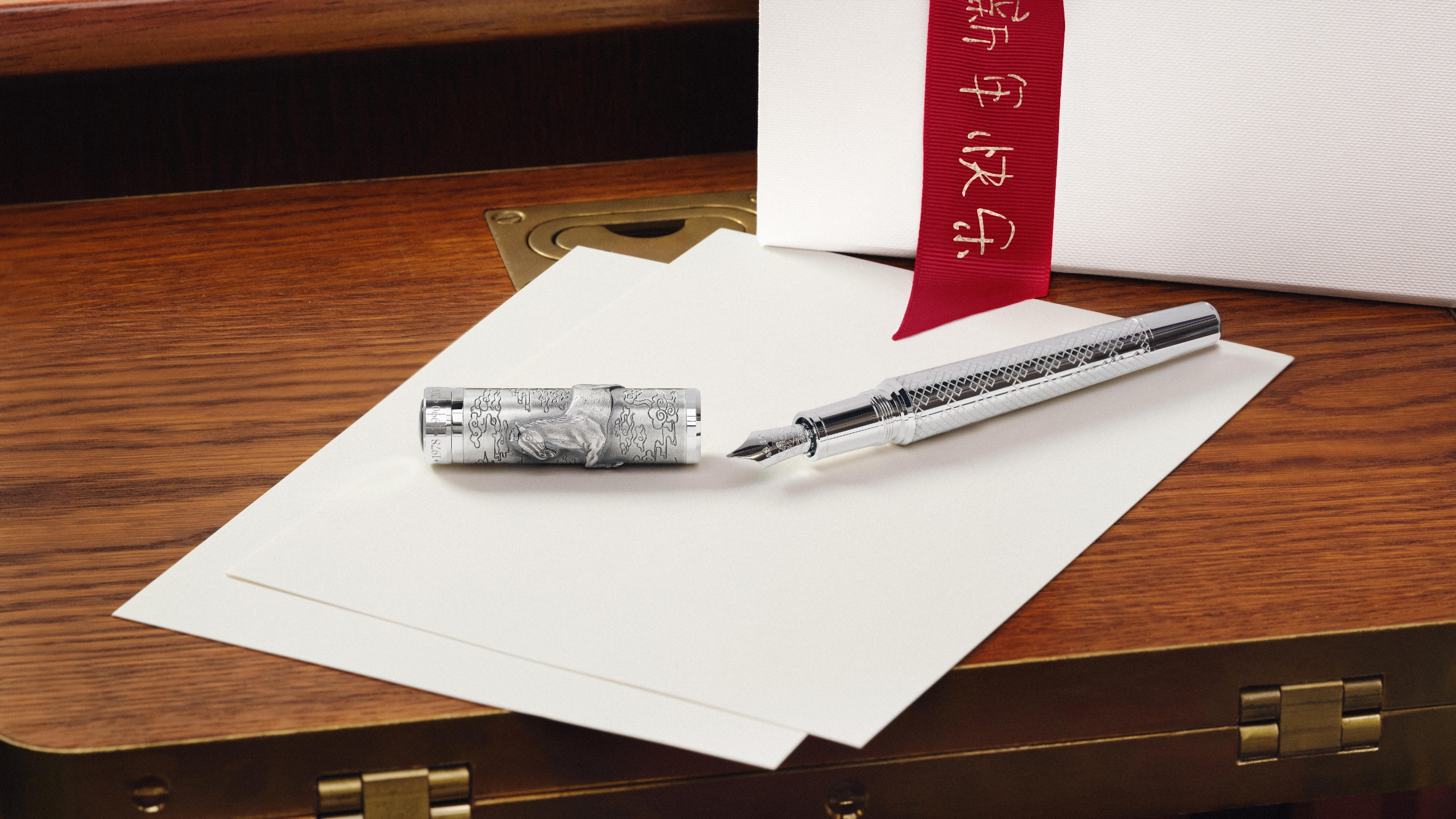
The Maison also extends the theme to watches with the Star Legacy Moonphase Limited Edition 1786, featuring a burgundy-patterned dial, rose-gold moon and stars and the MB 24.31 automatic movement in a 42mm stainless steel case. Across categories, the capsule emphasises red and gold colourways to evoke good fortune, while presenting limited-edition pieces designed to mark new beginnings with functional (and symbolic) craftsmanship.
MCM
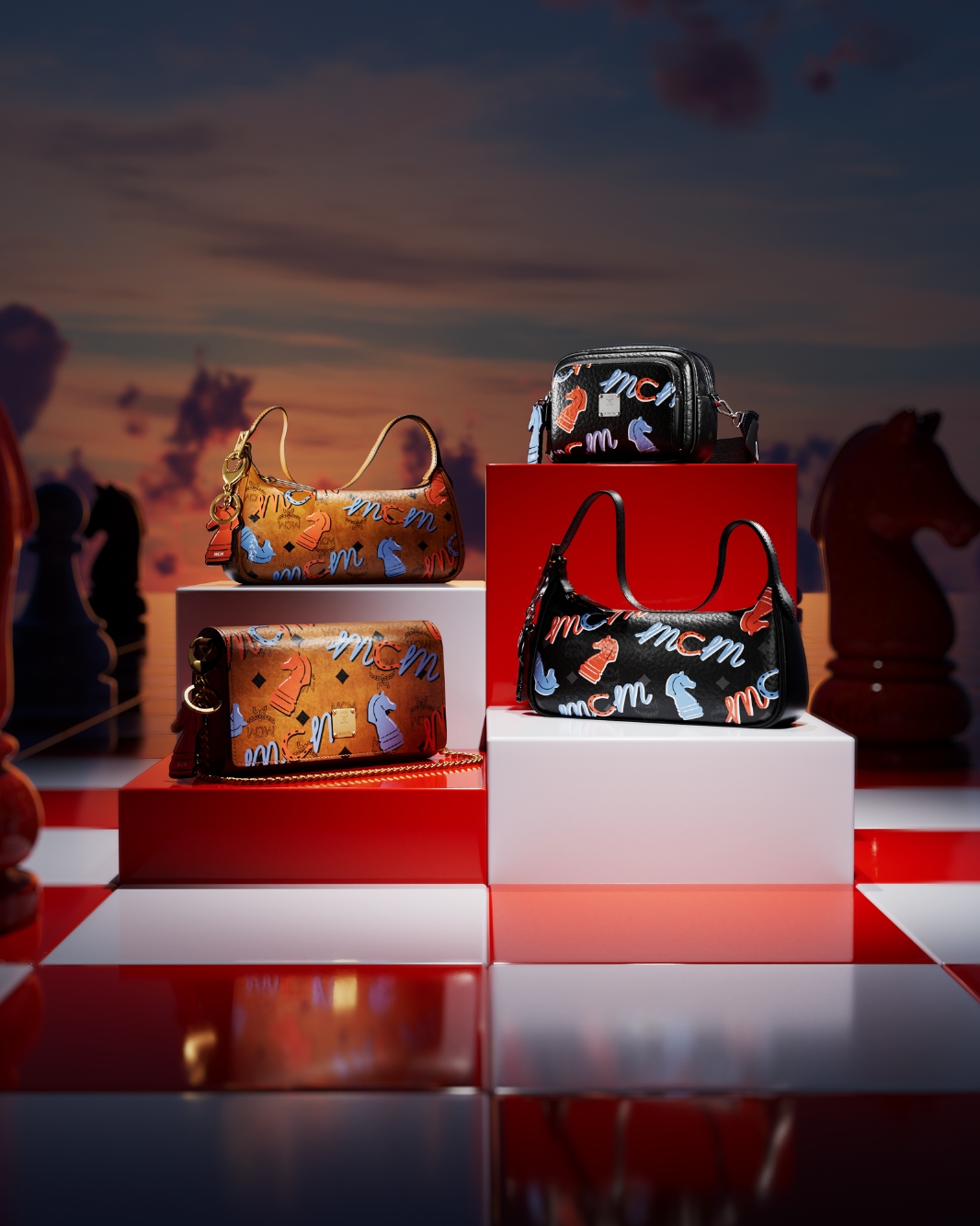
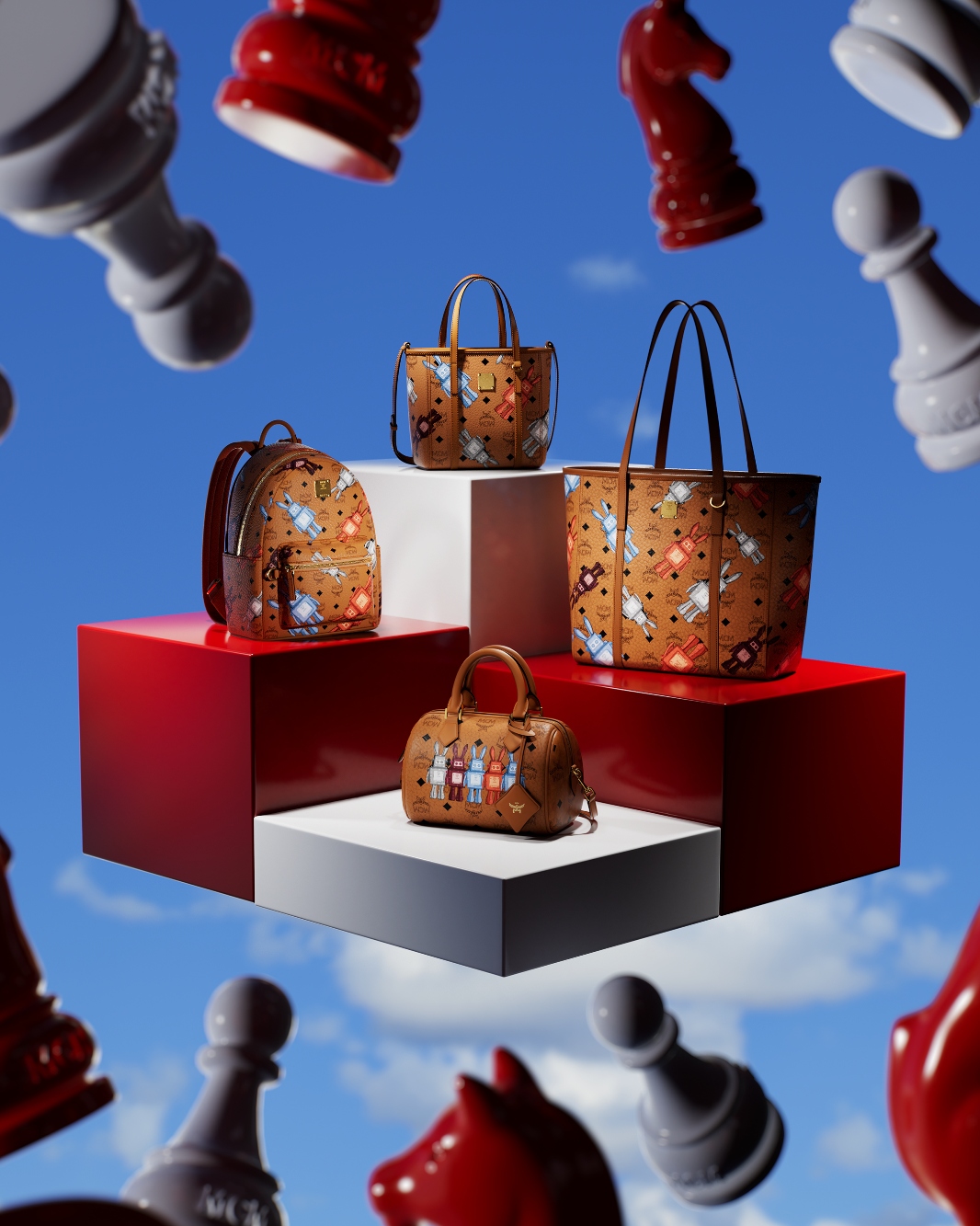
MCM’s Lunar New Year collection draws on the zodiac’s associations with freedom, vitality and forward momentum. Central to the campaign is the motif of the chess knight — a symbol of unconventional movement and decisive choice — reflecting both the agility of the horse and the strategic discipline of the game. The collection features upcycled Aren bags in Cognac Visetos, hand-painted with the knight motif to transform classic pieces into limited-edition expressions of individuality and purpose. Pieces include the Year of the Horse Aren Shoulder Bag, Aren Chain Shoulder Bag and the Aren Crossbody — each designed to reinforce the concept of intentional movement. The campaign also sees immersive visuals and global activations, emphasising the idea that progress is achieved through confidence and decisive action. The collection provides a contemporary interpretation of Lunar New Year symbolism through contemporary design and artisanal detailing.
Emporio Armani
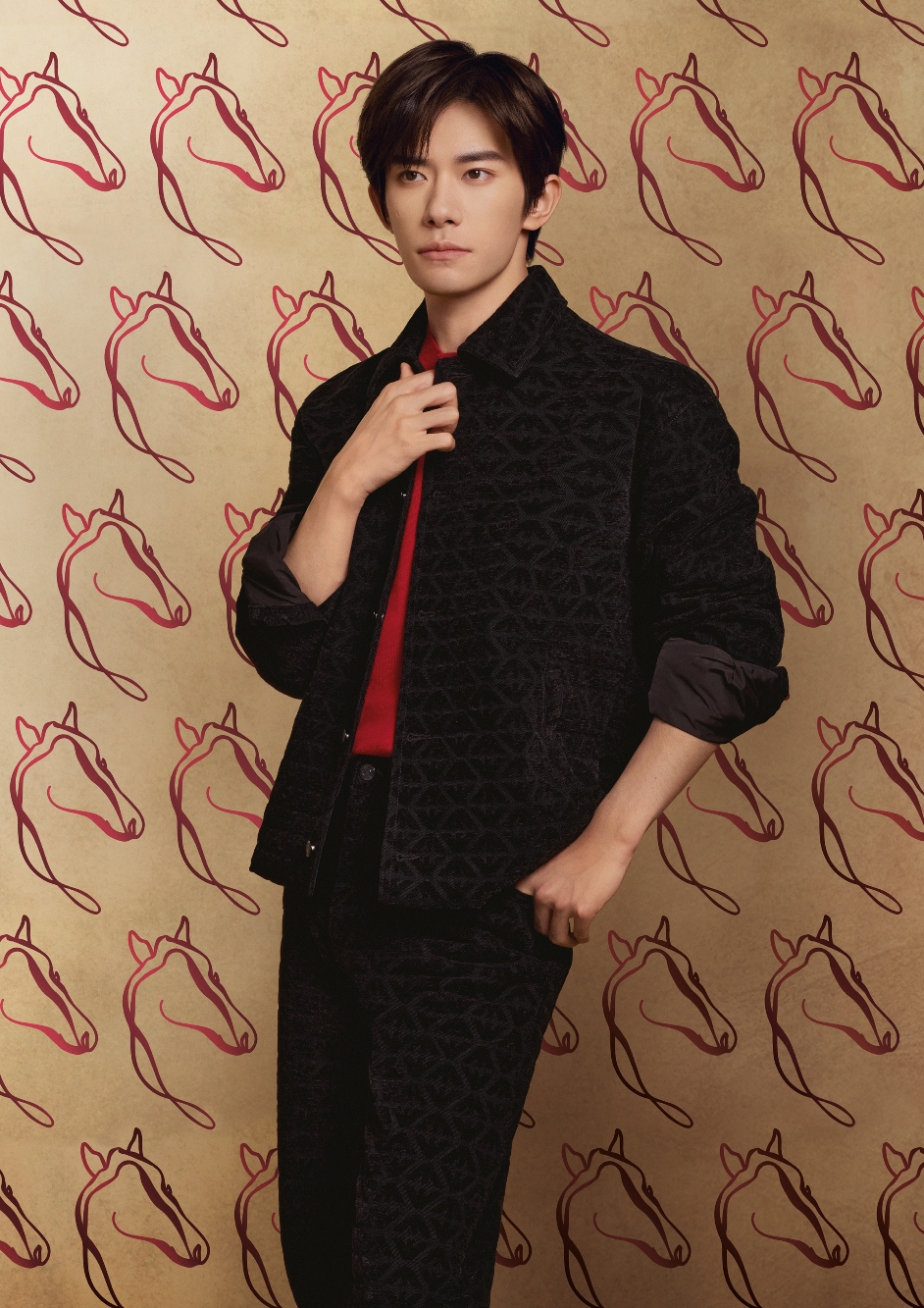
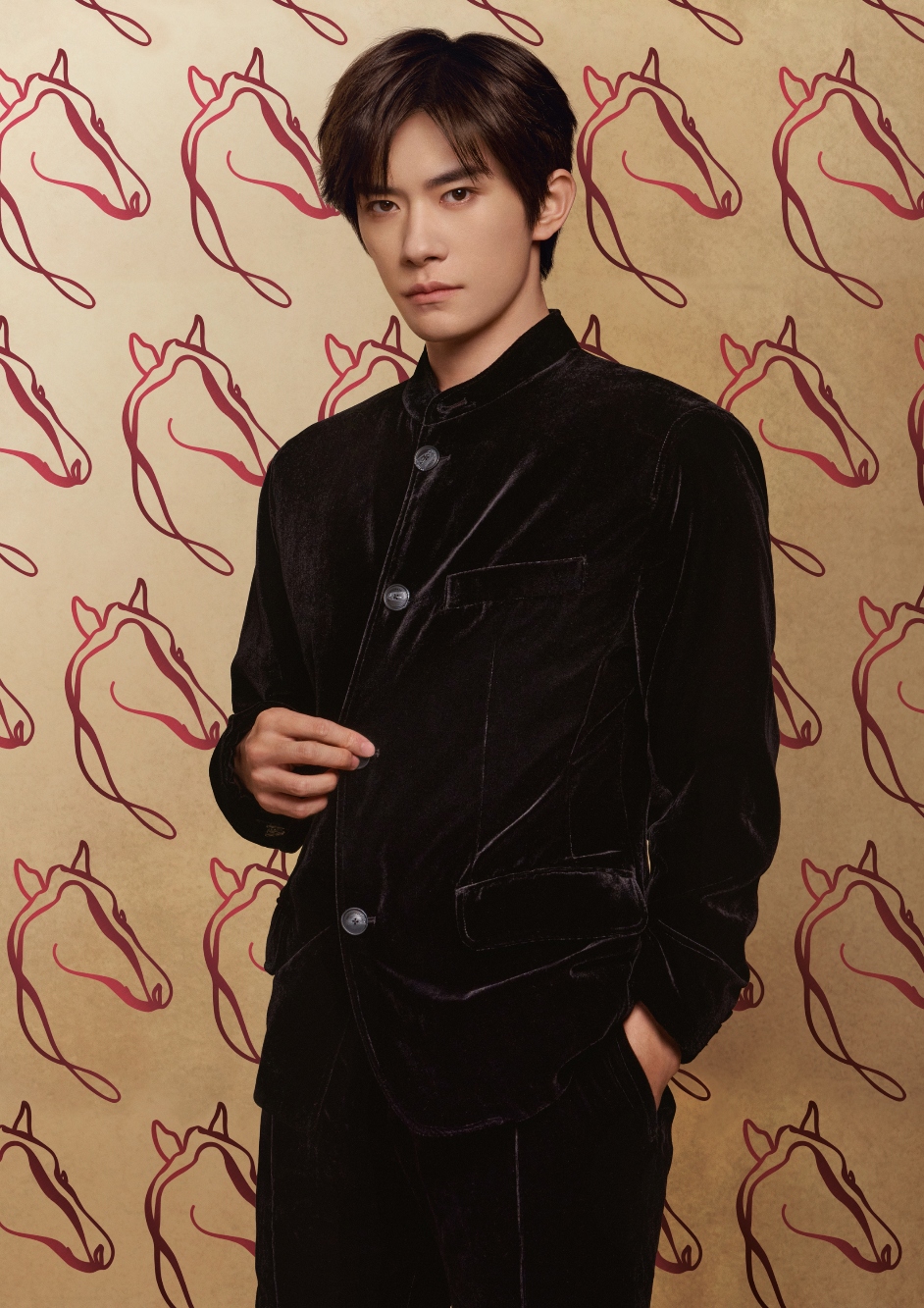
Emporio Armani’s Lunar New Year collection features motifs drawn from the zodiac horse, expressed through diamond accents, three-dimensional flocking techniques and detachable golden horse charms, which serve as a nod to renewal and fresh beginnings. Womenswear pieces include T-shirts and tops with understated horse detailing, tweed suits with removable charms, jeans, midi skirts, cotton coats, down gilets, jersey knitwear, sweatshirts and scarves. The men’s wardrobe encompasses velvet suits, bomber and hooded jackets, sweatshirts, T-shirts, polo shirts, trousers and coordinated scarf-and-cap sets.
The campaign is fronted by Emporio Armani global ambassador Jackson Yee, alongside Greater China and Asia-Pacific ambassadors Zeng Shunxi and Bai Lu — highlighting the versatility of the capsule. Zeng Shunxi wears the men’s 2026 Chinese New Year automatic watch with an openwork dial and brown leather strap, complemented by gunmetal jewellery with zircon details, while Bai Lu showcases the women’s edition with a mother-of-pearl dial, flake pattern, stone-set horseshoe accents and a burgundy croco-patterned strap.
For more on the latest in luxury fashion and style reads, click here.
The post 10 Exclusive Lunar New Year 2026 Capsule Collections appeared first on LUXUO.
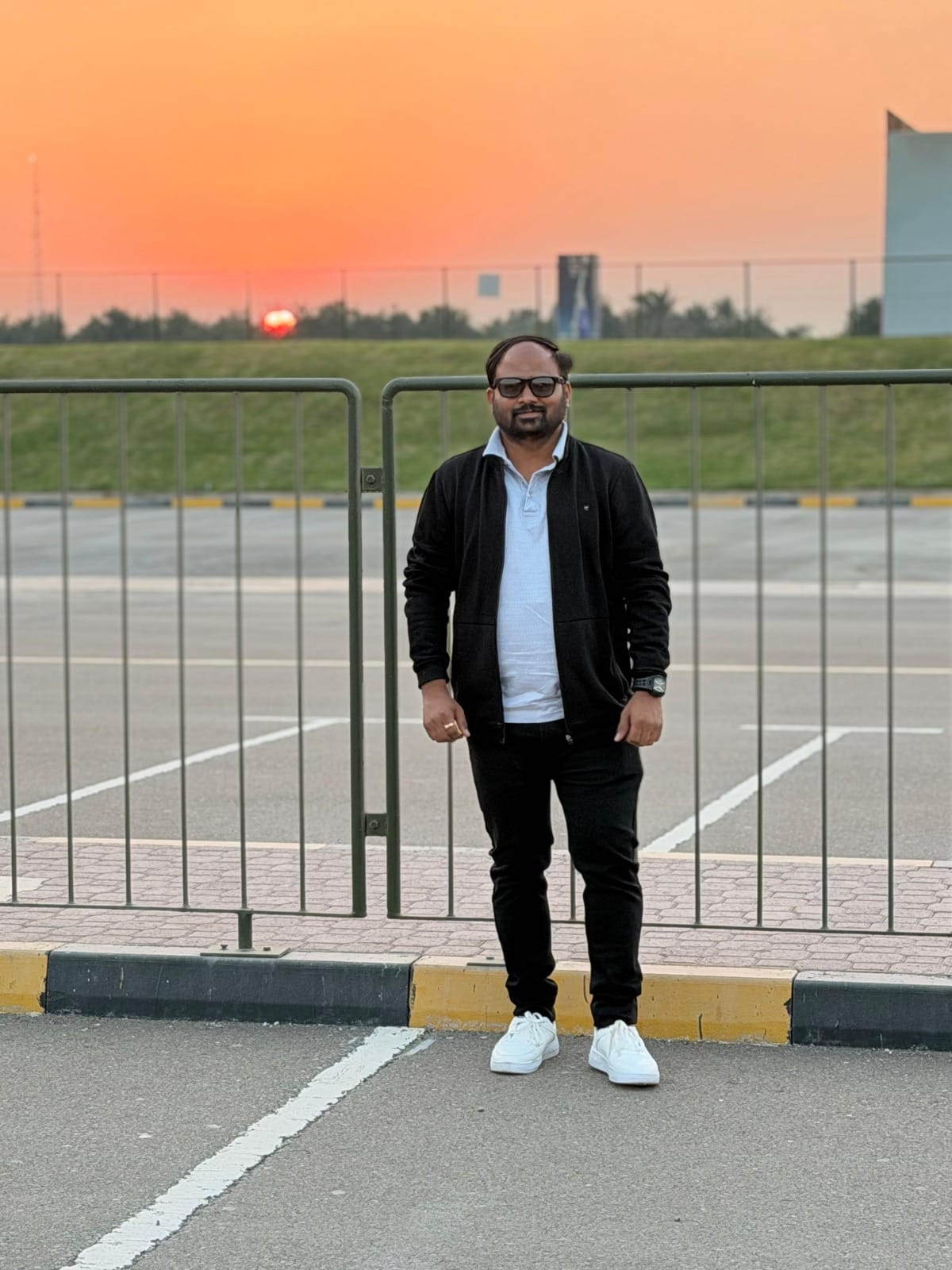
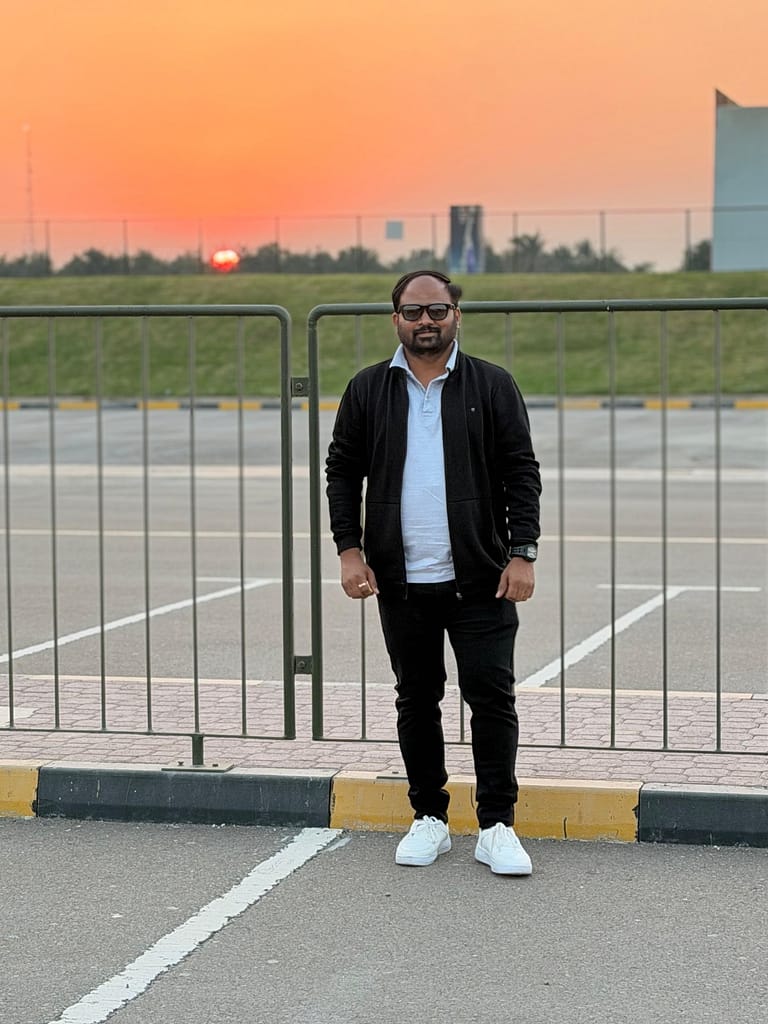
Anand’s journey is not defined by privilege, powerful connections, or overnight success. It is a story built quietly—through discipline, sacrifice, and unwavering belief. Born into a farmer family, Anand grew up in an environment where hard work was not an option but a way of life. The fields taught patience, and daily routines instilled resilience. These early lessons shaped his character long before he entered the professional world.
His formal education began in Pune, but his high school and college years were completed in his village. Living in hostels throughout this period forced Anand to learn independence at a young age. He managed his own time, expenses, and responsibilities an experience that prepared him for the realities ahead. Academically, he was never a topper. He remained an average student, and during his BSc in Physics, he failed twice. Those failures carried heavy emotional weight, amplified by family responsibilities, financial strain, and the unspoken societal pressure of “What will people say?” Yet even in those moments, Anand refused to give up.
During college, survival demanded action. To support himself, Anand worked night shifts for nearly a year as a machine operator at a newspaper printing press in Mapusa, Goa. The relentless noise of machines, strict deadlines, and sleepless nights tested his endurance. But they also taught him discipline, humility, and the true value of earning money through honest labor. Those long nights quietly strengthened his resolve.
After completing his degree, Anand returned to Pune with no fixed plan only determination. He was ready to take on any work available. He began as café staff, where his sincerity and dedication stood out. The café owner soon trusted him with responsibilities at a medical store, handling daily cash and accounts. Later, Anand worked in a call center. Even then, he continued searching for better opportunities. Some experiences ended in disappointment and loss, but each setback became a lesson rather than a stopping point.
A significant turning point came when Anand joined Pride Company. The interview process was unexpectedly simple. There were no technical questions or elaborate assessments. He was asked just one question: “What is your name?” When offered a salary of ₹10,000 per month, Anand felt genuine happiness. It was not about the amount it represented stability, dignity, and a fresh beginning.
The real test began after joining Pride. Daily travel expenses of around ₹70 were unaffordable. Instead of complaining, Anand made a defining choice. He repaired an old bicycle and began cycling nearly 12 kilometers one way 24 kilometers every day to work. No matter how exhausted he felt after returning home, he cooked his own meals and prepared his tiffin for the next day. This routine continued without interruption for months and then years.
During this phase, Anand did not visit his home for five continuous years. While working at Pride, he did not take a single leave for three straight years. His extraordinary discipline did not go unnoticed. The company formally recognized his commitment with a special “Access All Days” award.
In the first major meeting at Pride, CEO Mr. Sudendu sir made a statement that deeply impacted Anand. He said that those who worked with honesty and consistency would one day be able to own a home in Pune. At the time, Anand was earning only ₹10,000 per month, and owning a home in the city felt impossible. Still, he placed complete faith in those words and made a firm decision no complaints, only more hard work.
Over the next three years, Anand consistently delivered strong performance, took on extra responsibilities, earned incentives, and treated every task as an opportunity to grow. Trust within the company increased steadily. Eventually, Mr. Sudendu Sir entrusted Anand with a new process. Anand recognized it as a turning point and committed himself fully. Step by step, the process succeeded, and soon he was given his own team and leadership responsibility.
The sacrifices continued. For nine consecutive years, Anand did not attend his village fair. Due to work and circumstances, he could not celebrate a single festival with his parents for seven years. Diwali, Dussehra, and Ganesh Chaturthi existed only as memories during that time.
Today, the promise made in that first meeting has come true. Anand owns his own home in Pune. He holds a strong and responsible position within Pride and has completed nearly nine years with the company. He continues to serve as a key pioneer, contributing through leadership, process development, and long-term commitment.
Anand openly acknowledges that his journey would not have been possible without the guidance of Mr. Sudendu Sir and Ms. Preeti mam. Mr. Sudendu Sir offered belief before results, while Ms. Preeti Mam motherly in care yet firm in discipline guided, corrected, and shaped Anand throughout his growth.
From failing twice in college, working night shifts at a printing press, and cycling 24 kilometers daily, to owning a home in Pune and leading teams, Anand’s journey delivers a timeless message: belief gives direction, discipline creates success, and the right mentors truly transform lives.
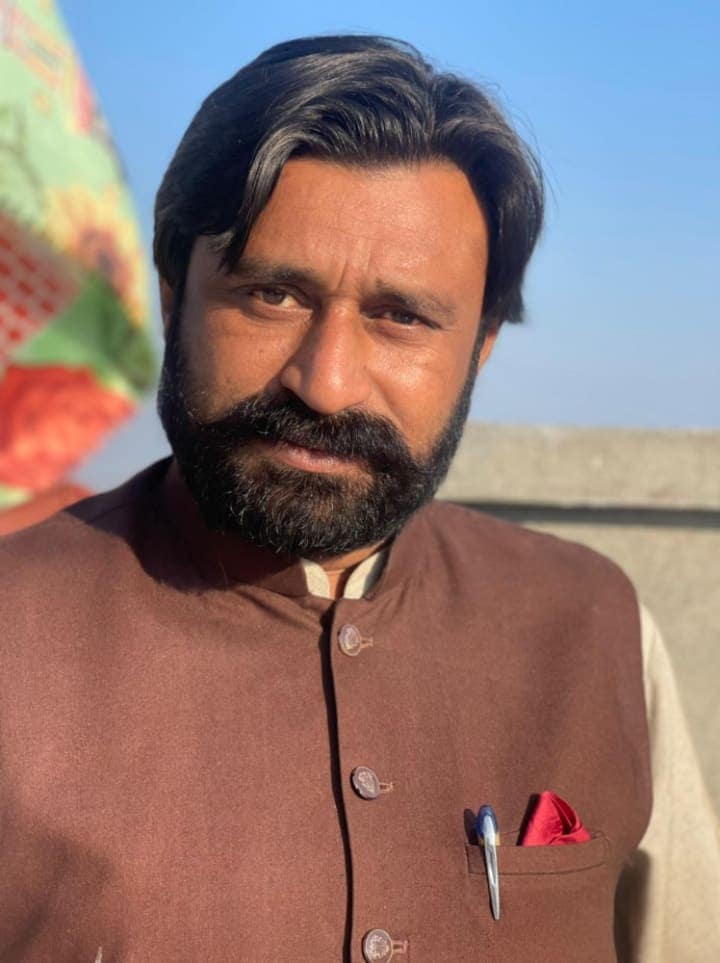
Rana Tahir Faisal: A Journey of Transformation, Faith, and Public Influence
Rana Tahir Faisal is a prominent Pakistani public figure whose life story reflects a rare and striking transformation. Born on January 1, 1982, in Okara, Punjab, he belongs to a Rana Rajput family known locally for influence and deep-rooted traditions. His early life was shaped by the social realities of his surroundings, family dynamics, and a strong presence in the local power structure of the region.
In his youth and early adulthood, Rana Tahir Faisal gained notoriety in Okara due to involvement in criminal activities alongside his brothers. This period marked a controversial chapter of his life, earning him fear and recognition within local circles. His name became associated with power, conflict, and street influence, defining his public image for several years.
A major turning point came around 2010, when Rana Tahir Faisal experienced a profound spiritual awakening after meeting the Sufi saint Sain Sher Ali Qalandar. This encounter reshaped his worldview and became the foundation of a complete personal transformation. He distanced himself from his past lifestyle and embraced Sufism, humility, and service to humanity. This shift was not merely symbolic; it reflected in his daily conduct, priorities, and long-term vision.
After his transformation, he became actively involved in spiritual and humanitarian activities. He spent time at Sufi shrines, participated in devotional practices, supported langar services for the poor, and promoted values of compassion and forgiveness. His spiritual identity became a defining aspect of his new public image, earning him respect among followers of Sufism and local communities.
Alongside spirituality, Rana Tahir Faisal entered the fields of business, media, and the arts. He founded and managed music and production platforms such as RT Music and TA Production, focusing on cultural and spiritual content. His artistic work often reflects themes of faith, redemption, and inner struggle, mirroring his personal journey.
In the business sector, he expanded into infrastructure and telecommunications-related ventures, contributing to development projects and employment opportunities in different regions of Pakistan. These ventures strengthened his standing as a businessman capable of combining commercial interests with community benefit.
Rana Tahir Faisal also became politically active, aligning himself with the Pakistan Muslim League (Nawaz). While not holding an elected office, he plays a role in grassroots mobilization, political networking, and local campaign support. His influence at the community level has positioned him as a potential future political contender.
Today, Rana Tahir Faisal is viewed as a complex and evolving personality — a man whose life embodies transformation from power through fear to influence through service. His journey continues to attract attention, debate, and admiration, making him a notable figure in contemporary Pakistani social and political discourse.
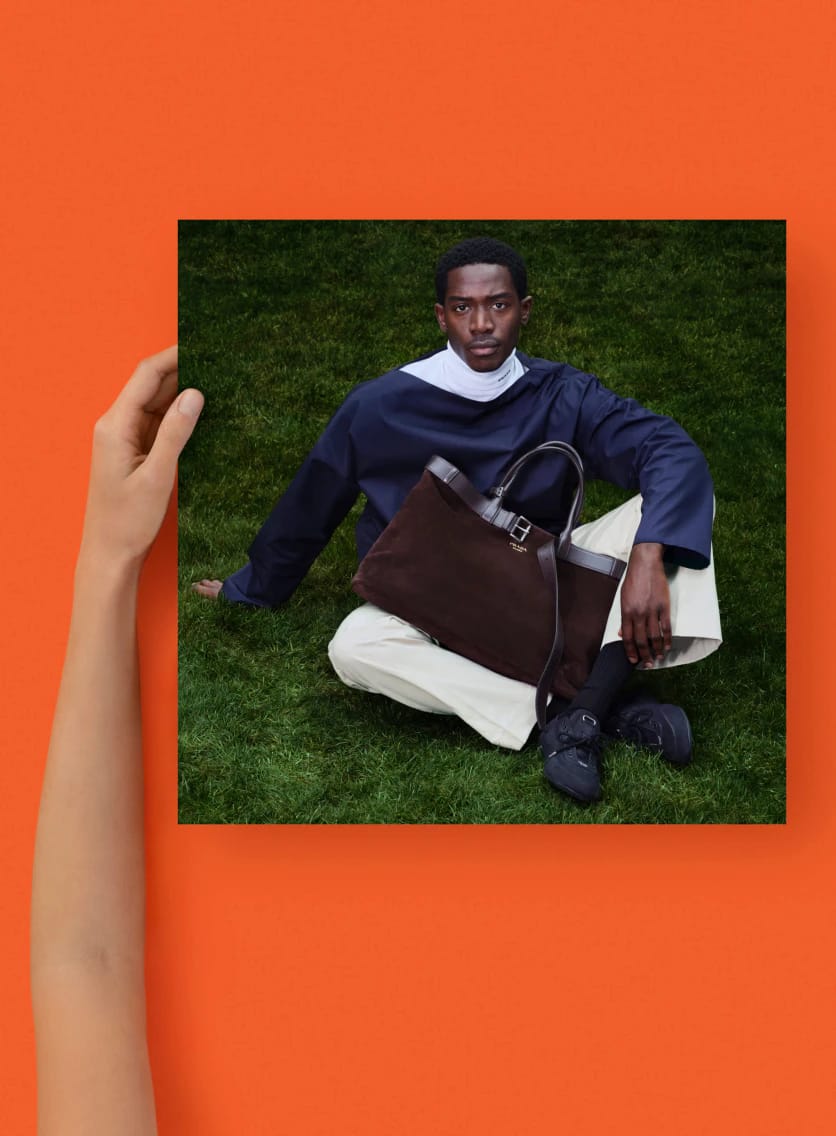
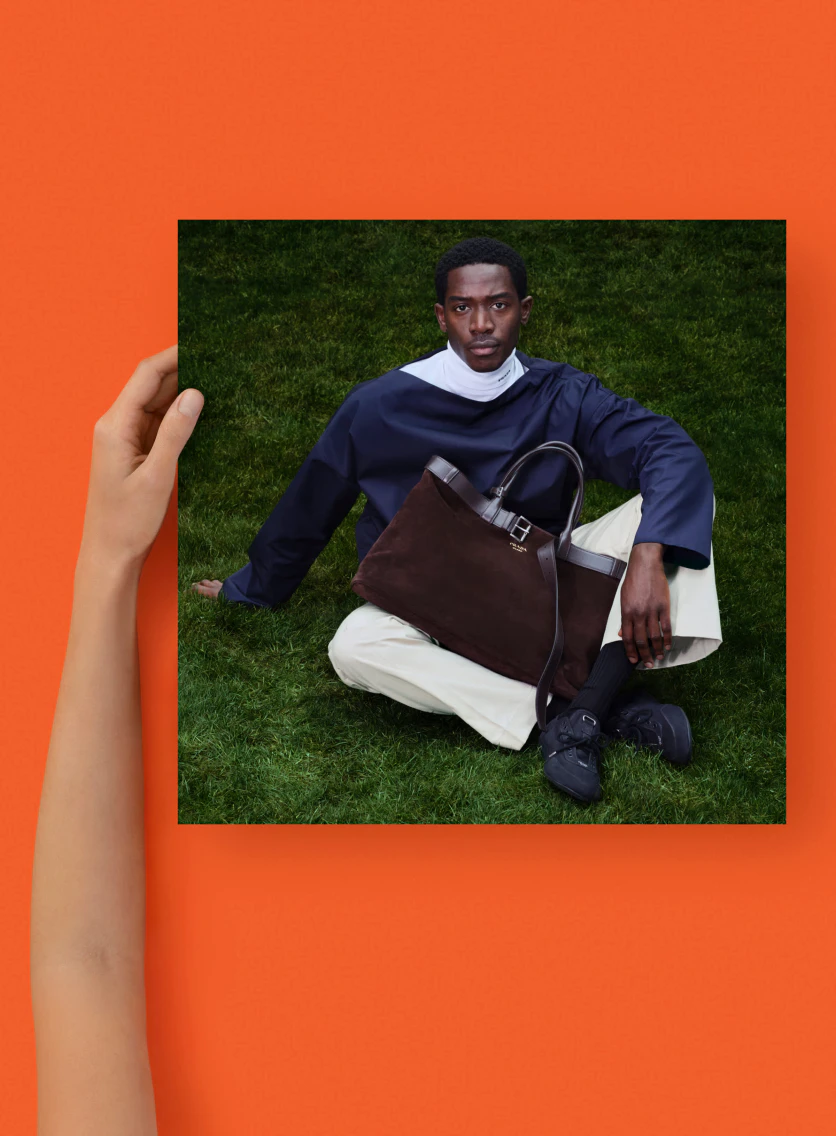
Despite the generally out-of-reach nature of celebrities and high fashion, through social media, the internet, and magazines we are able to grasp this foreign world within an arms-length — almost parasocially so. The new campaign ‘Image of an Image’ for Prada’s SS26 collection by Miuccia Prada and Raf Simons is a charming wink at the relationships between advertising, fashion, and viewers.
In its essence, parasocial behaviour is the ways people create illusions of intimacy and closeness by crossing the divide between fan and celebrity. Since celebrities are turned into spectacles, isn’t it only natural that we become spectators? Or is it our constant gaze, admiration, and attention that raise these distant figures onto pedestals of aspiration?
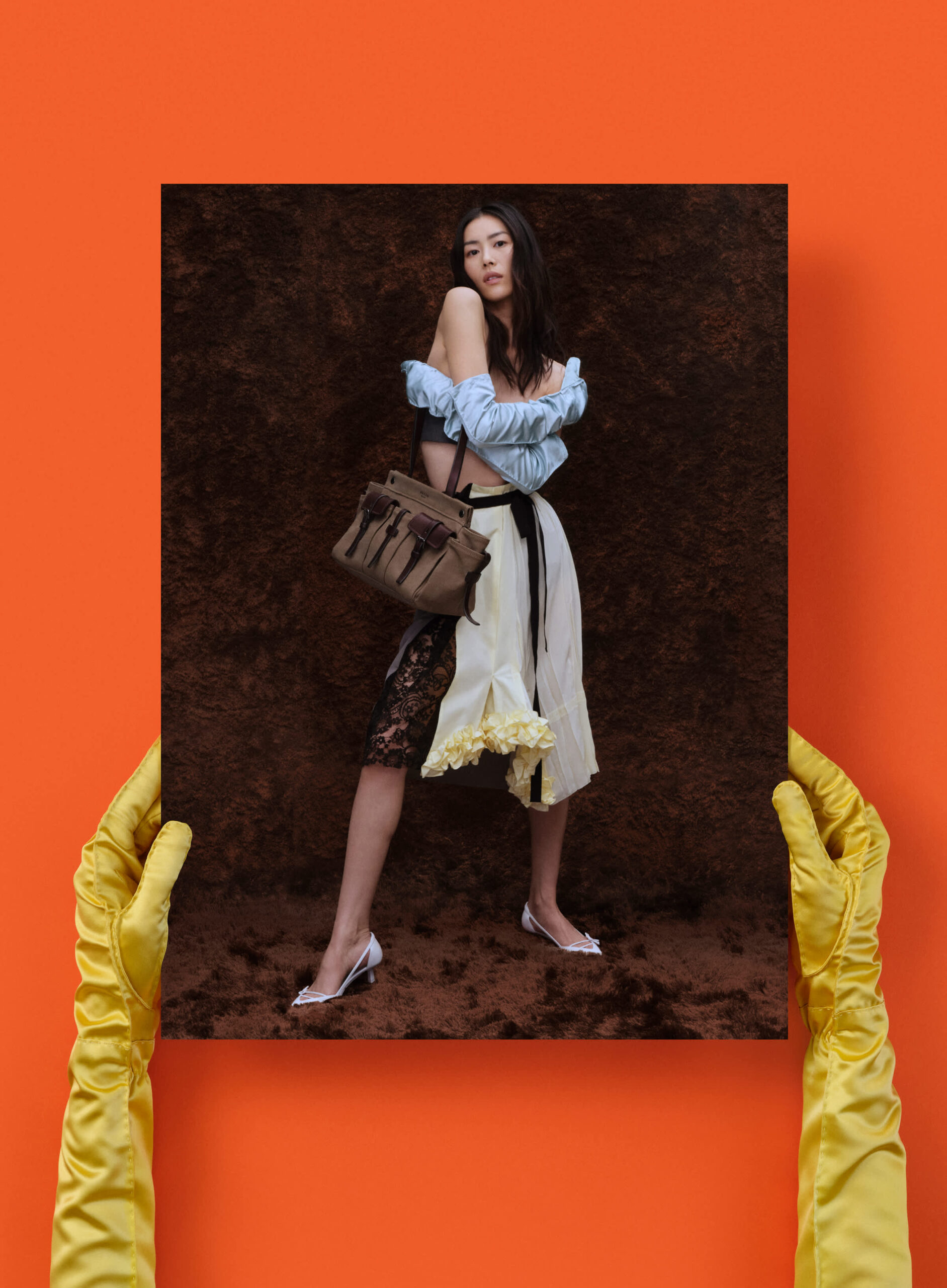
This year, Prada commissioned artist Anne Collier to execute a portfolio of images that re-contextualises our idea of fashion campaigns within the digital age. Collier’s visions turns the SS26 campaign into something physical — a material object to be held and felt.
Shot by Oliver Hadlee Pearch, each still life composition is held by a pair of hands, creating the effect of an additional observer. Consequently, the core of advertising is laid bare as the viewer is forced to identify with the hands of the onlooker who holds the photographs with admiration (and maybe even desire) for the campaign and models.
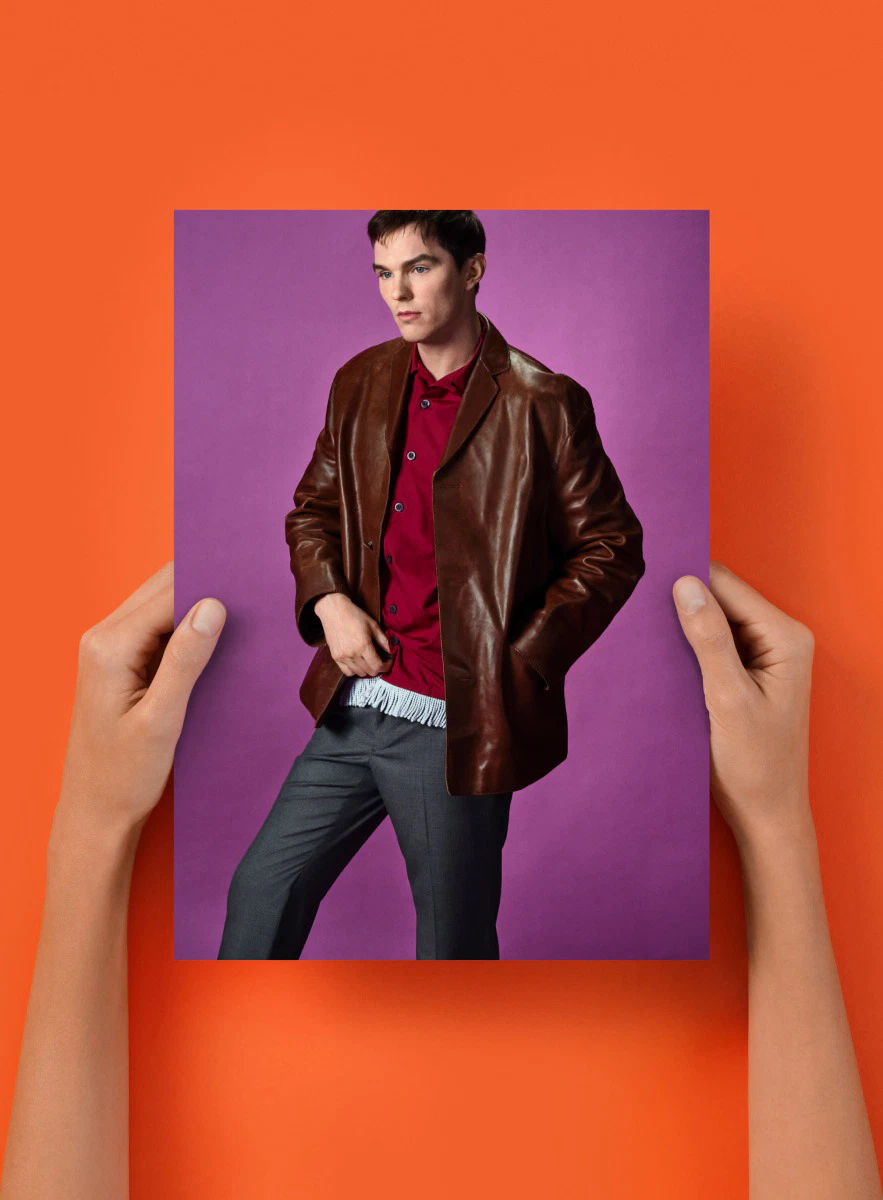
SS26 Prada pieces are worn by an ensemble of actors and personalities in the campaign including: actors Hunter Schafer, Nicholas Hoult, Carey Mulligan, Levon Hawke, and Damson Idris, musician John Glacier, and model Liu Wen. All the models — except for Nicholas Hoult who purposefully averts his gaze — stares straight at the camera. After all, it’s fitting for the campaign models’ occupations in industries built on the importance of perception and visibility.
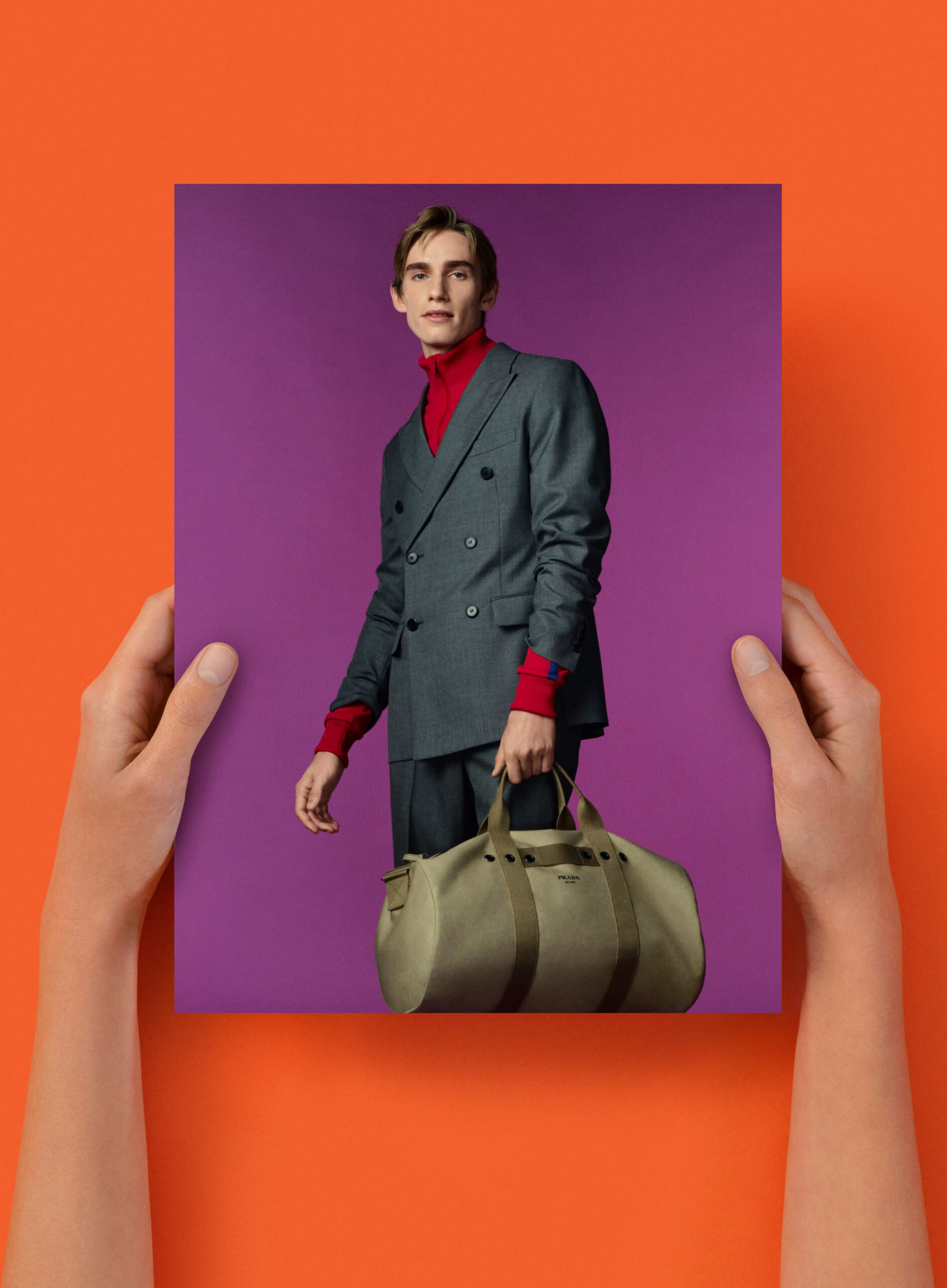
By creating this doubling effect from the models looking at us looking at them, the campaign instantly sparks discourse about our complicity in looking and the common practice of parasociality in the digital age. Image of an Image is both a celebration and a liberation from common fashion imagery; it’s an outside consideration of fashion through the lens of fine art and objective truths.
This article was first seen on Men’s Folio Singapore.
For more on the latest fashion reads, click here.
The post Prada’s Spring/Summer ’26 Campaign Turns the Camera Back on the Viewer appeared first on LUXUO.