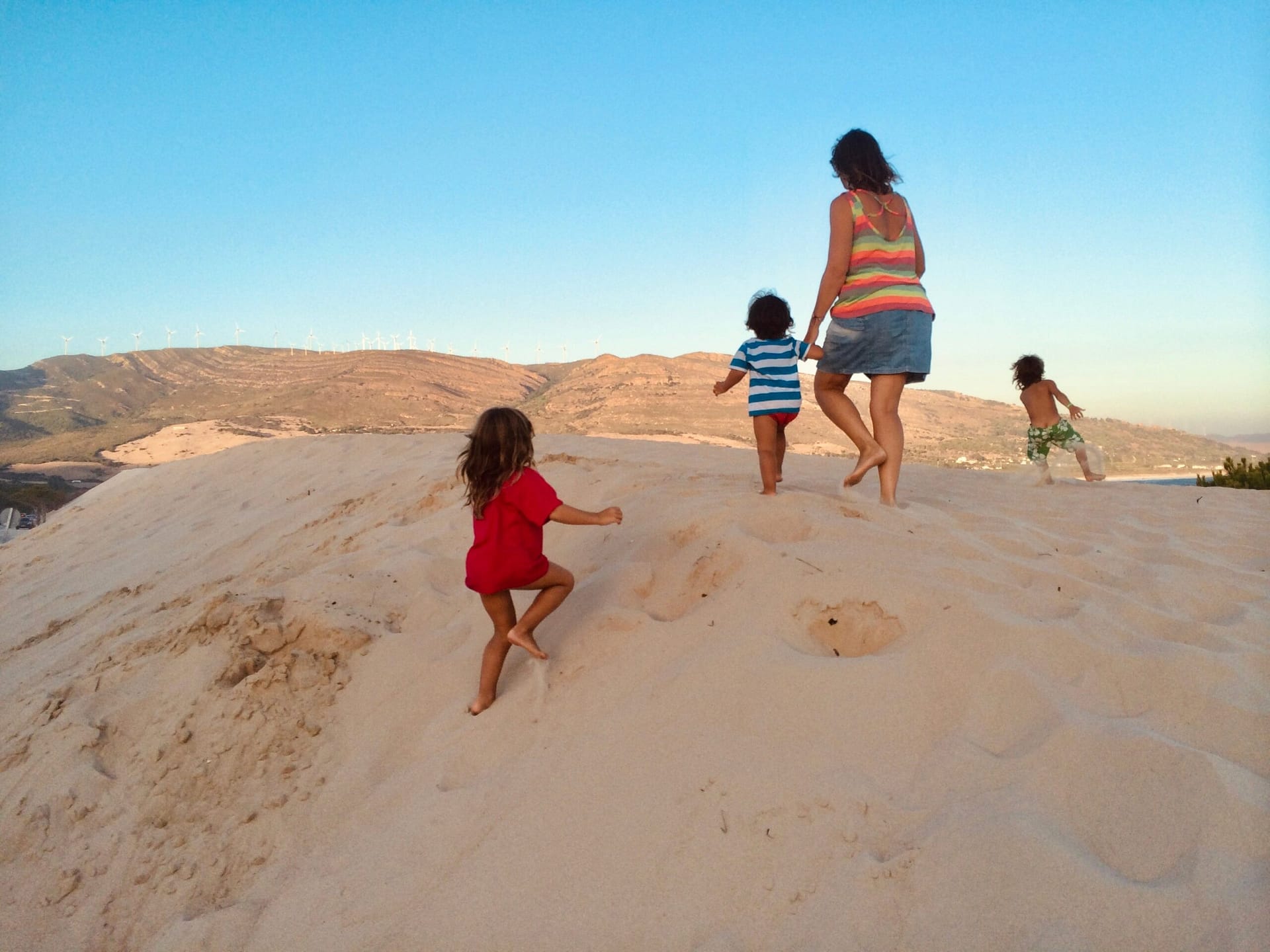
The author's kids playing in front of a wall of mapsThe author’s kids playing in front of a wall of maps

When we landed in Spain, I thought I knew what the hard part would be: the paperwork, the language, finding a decent school for my kids. It turned out to be none of those.

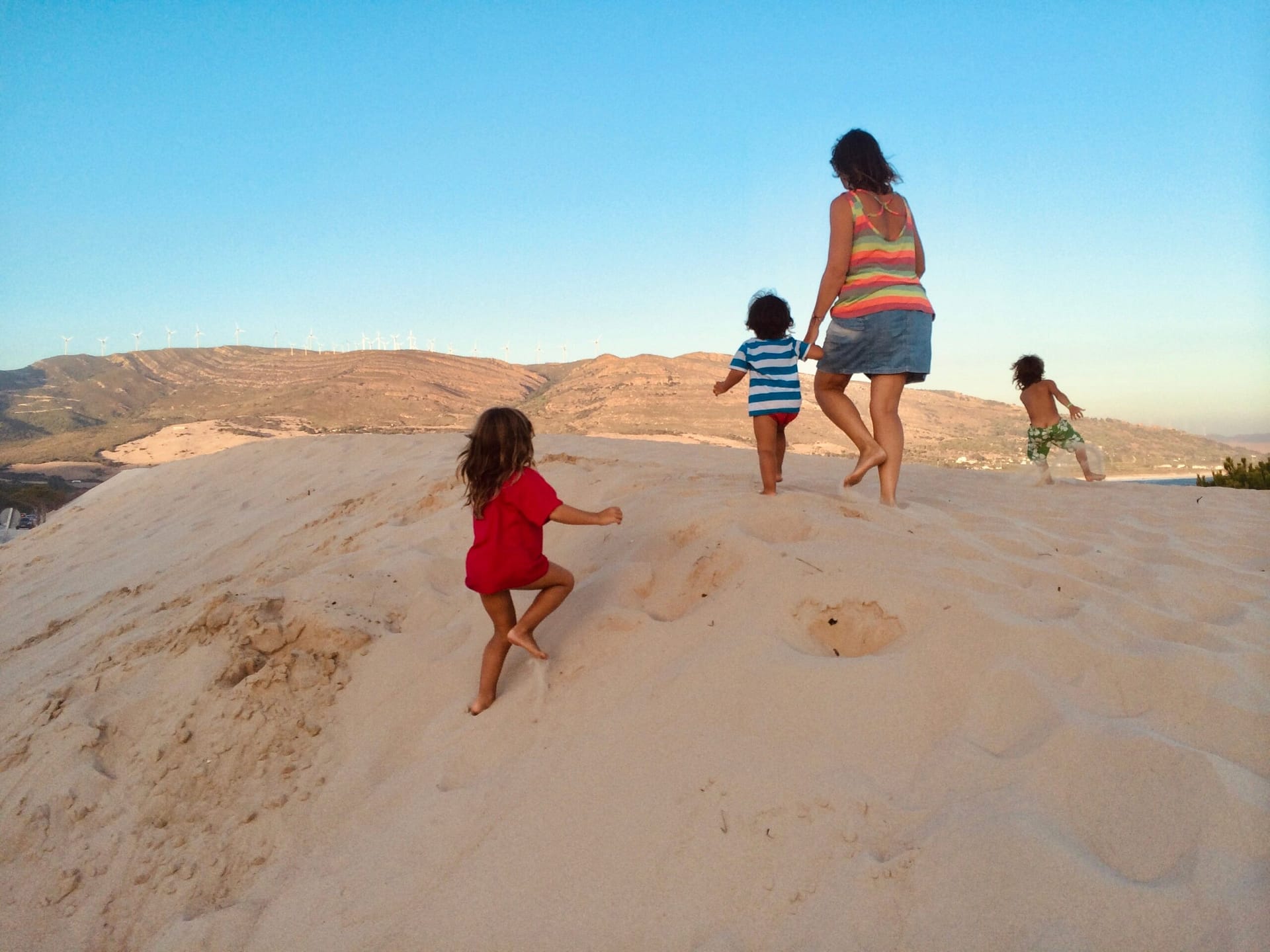
One afternoon, not long after we arrived, I took my son to the beach. He spotted a group of dolphins close to shore and started shouting before I could even take it in. His excitement was pure: loud, physical, alive. I just stood there, half smiling, half stunned by the thought that somewhere along the line I had started believing that moments of pure wonder and awe weren’t really meant for me anymore.

That’s the thing no one says out loud about motherhood. You don’t stop wanting adventure; you just learn it’s no longer encouraged. You’re meant to provide stability now – the constant background hum that keeps everything running smoothly.

Before having children, I lived abroad and travelled widely. I had explored more than 50 countries and always thought of myself as someone who was comfortable with change.

But when I became a mother, something shifted. I started receiving the message, subtle but persistent, that the responsible thing to do now was to stay put. I didn’t stop wanting to explore; I just started to question whether I was allowed to.

For the first few years, we lived a fairly conventional city life in London – one of routines, work schedules, nursery runs and the unspoken expectation that fun and novelty had given way to stability. But my restlessness never fully disappeared.
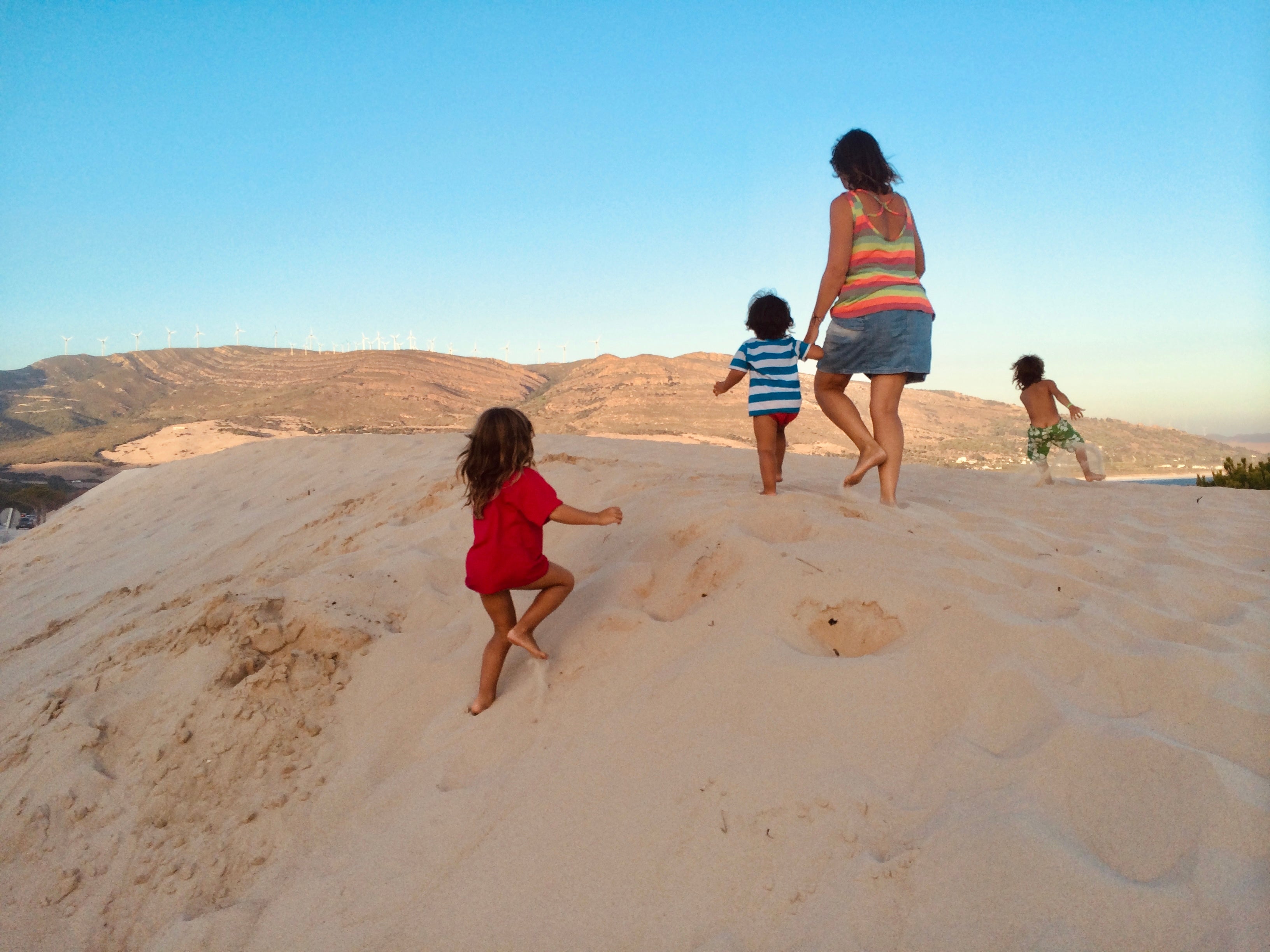
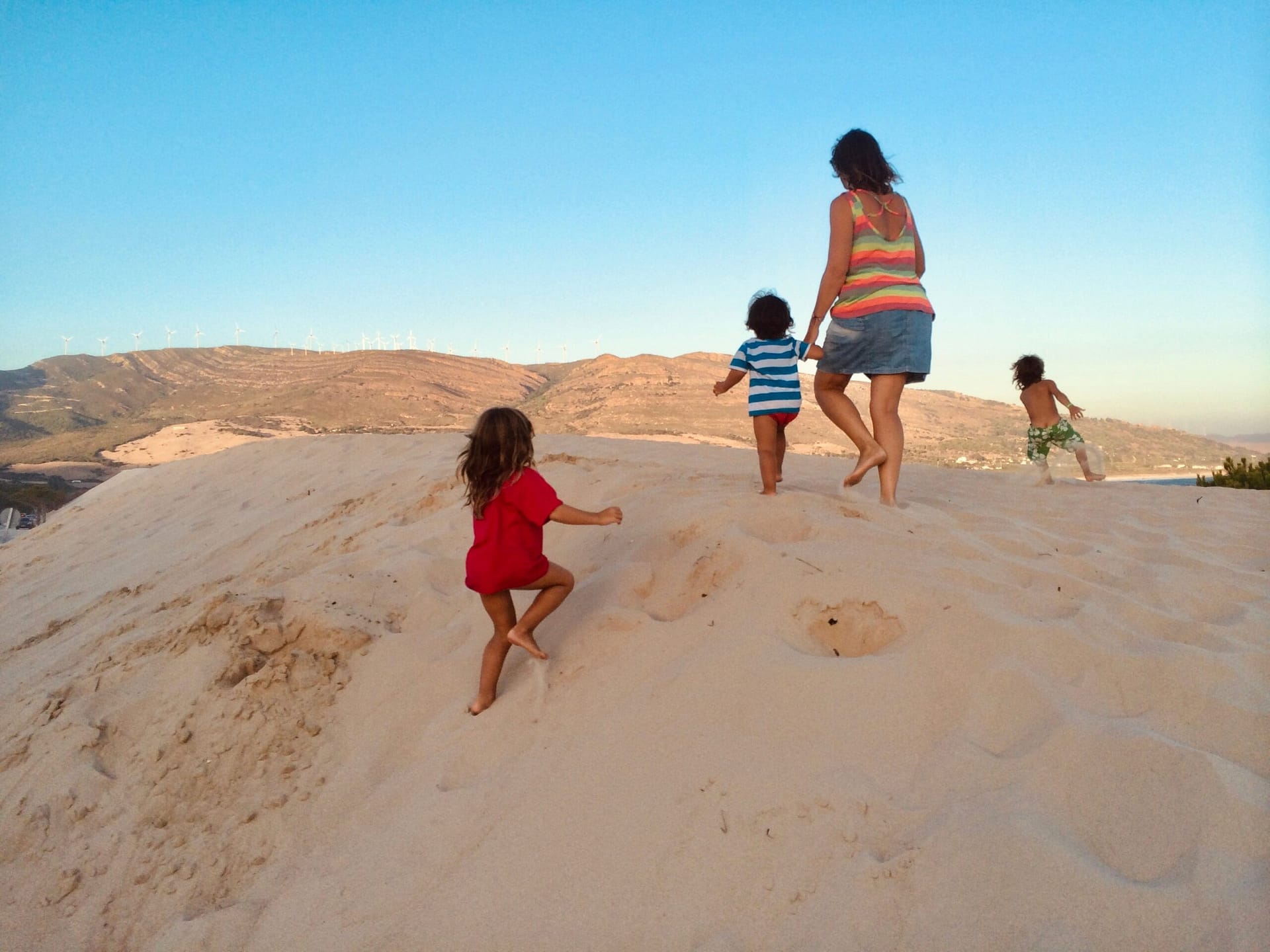
The author and her family on a beach walk in Andalucia, SpainThe author and her family on a beach walk in Andalucia, Spain

When we made the decision to move to Spain, it was something of an experiment – a chance to see what life might look like somewhere different, while the children were still small enough to adapt easily.

That first move became a pattern. Over the years, we relocated eight times as a family: to Spain, Italy, Switzerland, Northern Ireland. Some moves were prompted by a desire for language learning, others just because we wanted to try out a different rhythm of life. 

The children learned how to say quick hellos and long goodbyes. They picked up fragments of different languages, mixed up spellings, and made friends they still message in other time zones. 

Underneath it all was a desire to teach our children that the world was larger than just one place, and to have them grow up feeling at home in more than one culture. But I still felt a quiet strain – the guilt that maybe we were uprooting too often, chasing something children were meant to be shielded from.

Relocation looks glamorous from a distance, but in reality, it is a series of small practical puzzles: finding a house with decent heating, translating school emails, explaining to the kids why lunch suddenly starts at 3pm and no one seems bothered by it.

And underneath the logistics lies the emotional work of starting over.

The author on a family stroll in Vatican CityThe author on a family stroll in Vatican City

When one of my children started acting out after a move, I brushed it off as normal settling-in stress. I kept telling myself it was temporary. But what I now recognise is that it was grief: the low-level kind that hides behind bad moods and exhaustion.

After that, we changed our approach. We’d been good at talking about the excitement of what was next, but not about what we were leaving behind. Before each move, we started talking about what would be lost as well as what might be found. The friends, the familiar streets, our local corner shop. It didn’t make goodbyes easier, but it made them more honest.

Watching my children adapt forced me to reconsider what stability actually means. For our family, that anchor became simple rituals: dinners where everyone could say what they missed and what they were excited about, sometimes in the same breath.

Children, it turns out, are often better at transition than adults. They throw themselves into new places; they make connections quickly. It’s the parents who cling to the structure of what’s familiar, who mistake routine for safety. Watching my kids adjust forced me to reconsider what stability actually means.

Stability isn’t about one postcode forever. Maybe it’s about feeling emotionally anchored, wherever you end up.

Raising children is not about protecting them from change; my role is to show them how to move through it.

I also began to see what my children were gaining. They became comfortable entering unfamiliar spaces. They learned early that people live differently in different parts of the world. They ask questions about culture and language, and they developed perspectives they might not have if their world had stayed smaller.

They understand that identity can stretch across places, languages and communities. That belonging does not have to be tied to one passport or geography. Those are not small lessons.

Slowly, I also began to understand what all these moves were teaching me about motherhood: raising children is not about protecting them from change, my role is to show them how to move through it.

For a long time, I thought motherhood narrowed my world. In reality, it rewired it. Adventure does not have to mean throwing yourself off cliffs. For us, it means moving towards a life that feels truer, even when it doesn’t match the script people expect you to follow.

That afternoon on the beach, watching my son shouting with delight at the dolphins, reminded me of what I’d forgotten: that adventure and awe aren’t owned by the young or the brave. They’re available to anyone willing to look up and pay attention. 

And maybe that is the lesson I want my children to carry with them most – that their world is allowed to be big, changeable and full of beginnings.

Do you have a compelling personal story you’d like to see published on HuffPost? Find out what we’re looking for here and send us a pitch at pitch@huffpost.com.

The author's kids playing in front of a wall of mapsThe author’s kids playing in front of a wall of maps

When we landed in Spain, I thought I knew what the hard part would be: the paperwork, the language, finding a decent school for my kids. It turned out to be none of those.

One afternoon, not long after we arrived, I took my son to the beach. He spotted a group of dolphins close to shore and started shouting before I could even take it in. His excitement was pure: loud, physical, alive. I just stood there, half smiling, half stunned by the thought that somewhere along the line I had started believing that moments of pure wonder and awe weren’t really meant for me anymore.

That’s the thing no one says out loud about motherhood. You don’t stop wanting adventure; you just learn it’s no longer encouraged. You’re meant to provide stability now – the constant background hum that keeps everything running smoothly.

Before having children, I lived abroad and travelled widely. I had explored more than 50 countries and always thought of myself as someone who was comfortable with change.

But when I became a mother, something shifted. I started receiving the message, subtle but persistent, that the responsible thing to do now was to stay put. I didn’t stop wanting to explore; I just started to question whether I was allowed to.

For the first few years, we lived a fairly conventional city life in London – one of routines, work schedules, nursery runs and the unspoken expectation that fun and novelty had given way to stability. But my restlessness never fully disappeared.

The author and her family on a beach walk in Andalucia, SpainThe author and her family on a beach walk in Andalucia, Spain

When we made the decision to move to Spain, it was something of an experiment – a chance to see what life might look like somewhere different, while the children were still small enough to adapt easily.

That first move became a pattern. Over the years, we relocated eight times as a family: to Spain, Italy, Switzerland, Northern Ireland. Some moves were prompted by a desire for language learning, others just because we wanted to try out a different rhythm of life. 

The children learned how to say quick hellos and long goodbyes. They picked up fragments of different languages, mixed up spellings, and made friends they still message in other time zones. 

Underneath it all was a desire to teach our children that the world was larger than just one place, and to have them grow up feeling at home in more than one culture. But I still felt a quiet strain – the guilt that maybe we were uprooting too often, chasing something children were meant to be shielded from.

Relocation looks glamorous from a distance, but in reality, it is a series of small practical puzzles: finding a house with decent heating, translating school emails, explaining to the kids why lunch suddenly starts at 3pm and no one seems bothered by it.

And underneath the logistics lies the emotional work of starting over.

The author on a family stroll in Vatican CityThe author on a family stroll in Vatican City

When one of my children started acting out after a move, I brushed it off as normal settling-in stress. I kept telling myself it was temporary. But what I now recognise is that it was grief: the low-level kind that hides behind bad moods and exhaustion.

After that, we changed our approach. We’d been good at talking about the excitement of what was next, but not about what we were leaving behind. Before each move, we started talking about what would be lost as well as what might be found. The friends, the familiar streets, our local corner shop. It didn’t make goodbyes easier, but it made them more honest.

Watching my children adapt forced me to reconsider what stability actually means. For our family, that anchor became simple rituals: dinners where everyone could say what they missed and what they were excited about, sometimes in the same breath.

Children, it turns out, are often better at transition than adults. They throw themselves into new places; they make connections quickly. It’s the parents who cling to the structure of what’s familiar, who mistake routine for safety. Watching my kids adjust forced me to reconsider what stability actually means.

Stability isn’t about one postcode forever. Maybe it’s about feeling emotionally anchored, wherever you end up.

Raising children is not about protecting them from change; my role is to show them how to move through it.

I also began to see what my children were gaining. They became comfortable entering unfamiliar spaces. They learned early that people live differently in different parts of the world. They ask questions about culture and language, and they developed perspectives they might not have if their world had stayed smaller.

They understand that identity can stretch across places, languages and communities. That belonging does not have to be tied to one passport or geography. Those are not small lessons.

Slowly, I also began to understand what all these moves were teaching me about motherhood: raising children is not about protecting them from change, my role is to show them how to move through it.

For a long time, I thought motherhood narrowed my world. In reality, it rewired it. Adventure does not have to mean throwing yourself off cliffs. For us, it means moving towards a life that feels truer, even when it doesn’t match the script people expect you to follow.

That afternoon on the beach, watching my son shouting with delight at the dolphins, reminded me of what I’d forgotten: that adventure and awe aren’t owned by the young or the brave. They’re available to anyone willing to look up and pay attention. 

And maybe that is the lesson I want my children to carry with them most – that their world is allowed to be big, changeable and full of beginnings.

Do you have a compelling personal story you’d like to see published on HuffPost? Find out what we’re looking for here and send us a pitch at pitch@huffpost.com.

The author's kids playing in front of a wall of mapsThe author’s kids playing in front of a wall of maps

When we landed in Spain, I thought I knew what the hard part would be: the paperwork, the language, finding a decent school for my kids. It turned out to be none of those.

One afternoon, not long after we arrived, I took my son to the beach. He spotted a group of dolphins close to shore and started shouting before I could even take it in. His excitement was pure: loud, physical, alive. I just stood there, half smiling, half stunned by the thought that somewhere along the line I had started believing that moments of pure wonder and awe weren’t really meant for me anymore.

That’s the thing no one says out loud about motherhood. You don’t stop wanting adventure; you just learn it’s no longer encouraged. You’re meant to provide stability now – the constant background hum that keeps everything running smoothly.

Before having children, I lived abroad and travelled widely. I had explored more than 50 countries and always thought of myself as someone who was comfortable with change.

But when I became a mother, something shifted. I started receiving the message, subtle but persistent, that the responsible thing to do now was to stay put. I didn’t stop wanting to explore; I just started to question whether I was allowed to.

For the first few years, we lived a fairly conventional city life in London – one of routines, work schedules, nursery runs and the unspoken expectation that fun and novelty had given way to stability. But my restlessness never fully disappeared.

The author and her family on a beach walk in Andalucia, SpainThe author and her family on a beach walk in Andalucia, Spain

When we made the decision to move to Spain, it was something of an experiment – a chance to see what life might look like somewhere different, while the children were still small enough to adapt easily.

That first move became a pattern. Over the years, we relocated eight times as a family: to Spain, Italy, Switzerland, Northern Ireland. Some moves were prompted by a desire for language learning, others just because we wanted to try out a different rhythm of life. 

The children learned how to say quick hellos and long goodbyes. They picked up fragments of different languages, mixed up spellings, and made friends they still message in other time zones. 

Underneath it all was a desire to teach our children that the world was larger than just one place, and to have them grow up feeling at home in more than one culture. But I still felt a quiet strain – the guilt that maybe we were uprooting too often, chasing something children were meant to be shielded from.

Relocation looks glamorous from a distance, but in reality, it is a series of small practical puzzles: finding a house with decent heating, translating school emails, explaining to the kids why lunch suddenly starts at 3pm and no one seems bothered by it.

And underneath the logistics lies the emotional work of starting over.

The author on a family stroll in Vatican CityThe author on a family stroll in Vatican City

When one of my children started acting out after a move, I brushed it off as normal settling-in stress. I kept telling myself it was temporary. But what I now recognise is that it was grief: the low-level kind that hides behind bad moods and exhaustion.

After that, we changed our approach. We’d been good at talking about the excitement of what was next, but not about what we were leaving behind. Before each move, we started talking about what would be lost as well as what might be found. The friends, the familiar streets, our local corner shop. It didn’t make goodbyes easier, but it made them more honest.

Watching my children adapt forced me to reconsider what stability actually means. For our family, that anchor became simple rituals: dinners where everyone could say what they missed and what they were excited about, sometimes in the same breath.

Children, it turns out, are often better at transition than adults. They throw themselves into new places; they make connections quickly. It’s the parents who cling to the structure of what’s familiar, who mistake routine for safety. Watching my kids adjust forced me to reconsider what stability actually means.

Stability isn’t about one postcode forever. Maybe it’s about feeling emotionally anchored, wherever you end up.

Raising children is not about protecting them from change; my role is to show them how to move through it.

I also began to see what my children were gaining. They became comfortable entering unfamiliar spaces. They learned early that people live differently in different parts of the world. They ask questions about culture and language, and they developed perspectives they might not have if their world had stayed smaller.

They understand that identity can stretch across places, languages and communities. That belonging does not have to be tied to one passport or geography. Those are not small lessons.

Slowly, I also began to understand what all these moves were teaching me about motherhood: raising children is not about protecting them from change, my role is to show them how to move through it.

For a long time, I thought motherhood narrowed my world. In reality, it rewired it. Adventure does not have to mean throwing yourself off cliffs. For us, it means moving towards a life that feels truer, even when it doesn’t match the script people expect you to follow.

That afternoon on the beach, watching my son shouting with delight at the dolphins, reminded me of what I’d forgotten: that adventure and awe aren’t owned by the young or the brave. They’re available to anyone willing to look up and pay attention. 

And maybe that is the lesson I want my children to carry with them most – that their world is allowed to be big, changeable and full of beginnings.

Do you have a compelling personal story you’d like to see published on HuffPost? Find out what we’re looking for here and send us a pitch at pitch@huffpost.com.
The Gorton and Denton By-election has rightly prompted much soul searching for the Labour Party. One particular piece of analysis arising from the catastrophic defeat is that “Blue Labour”, the party’s socially conservative tradition, should be repudiated. A return to “True Labour, not Blue Labour” goes the cry. But what is “True Labour” and how does an ever narrowing interpretation of it help our movement fulfil its historic purpose – to act as a vehicle for working people to govern our great country?

For some, the history of the Labour Party is viewed through a prism of relentless, linear progressivism. In this narrative, the movement has always been a vanguard for social revolution, making the emergence of “Blue Labour” feel like a grit-toothed betrayal – a foreign body injected into a purely progressive bloodstream.

I do not write this piece to trash the social progress that was made under the last Labour government. We should celebrate and continue to defend The Equality Act, equal pay, greater diversity and acceptance in our institutions, including within our politics. We must defend these things particularly as it comes under attack from the populist right, and we should say clearly that the mainstream of this country has no desire to go back to the bad old days where racism, homophobia, misogyny and other social evils were more prevalent.

However, to suggest that a focus on the traditional values is “alien” to Labour values isn’t just a political critique; it is a profound rewriting of history. If you peel back the layers of the movement, you find a plurality of traditions holding our historic coalition together, of which Methodism, trade union protectionism, and a deep-seated desire for social stability are a key part.

The oft-quoted phrase that the Labour Party owes “more to Methodism than Marx” is more than a catchy aphorism. The early pioneers of the movement were often socially conservative figures who viewed the excesses of raw capitalism not just as an economic failure, but as a moral one.

Their primary concern was the protection of the “moral economy.” This included:

  • The sanctity of the home: Early unions fought for a “family wage” specifically so that the domestic sphere could be protected from the industrial machine.
  • Communal discipline: The movement was rooted in self-improvement, temperance, and a strict ethical code.
  • Localism: The focus was on the parish and the branch, not a borderless global utopia.

It is one of the great successes of neoliberalism that we have been convinced that “radical” and “conservative” are polar opposites. We are told we must choose between a left which is socially liberal and or a right wing which is socially conservative. Both of which have accepted the dominance of free market orthodoxy.

However, for the Labour movement, the most potent periods of change occurred when radical economic reform was fuelled by conservative social values. The two are not only compatible; they are often mutually dependent. To rebuild a broken economy, one needs the “social glue” that conservatism provides. A radical socialist program – nationalisation, wealth redistribution, the empowerment of unions – requires a high degree of social trust and solidarity.

The 1945 Attlee government – the gold standard of radical Labour achievement – was culturally traditional. They built the NHS and the welfare state not to dismantle the British way of life, but to fortify it. They were radical in their means because they were conservative in their ends: the health, dignity, and stability of British families.

Modern progressives often view “radicalism” as synonymous with “disruption.” But for a worker, radicalism is the tool used to achieve stability. You nationalise the railways or protect the NHS not to cause a revolution, but to ensure that the foundational things in life remain predictable and secure. In these times of global insecurity, the security of those things we most hold dear as a country and in our communities is a potent political message.

By dismissing the socially conservative streak of the movement as an aberration, we risk alienating the very heartlands we should aspire to represent. When the “Red Wall” crumbled, it wasn’t necessarily because the voters moved; it was because gradually, over decades, the party’s centre of gravity shifted toward a metropolitan liberalism that felt increasingly judgmental of parts of the tradition that founded it.

It’s not just potential Reform voters who could find some appeal in a Labour party talking which places fairness, security and tradition at the core of it’s message. Despite the vehement disrespect for working class communities shown by Zack Polanski when talking about social care workers, we should note that in Gorton and Denton Hannah Spencer secured the support of a coalition of voters who would once have cast their vote for Labour, by focusing on the bread and butter things that most people, regardless of their background, care about. Am I going to be able to afford to put food on the table or heat my home? Can I afford to go on a holiday this year? Is my community divided?

Blue Labour isn’t a Tory-lite infiltration. It is a reminder that work is a vocation, not just a contract, that relationships matter more than abstract rights and that patriotism is a valid expression of solidarity, not always a precursor to prejudice.

To purge the “Blue” from Labour is to lobotomise the party’s own memory. We must stop treating social conservatism as a stain to be scrubbed out and start seeing it for what it is: a foundation stone of the British working-class experience. If Labour wants to win again, it cannot retreat into a comfort zone of any one part of its coalition. It must not lean into the fragmentation of our politics but instead reach back out towards the things that unite us – a radical desire for security, community and a good life that resonates with our historic base.

Politics.co.uk is the UK’s leading digital-only political website. Subscribe to our daily newsletter for all the latest news and analysis.

The post Connor Naismith MP: ‘Why Blue Labour is a key component of True Labour’ appeared first on Politics.co.uk.

This year marks 25 years since the devastating 2001 foot and mouth outbreak. For many, it is a distant memory. For our farmers, it is not. It is a reminder of how quickly disease can bring rural Britain to its knees and how fragile our biosecurity truly is.

The scale of that crisis remains staggering. According to the National Audit Office, more than six million animals were slaughtered. The total cost to the UK economy exceeded £8 billion, with at least £3 billion falling directly on taxpayers. Entire rural economies shut down. Tourism collapsed. Livelihoods were destroyed. Communities were traumatised.

This was not simply an agricultural crisis. It was a national crisis.

Today, we face new and growing threats. African Swine Fever is sweeping across Europe and edging ever closer to our shores. Experts estimate an outbreak here could cost at least £100 million, with the impact falling heavily on pig producing regions like Norfolk. Our farmers know what is at stake. They are watching anxiously and asking whether we are truly prepared.

Biosecurity is national security. It protects our food supply, our rural economy and our national resilience.

One of the greatest risks comes from illegal animal product imports. Too many people still believe that bringing back a little cheese or cured meat from abroad is harmless. It is not. These products can carry devastating diseases. One sandwich in the wrong place can trigger catastrophe.

We need a far more coordinated national effort. The Home Office and Department for Environment, Food and Rural Affairs must work together to strengthen bio border enforcement. I strongly believe we must open a new border control post at Dover. It is unacceptable that vehicles can travel more than 20 miles inland before checks. We must also redouble enforcement at smaller ports and airports, the cracks through which illegal meat can enter.

Investment in science is welcome. The £1.4 billion redevelopment of facilities at Animal and Plant Health Agency Weybridge, led by the Animal and Plant Health Agency, alongside £200 million to upgrade biosecurity infrastructure, will strengthen our diagnostic capability. But science alone is not enough if our borders remain vulnerable.

We also face a crisis in veterinary capacity. The Royal College of Veterinary Surgeons has reported a 68% drop in new EU registrants between 2019 and 2021. This shortage threatens our ability to monitor disease, protect public health and sustain international trade. Changes to the Veterinary Surgeons Act 1966 must go beyond consumer costs. It must deliver root and branch reform, expand training places and empower vets to protect our national biosecurity.

As the first Labour MP for South Norfolk since 1950, I take seriously my duty to speak up for our farmers. From avian influenza to African Swine Fever, they face constant threats. They need a government that recognises the seriousness of this moment.

The lesson of 2001 is clear. Disease does not respect borders. Complacency carries a cost measured in billions.

We cannot afford to learn that lesson again.

Biosecurity must be placed at the heart of our national security strategy. The safety of our farmers, our food and our country depends on it.

Politics.co.uk is the UK’s leading digital-only political website. Subscribe to our daily newsletter for all the latest news and analysis.

The post Ben Goldsborough MP: ‘Biosecurity must be placed at the heart of our national security strategy’ appeared first on Politics.co.uk.