
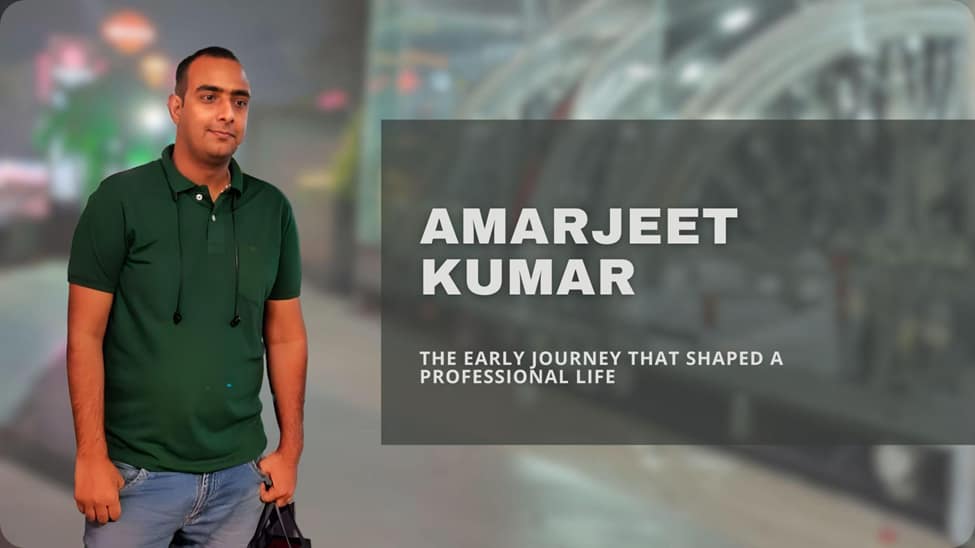
Every professional story has a visible chapter, the achievements, the titles, the global exposure, but the real foundation is built much earlier, often in places far removed from boardrooms and recognition. For Amarjeet Kumar, the story begins not with ambition, but with adaptation.
Born and raised in a modest environment, Amarjeet’s early life was shaped by movement, change, and responsibility. Frequent relocations during his childhood exposed him to different schools, communities, and cultures, requiring him to repeatedly rebuild familiarity. These transitions, while challenging at the time, developed a quiet resilience and an ability to adjust quickly, a skill that would later define his professional approach. Life during those years was simple, but it demanded maturity early. Education was not treated as a formality; it was seen as a path toward stability and growth. The absence of comfort never became a limitation. Instead, it cultivated discipline, an understanding that progress is built through consistency rather than shortcuts.
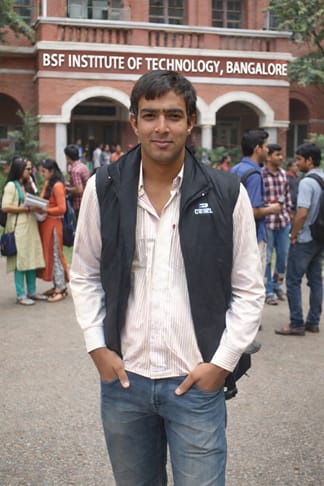
When Amarjeet entered the professional world, the beginning was far from glamorous. His early career was rooted in operational roles where learning happened through experience rather than title. He worked closely with processes, systems, and day-to-day execution, developing an understanding of how organizations function at the ground level. This phase taught him something many professionals overlook, that real expertise begins with understanding the basics deeply. The early years of his career were defined by effort and endurance. Balancing responsibilities while building professional credibility required long hours and sustained focus. Rather than chasing quick recognition, he concentrated on reliability. Colleagues and mentors began to notice his consistency, a professional who delivered quietly but effectively.

Over time, Amarjeet’s curiosity moved beyond execution. He began observing how teams operated, how workflows influenced outcomes, and how structured systems could improve performance. This shift in perspective marked a turning point. He was no longer just completing tasks; he was studying patterns.
Technology and innovation gradually became central to his growth. He explored tools, systems, and automation processes that could make work more efficient. Instead of waiting for opportunities to be assigned, he actively sought ways to improve processes. This mindset positioned him as someone who understood both operational detail and strategic thinking, a rare combination in early-stage careers.

Relocating for work brought new challenges and fresh learning experiences. Moving from one city to another required rebuilding professional networks and adapting to new organizational cultures. Each transition reinforced a core lesson: success depends not only on skill but on the ability to evolve with changing environments.
What distinguished Amarjeet during this period was not aggressive ambition, but steady progression. He believed in mastering each phase before moving forward. Leadership, for him, was never about authority; it was about responsibility. Even before formal leadership roles, he demonstrated ownership in the way he approached problems and supported team outcomes. By the time larger opportunities began to appear, Amarjeet had already built a strong foundation, one shaped by discipline, operational understanding, and a mindset focused on long-term growth. The early chapters of his life and career were less about visibility and more about preparation.

Looking back, the beginning of Amarjeet Kumar’s journey reveals a consistent theme: growth through adaptation. The lessons learned from humble beginnings, combined with a commitment to continuous learning, laid the groundwork for everything that followed.
His story is not defined by sudden success but by deliberate progress, a reminder that strong careers are rarely built overnight. They are built quietly, one decision, one responsibility, and one disciplined step at a time.